
ASUS ProArt PA248QV
4.6Editor score
Affordable Professional Display
100% Rec.709
Ergonomic Stand Design
This guide compares the top monitors for Premiere Pro video editing to help creators choose screens with accurate colors high resolution and reliable performanc
Finding the right monitor for Premiere Pro video editing is crucial for achieving professional results. You need a screen that delivers accurate colors sharp details and smooth playback to make your creative vision come to life effectively.
We evaluated ten top monitors based on color accuracy resolution connectivity and ergonomics. This list covers various budgets and needs ensuring you find a display that supports your specific video editing workflow without compromise.
Each pick shows key specs pros and cons to help you decide quickly. Keep in mind that prices and availability change frequently so check current listings before making your final purchase decision today.
4.6Editor score

4.6Editor score

3.8Editor score
Here is a side-by-side look at all ten monitors to help you compare specs and features quickly.



The ASUS ProArt PA278QV stands out as the top pick for video editors seeking reliable color performance without overspending. With a 4.6 rating it delivers consistent visuals right out of the box thanks to Calman verification and Delta E under 2 accuracy.
We may earn a commission when you buy through this link, at no additional cost to you.
Its 100% sRGB and Rec.709 coverage ensure your edits match broadcast standards. The 27 inch QHD screen offers sharp detail for timeline work and previewing sequences. Connectivity includes DisplayPort HDMI DVI and Mini DP with a built in USB hub for peripherals.
While it lacks USB-C power delivery the ergonomic stand allows full height pivot and tilt adjustments. Some units may show minor light bleed but this is typical for IPS panels. The 5 year warranty gives added peace of mind for professional use.
Editors who need accuracy and comfort will find this monitor a solid long term investment. It balances cost and performance better than most competitors in this category making it our top choice for Premiere Pro workflows today.
Factory calibration ensures Delta E less than 2 so you trust your colors immediately.
Multiple inputs including Mini DP and HDMI let you connect various devices easily.
We may earn a commission when you buy through this link, at no additional cost to you.
The ASUS ProArt PA32QCV offers a stunning 32 inch 6K display ideal for high end Mac setups. Its 98% DCI-P3 coverage and Thunderbolt 4 connectivity make it a strong candidate for professional color grading and multi monitor workflows.
We may earn a commission when you buy through this link, at no additional cost to you.
With MacBook color matching and factory calibration it ensures your edits look correct on Apple devices. The KVM switch allows you to control two computers with one mouse and keyboard seamlessly. The ambient light sensor adjusts brightness automatically for comfort.
While the cost is high the resolution and connectivity justify it for serious professionals. You need a capable GPU to drive 6K comfortably but the visual payoff is significant for timeline efficiency and detail.
Mac users wanting a unified seamless display experience will appreciate the seamless integration. This monitor serves as a flagship option for those prioritizing screen quality and workflow automation over budget constraints.
Single cable solution provides video data and 96W charging for laptops.
Switch between devices without changing cables or keyboard setups physically.
We may earn a commission when you buy through this link, at no additional cost to you.
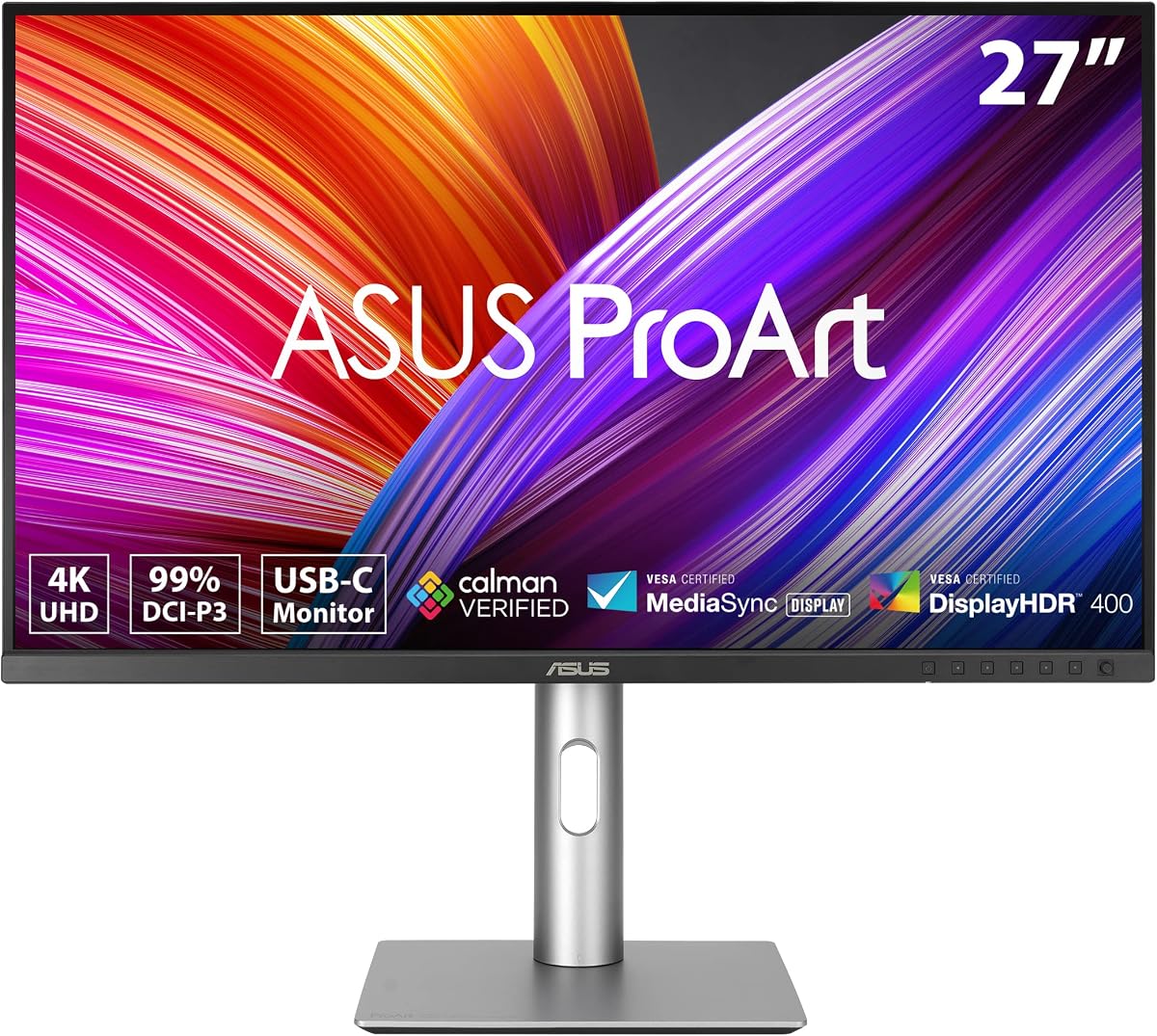
The ASUS ProArt PA279CRV delivers crisp 4K visuals with solid USB-C performance for editors on the go. Its 99% DCI-P3 and 99% Adobe RGB coverage make it versatile for both video and print workflows effectively.
We may earn a commission when you buy through this link, at no additional cost to you.
The 96W power delivery via USB-C means you can connect a laptop with one cable. Daisy-chain support allows a second monitor setup without extra hubs. The factory calibration ensures reliable color for professional tasks from the start.
HDR support is present but not groundbreaking. The stand occupies some desk space though it offers full ergonomic adjustability for comfort during long sessions. It is a balanced option for those who need clarity and connectivity.
Editors prioritizing screen sharpness and cable reduction will find this monitor appealing. It bridges the gap between consumer displays and true professional grade hardware at a competitive price point.
High wattage USB-C port powers most laptops while sending video.
Broad Adobe RGB coverage supports print design alongside video editing.
We may earn a commission when you buy through this link, at no additional cost to you.
The MSI PRO MAX 271UPX12G brings OLED technology to professional editing with deep blacks and vivid colors. The QD-OLED panel delivers exceptional contrast that helps visualize shadows and highlights in HDR content accurately.
We may earn a commission when you buy through this link, at no additional cost to you.
With 120Hz refresh rate and HDR True Black 400 certification it handles motion and brightness well. USB-C connectivity is included though you may need a hub for all ports. Mac optimization ensures seamless integration with Apple systems.
OLED panels carry inherent burn-in risk with static UI elements like toolbars. It is essential to manage display settings and use screen savers. For short sessions and color critical work it shines brightly.
Editors who value deep contrast and fast response times will appreciate this display. It offers a premium visual experience that traditional IPS screens cannot match in dark room environments.
True black pixels deliver perfect contrast for dark scenes.
120Hz refresh rate makes scrolling timelines feel fluid and fast.
We may earn a commission when you buy through this link, at no additional cost to you.
The ASUS ProArt PA278CGRV stands out with a 144Hz refresh rate rare in pro monitors. This ensures smooth motion during playback and scrubbing in timelines for a responsive editing experience.
We may earn a commission when you buy through this link, at no additional cost to you.
It covers 97% DCI-P3 and includes MacBook color matching for consistent visuals. Auto KVM allows switching between two machines using one set of peripherals. USB-C with 96W delivery simplifies desk cabling significantly.
The QHD resolution is sharp enough for most tasks though not as detailed as 4K. Some users prefer higher pixel density for still work but playback is smooth. HDR support adds contrast when content allows.
Editors who work with high frame rate footage or need fluid UI response will find this unique. It balances gaming tech features with professional color standards effectively.
144Hz refresh rate ensures smooth scrubbing and playback previews.
Color temperature preset matches MacBook displays for accurate previews.
We may earn a commission when you buy through this link, at no additional cost to you.
The ASUS ProArt PA248QV offers professional color accuracy at a budget price. It is perfect for secondary screens or editors starting out who still need reliable sRGB coverage.
We may earn a commission when you buy through this link, at no additional cost to you.
Its 16:10 aspect ratio gives vertical space for panels. Calman verification ensures Delta E less than 2 accuracy for true color. The stand supports full adjustment to reduce fatigue during long sessions.
Resolution is limited to WUXGA but sufficient for basic tasks. It lacks modern USB-C but still provides HDMI DisplayPort and D-Sub. This is a practical option for tight budgets.
Editors needing a cost effective primary or secondary display should consider this. It delivers core pro features without the high cost of larger 4K screens.
Pro level color accuracy at a price point accessible to freelancers.
16:10 provides more vertical space for timeline panels.
We may earn a commission when you buy through this link, at no additional cost to you.
The LG 27UP850K-W offers solid 4K performance with convenient audio built in. It is a strong all-in-one solution for editors wanting to reduce clutter on their desk setups.
We may earn a commission when you buy through this link, at no additional cost to you.
It covers 95% DCI-P3 and supports HDR 400. USB-C with 90W power delivery keeps laptops charged during work. The speakers provide basic sound for quick previews without headphones.
HDR is modest but useful for checking highlights. The stand allows tilt pivot and height adjustment for ergonomics. It balances price and features well for general video editing needs.
Editors needing a compact setup with audio will find this helpful. It is a practical choice for those who prefer fewer peripherals and good connectivity.
Integrated speakers eliminate need for external monitors for basic sound.
90W delivery ensures laptops stay powered during long sessions.
We may earn a commission when you buy through this link, at no additional cost to you.
The ASUS ProArt PA27JCV brings 5K resolution to a 27 inch panel for crisp visuals. It targets Mac users needing higher pixel density than 4K for precise work.
We may earn a commission when you buy through this link, at no additional cost to you.
Color coverage includes 99% DCI-P3 and 100% sRGB with ambient light sensors. USB-C with 96W power simplifies laptop setup. Auto brightness helps maintain consistent colors throughout the day.
Lower rating score may suggest some firmware quirks. Still the 5K screen offers exceptional detail for still and video work. It is a niche pick for pixel conscious editors.
Those wanting more resolution than 4K will appreciate this. It serves a specific need for high pixel density in a Mac workflow.
5K resolution offers more sharpness than 4K on same screen.
Ambient light sensor adjusts brightness for consistent viewing.
We may earn a commission when you buy through this link, at no additional cost to you.
The ASUS ProArt PA27UCDMR combines OLED quality with high refresh rates for top performance. It is a premium choice for those needing the highest accuracy and speed.
We may earn a commission when you buy through this link, at no additional cost to you.
Color accuracy reaches Delta E less than 1 with hardware calibration. Thunderbolt 4 and 96W delivery streamline connectivity. Brightness reaches 1000 nits with HDR True Black for stunning contrast.
Complexity and price are significant. Firmware updates are needed for some HDR formats. Still this monitor offers unmatched specs for professional use.
It is a flagship option for professionals needing precision and speed. Those prioritizing ultimate quality will find it worth the cost.
Hardware calibration ensures extreme color accuracy for demanding work.
240Hz refresh rate provides ultra smooth scrolling and playback.
We may earn a commission when you buy through this link, at no additional cost to you.
The ASUS ProArt PA278CV offers 65W USB-C power and daisy chain support. It is a solid value pick for editors wanting reliable color without high cost.
We may earn a commission when you buy through this link, at no additional cost to you.
Color accuracy includes 100% Rec.709 and Delta E less than 2. The stand offers 90 degree pivot for vertical coding. Daisy chain allows multiple displays without extra hubs.
Power is lower than other models but suits many laptops. It lacks DCI-P3 but covers Rec.709 well for video. It is a good entry point for pro workflows.
Editors needing USB-C convenience will find this helpful. It balances cost and features well for general editing needs.
Connect multiple monitors via single cable for multi display setups.
90 degree pivot allows vertical screen for coding or text.
We may earn a commission when you buy through this link, at no additional cost to you.
Choosing the right monitor involves balancing resolution color accuracy connectivity and ergonomics for your workflow.
Screen size impacts your ability to see timelines and previews clearly. 27 inches is common with 4K or QHD for sharp detail without needing excessive zoom. Larger screens offer more workspace but require higher GPUs to drive resolution smoothly.
Choose 27 inches or more with 1440p or 4K for best results in Premiere Pro.
Color accuracy ensures your edits look correct across devices. Look for Delta E less than 2 and wide color gamuts like sRGB DCI-P3 and Adobe RGB. Factory calibration saves time setting up profiles manually for consistent results.
Aim for Delta E less than 2 and high sRGB or DCI-P3 coverage.
Refresh rate affects smoothness during playback and UI navigation. Higher rates like 120Hz or 144Hz reduce blur when scrubbing timelines. Standard 60Hz is sufficient for static work but high rates improve comfort.
Prioritize refresh rates above 60Hz for smoother timeline scrubbing and playback.
Connectivity determines how you attach your computer. USB-C with power delivery is ideal for modern laptops. DisplayPort HDMI and Thunderbolt support multi monitor setups and high bandwidth video transmission for 4K.
Check for USB-C with power delivery and DisplayPort support for flexible connections.
Ergonomics protect your health during long sessions. Full height tilt pivot and swivel adjustments help align the screen with your posture. Good stands reduce strain and allow switching to vertical mode easily.
Ensure the stand supports height tilt and pivot adjustments for comfort.
HDR support allows editing and viewing high dynamic range content. Look for HDR400 or higher with high brightness and black levels. Proper HDR ensures your video will look correct on HDR displays.
Choose monitors with HDR400 or higher for accurate HDR content editing.
A strong warranty protects your investment. Look for at least 3 years with options to extend to 5 years. Professional displays often include better service and replacement policies than consumer models.
Prioritize models offering 3 to 5 year warranties for professional use.
Budget determines what features you can access. Higher prices bring better color accuracy and resolution. Balance cost with your actual needs to avoid overspending on unused specs like 5K when 4K is enough.
Compare cost against needed specs to avoid overspending on unused features.
Always calibrate your monitor before starting color critical work. Use software tools like Pro or display calibration hardware to ensure colors match your workflow standards accurately and consistently.
Keep your workspace well lit to reduce contrast stress. Use bias lighting behind the screen to lower eye strain during long editing sessions and maintain accurate color perception.
Clean your screen gently with a microfiber cloth and distilled water. Avoid harsh chemicals and protect your panel from dust buildup which can affect visibility and long term performance.
For most editors 4K offers sharp detail and enough space for timelines. 1440p works well too if you want better performance. Match your resolution to your GPU strength and typical project scale.
USB-C simplifies connections by combining video data and power. It is ideal for laptop users but not mandatory for desktops. Look for at least 65W power delivery for charging capability while working.
Delta E measures color accuracy where lower is better. Delta E less than 2 means colors are indistinguishable to most eyes. It ensures edits match what viewers see on other devices.
HDR is useful if you work with HDR content. Standard 10-bit SDR editing needs less brightness. HDR monitors help check highlights but are not essential for all workflows.
DCI-P3 is ideal for digital video and DCI standards. sRGB is good for web content. Adobe RGB covers print needs. Match the gamut to your target output platform.
Higher refresh rates make UI scrolling and playback smoother. 60Hz is standard but 120Hz improves experience. It helps reduce motion blur during timeline navigation.
Professional monitors often include 3 to 5 years. Look for options to extend coverage. This protects against defects and ensures long term reliability.
Gaming monitors offer speed but may lack color accuracy. Look for color specs before buying. Some models are good but verify coverage and calibration options first.
We recommend the ASUS ProArt PA278QV for most editors due to its balance of color accuracy price and features. It offers the best overall value without compromising professional standards.
Consider your specific needs like resolution or refresh rate before deciding. Prioritize color accuracy and ergonomics for long term comfort during editing projects.
Remember that prices change frequently so verify current listings before buying. Use our comparison table to find the perfect monitor for your workflow and budget.