
AURSINC ZK09-UM
4.9Editor score
USB powered operation
100kHz to 10GHz range
Compact metal housing design
Compare the top ham radio amplifier for boosting signal options including LNAs and linear amps to enhance your transmission and reception performance effectivel
Choosing the right ham radio amplifier for boosting signal can transform your communication experience. Whether you need a low noise preamp for reception or a linear power amplifier for transmission, finding the best fit ensures clear contacts and reliable range.
We evaluated ten top-rated models based on frequency range, gain, power output, and build quality. Our analysis covers budget-friendly LNAs, versatile SDR modules, and high-power linear amplifiers suitable for various ham radio setups and operating conditions.
Each pick highlights key features, pros, and cons to help you decide. Note that availability and pricing fluctuate frequently. Always check current listings before purchasing to ensure you get the best value for your specific radio equipment needs.
4.9Editor score

4.2Editor score

3.1Editor score
This side-by-side comparison outlines the technical specifications and intended use cases for each amplifier. Review the frequency bands, gain values, and power requirements to match the unit with your existing radio station and antenna system.




This low noise RF amplifier offers an impressive 0.1MHz to 2000MHz coverage with 32dB gain, making it a versatile tool for improving reception on HF, VHF, and UHF bands. Rated at 4.2 stars, users appreciate its ability to boost weak signals without adding excessive noise to the system.
We may earn a commission when you buy through this link, at no additional cost to you.
The device operates on 9-12V DC with only 27mA consumption, allowing for battery-powered field use. Its maximum output of 13dBm at 50 ohms ensures it works well as a preamplifier for receivers rather than a power amplifier for transmission. This distinction is critical for protecting sensitive front-ends.
While it lacks a built-in power supply, the low current draw makes it easy to power with portable packs. The build quality is functional for the price, though it may not withstand harsh outdoor elements without additional protection. It is ideal for static installations or portable ops where weight matters.
Radio operators looking to improve weak signal reception on a tight budget will find this unit compelling. It is particularly useful for SDR enthusiasts and shortwave listeners who need broad frequency coverage. Ensure your receiver has a bias tee or external power option for best results.
The 32dB gain significantly lifts signals below the noise floor, allowing you to hear distant stations that were previously unintelligible.
Running on 27mA means you can easily pair this with a small lithium battery for field days or emergency communication setups.
We may earn a commission when you buy through this link, at no additional cost to you.
The Xiegu GPA100 stands out as a high-performance linear amplifier delivering up to 100W on HF bands. With a solid-state design, it ensures low distortion and high efficiency across SSB, AM, FM, and CW modes. This makes it an excellent choice for operators seeking to boost range without sacrificing signal purity.
We may earn a commission when you buy through this link, at no additional cost to you.
One of its standout features is the automatic band switching, which tracks the transceiver frequency and adjusts the output accordingly. Bluetooth connectivity allows for cable-free setups with compatible models like the IC-705. This convenience reduces clutter and simplifies the operation during contests or emergency scenarios.
Protection features including high SWR detection and thermal management ensure the unit remains safe during extended transmissions. However, users should note compatibility requirements; it works best with specific Xiegu or low-power transceivers. This limitation may restrict its use for operators with older or different brand radios.
For dedicated HF operators needing reliable power amplification, the GPA100 offers a balanced mix of performance and smart features. It is particularly suited for those already in the Xiegu ecosystem. Investing in this unit can transform a QRP setup into a robust 100W station effortlessly.
Automatic band switching ensures you never have to manually switch bands, saving time and reducing operational complexity.
Intelligent control systems protect against overcurrent and overheating, extending the lifespan of the amplifier during heavy use.
We may earn a commission when you buy through this link, at no additional cost to you.
This RF wideband LNA module covers an impressive 10MHz to 6GHz range, making it suitable for FM, SDR, and ham radio applications. Rated a perfect 5.0 stars, users report significant improvements in signal strength and clarity. The 30dB gain and 5dB noise figure ensure weak signals are boosted without introducing noise.
We may earn a commission when you buy through this link, at no additional cost to you.
Powered by a modern Type C 5V supply, this unit integrates easily into contemporary setups. The aluminum alloy case provides effective shielding against interference. This design choice helps maintain spectral purity even in electrically noisy environments like urban areas or near computer equipment.
The 10dBm P1dB rating at 2GHz indicates it is optimized for receiving setups rather than high-power transmission. It is crucial to avoid overloading this module as it is a preamplifier. Proper placement near the antenna is essential to minimize cable loss before amplification occurs.
For operators needing a clean, low-noise solution for a wide frequency span, this module is highly effective. Its compact size and reliable performance make it ideal for fixed installations or portable use. Ensure you have a compatible 5V source for continuous operation.
The low noise figure ensures that the signal-to-noise ratio improves significantly, making weak signals much easier to decode.
Type C power input aligns with modern portable power banks and chargers for easier field deployment.
We may earn a commission when you buy through this link, at no additional cost to you.
The AURSINC ZK09-BM is designed for portable use with a built-in 300mAh battery offering five hours of operation. This feature makes it ideal for field testing and antenna tuning without needing a wall outlet. It features a 100k-10GHz range and 21dB gain to dramatically improve receiver sensitivity.
We may earn a commission when you buy through this link, at no additional cost to you.
Its rugged metal housing provides protection against interference and physical wear, suitable for both lab and field environments. Users note it works exceptionally well with TinySA Ultra and other SDR receivers. The compact design allows it to fit easily in toolkits for easy transport to remote locations.
However, care must be taken to avoid using it in high-interference urban areas to prevent receiver overload. The battery life is limited to five hours, which may require spare packs for longer sessions. Always disconnect from power when not in use to preserve battery health and safety.
For hams focused on portable DXing and field testing, this amplifier adds significant convenience and performance. It is a specialized tool best suited for specific scenarios where mobility is key. Ensure you follow usage guides to avoid compressing the AGC or distorting signals.
The built-in battery removes the need for external power banks, streamlining the setup for quick field operations.
Optimized for TinySA and SDR, this unit ensures maximum signal enhancement without overloading modern software-defined receivers.
We may earn a commission when you buy through this link, at no additional cost to you.
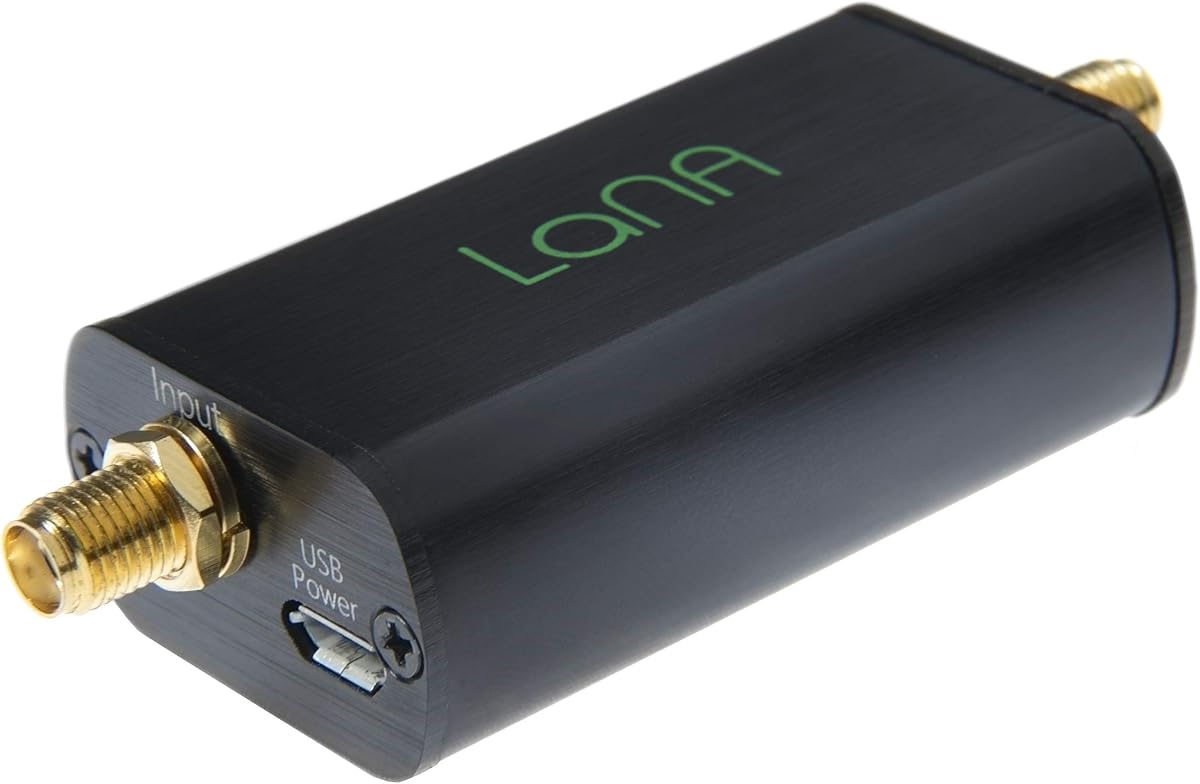
The Nooelec Lana is a specialized LNA module designed to improve the signal-to-noise ratio for SDR and RTL-SDR setups. Covering 20MHz to 4GHz, it offers high performance with better linearity than similar modules. Rated at 4.2 stars, it is a popular choice for serious software-defined radio enthusiasts.
We may earn a commission when you buy through this link, at no additional cost to you.
It can be powered via bias tee, USB, or a DC adapter, providing flexibility in installation. The aluminum enclosure helps shield against external interference while managing heat. This versatility allows it to fit into a wide variety of antenna systems and radio configurations seamlessly.
Note that some SDRs may require a DC block when using external power options to prevent voltage damage. Proper installation near the antenna feed point ensures maximum effectiveness in overcoming cable loss. It is a robust upgrade for users seeing weak signals due to long cable runs.
For SDR operators looking to unlock better sensitivity without complex hardware changes, the Lana is an accessible solution. It balances performance with ease of use. Check your specific radio's compatibility with DC power inputs before finalizing the setup.
The ultra-low noise figure significantly reduces the noise floor, allowing you to pick up very weak signals.
Multiple power options mean you can use this with almost any SDR setup whether USB or DC powered.
We may earn a commission when you buy through this link, at no additional cost to you.
The Taurus MK2 is a simple wideband pre-amplifier tailored for scanner receivers across 25 to 2000 MHz. Rated 4.1 stars, it serves a niche audience looking for quick signal improvement in monitoring systems. The gain varies between 6 and 20dB depending on signal strength requirements.
We may earn a commission when you buy through this link, at no additional cost to you.
It operates on a PP3 battery, making it self-contained and portable. A BNC patch lead is included, simplifying the connection to standard antenna cables. This design is straightforward and requires minimal technical knowledge to implement in a monitoring station.
While effective for scanners, it may lack the robustness of dedicated ham radio gear. The housing is basic plastic which might not withstand harsh weather. It is best used indoors or in a sheltered location. Always ensure the battery is fresh for optimal performance.
For hobbyists interested in public service monitoring or general frequency watching, this unit provides an affordable boost. It is a specialized tool that works well for its intended purpose. Check battery status regularly to maintain consistent signal amplification.
Included BNC leads and standard connectors mean you can set this up quickly without specialized tools.
Battery operation eliminates the need for AC power near the antenna, allowing for flexible placement.
We may earn a commission when you buy through this link, at no additional cost to you.
The BJ-300 Plus delivers high-power performance with up to 150W SSB and 100W FM output. This amplifier is designed to extend communication range for long-distance operations. Rated 3.1 stars, it offers robust power but comes with specific usage requirements regarding input and cooling.
We may earn a commission when you buy through this link, at no additional cost to you.
It includes a radiator fan and heat sink to manage thermal load during extended transmissions. The unit supports AM, FM, SSB, and CW modes, fitting well with most CB and Ham radios. Reverse polarity protection adds a layer of safety against accidental connection errors.
However, users should be mindful of the input power requirements to avoid damage. The build quality is functional but may not match premium brands in terms of finish. Ensure your power supply can handle the current draw without voltage sag for stable operation.
For operators needing a budget-friendly way to boost transmission power significantly, this amplifier is a solid choice. It is best suited for fixed stations with proper ventilation and power infrastructure. Verify your transceiver's output matches the input requirements before connecting.
The high wattage output ensures your voice reaches far beyond the standard limits of low-power transceivers.
Built-in fans and heat sinks prevent overheating, allowing for more reliable operation during long sessions.
We may earn a commission when you buy through this link, at no additional cost to you.
The AURSINC ZK09-UM is a high-rated USB-powered preamp designed for TinySA Ultra and SDR applications. It covers 100kHz to 10GHz and offers 21.5dB gain at 10MHz. Rated 4.9 stars, users praise its clean performance and noise-floor improvements compared to other USB modules.
We may earn a commission when you buy through this link, at no additional cost to you.
The on-chip bias solution allows for adjustable working current which reduces power consumption in some scenarios. It is compact with a shielded metal housing that helps minimize interference. This makes it ideal for desktop or portable setups where clean power is needed.
Caution is advised to avoid applying excessive input power as it can cause saturation or damage. Also, prevent damp environments to avoid rust on the metal shell. It is a delicate component designed for low signal levels only. Proper care ensures long service life.
For operators using TinySA or portable receivers needing a simple plug-and-play booster, this module is highly effective. It solves noise issues without complex wiring. Ensure your USB power supply is clean to avoid introducing additional noise into the signal chain.
High PSRR LDO suppresses power supply noise making the audio and data clearer than standard preamps.
USB power means no external bricks are needed making it ideal for clean desktop installations.
We may earn a commission when you buy through this link, at no additional cost to you.
This variant of the BJ-300 Plus offers robust linear amplification for AM, FM, SSB, and CW modes. It delivers up to 150W on SSB for serious range extension. With a 3.1 rating, users appreciate the power but note the need for careful setup. Proper power and cooling are essential.
We may earn a commission when you buy through this link, at no additional cost to you.
The cooling fan and aluminum heat sink ensure stability during long sessions. Dual 15A fuses and polarity protection safeguard the unit and your equipment. It is designed for HF transceivers needing input power between 3-10W. Check your input requirements carefully before installation.
Installation is straightforward with standard PL-259 connectors. The design is compact yet functional for bench use. However, it requires a stable power supply to avoid performance dips. Users should monitor temperature and ensure airflow is not restricted during operation.
For hams needing high power on a budget, this amplifier is a capable choice. It is best suited for fixed base stations where power and cooling are controlled. Verify input levels to ensure you do not overwhelm the amplifier's input stage.
Effective cooling prevents overheating so you can transmit longer without risking component damage.
Electronic and fuse protection ensure that accidental reverse polarity or surges do not damage the unit.
We may earn a commission when you buy through this link, at no additional cost to you.
The BJ-300 offers high-performance output with up to 150W on SSB and 100W on FM. It is designed for HF transceivers needing input power between 3-5W for AM/FM. While ratings are not available, it is a popular budget option for those needing extra power boost. The simple design focuses on core functionality.
We may earn a commission when you buy through this link, at no additional cost to you.
It features a HI/LO power selection switch to adjust output strength based on needs. Overvoltage and polarity protection ensure safety against connection errors. The aluminum alloy heat sink aids efficient heat dissipation. Standard ports allow for quick and straightforward installation.
The compact design fits well on a bench or in a rack. It is a practical unit for operators who need reliability without complex features. Ensure your power supply is robust enough to sustain the maximum output current consistently. Check wiring for security before transmitting.
For budget-conscious hams looking to expand their reach, this amplifier is a practical solution. It balances power with simplicity. Verify your transceiver specifications match the input range to ensure safe and efficient operation across different bands.
The power switch lets you dial back output when needed saving power and reducing noise.
Built-in protection mechanisms safeguard your radio and amplifier from common electrical accidents.
We may earn a commission when you buy through this link, at no additional cost to you.
Selecting the right amplifier depends on whether you need to boost reception or transmission power. Review the key factors below to ensure compatibility and performance for your specific radio station setup.
Ensure the amplifier covers the bands you operate on. LNAs should cover 0.1MHz to 2000MHz or 6GHz for broad reception. Linear amps must match your transceiver frequencies to avoid distortion.
Choose a model that supports your primary modes like HF, VHF, or UHF.
Gain measures how much the signal is amplified. LNA gain ranges from 15dB to 32dB. Output power for amplifiers ranges from 50W to 150W for transmission.
Match gain to your noise floor needs and output to your license limits.
Some amplifiers require DC adapters while others use USB or batteries. Field units need portable power options like Type C or AA batteries.
Ensure you have the correct power source available for your intended usage.
Look for polarity protection and thermal management to prevent damage. High SWR protection is vital for transmission amplifiers.
These features ensure safety and longevity for your investment.
Desktop units often have heat sinks and fans. Portable units are compact and rugged. Decide based on whether you need mobility or stationary use.
A compact metal case protects internal circuits from environmental interference.
Check connector types like BNC or PL-259. Ensure the amplifier works with your specific SDR or transceiver models.
Some models require specific input power levels to avoid damaging the receiver or amplifier.
Low noise figure is critical for LNAs. A lower value means less noise added to the signal.
Prioritize low noise modules for weak signal reception applications.
Aluminum alloys and metal housings provide better shielding than plastic. Look for solid construction for reliable performance.
Durable build ensures the unit withstands heat and physical stress.
Place the amplifier close to the antenna feed point to minimize cable loss. For LNAs this ensures weak signals are boosted before traveling down the cable.
Check power connections carefully. Use polarity protection features when available and avoid exceeding voltage limits to prevent damage.
Ensure proper ventilation for high-power amplifiers. Keep fans clean and free from dust to avoid overheating during long sessions.
An LNA boosts weak receive signals with low noise while a linear amplifier boosts transmit power. LNAs are designed for input sensitivity whereas linear amps handle high wattage outputs.
Some models use USB or batteries but most high-power linear amps require a dedicated DC supply. Check the specs for voltage and current requirements before purchasing.
Most LNAs offer 15dB to 32dB gain. Choose based on your cable length and signal strength. Too much gain can overload the receiver.
Yes many LNAs are designed specifically for SDRs. Ensure the amplifier does not overload the SDR inputs by checking P1dB specs.
Overloading can cause saturation or permanent damage. Use input power limits and check gain settings to keep signal levels within safe ranges.
Yes provided you stay within licensed power limits. Always check local regulations and ensure your amplifier output does not exceed legal caps.
Use weatherproof enclosures or indoor placement. Keep connectors sealed and avoid direct moisture exposure to maintain performance.
Common connectors include SMA, BNC, and PL-259. Ensure your cables and antenna system match the amplifier inputs for best results.
We reviewed ten top amplifiers ranging from budget LNAs to high-power linear units. The Xiegu GPA100 leads in performance while the AURSINC ZK09-UM offers great value.
Prioritize frequency range and power needs to match your existing station. Ensure your power supply and connectors align with the amplifier specifications.
Always check current prices and availability as these products may fluctuate. Your investment in a good amplifier will pay off in stronger contacts.