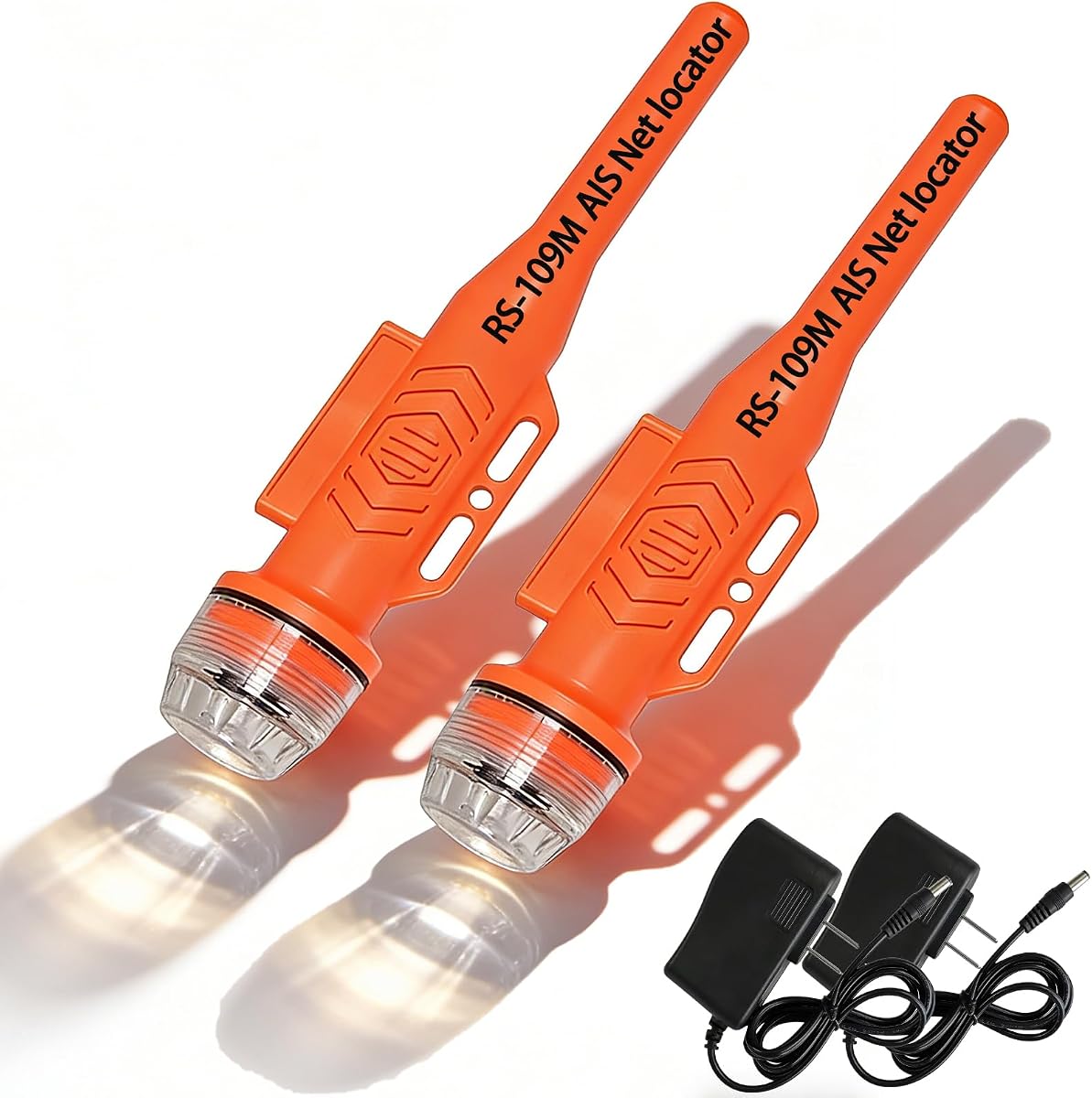
RS-109M Marine Net Locator
4.0Editor score
IPX7 waterproof design
Ten nautical mile range
Two week battery life
Navigating modern waters requires reliable communication and tracking tools to ensure safety and awareness. An AIS transponder plays a critical role in identifying nearby vessels and broadcasting your own position to prevent collisions effectively.
We evaluated ten leading models based on their display quality, connectivity options, and safety features to find the best options for various vessel types. Our analysis focuses on real-world performance, ease of installation, and integration with existing marine electronics systems.
Each selection highlights unique strengths such as rugged build quality, advanced navigation aids, or specialized personal safety functions. Please note that pricing and availability fluctuate frequently, so verify current details before making your final purchase decision.
4.0Editor score

4.5Editor score
4.5Editor score
As an Amazon Associate we earn from qualifying purchases.
The following table provides a side-by-side overview of key specifications for each model to help you quickly identify the device that best fits your maritime navigation needs.




This Icom model serves as a robust standalone AIS transponder with a bright display and essential navigation features. It stands out for its user-friendly interface and comprehensive safety alarms designed for recreational boaters.
We may earn a commission when you buy through this link, at no additional cost to you.
The integrated GPS ensures your position is accurately broadcast without external sensors. Users appreciate the anchor watch and collision alarm functions which provide peace of mind during overnight stays or busy waterways.
While it relies on compatible VHF radios for DSC calling, this limitation does not hinder core AIS functionality. The silent mode allows for discreet operation which can be useful in sensitive or security-conscious situations.
This unit is ideal for boaters seeking a reliable AIS solution with a built-in display. It balances advanced features with ease of use making it a strong choice for mid-sized vessels.
The vibrant display ensures clear visibility of AIS targets even in bright sunlight conditions.
Users can configure MMSI and ship details directly on the unit without needing external software.
We may earn a commission when you buy through this link, at no additional cost to you.
This EM-TRAK Class B transceiver offers essential AIS functionality for vessels requiring basic traffic awareness. Its flexible power input supports a wide range of boat electrical systems.
We may earn a commission when you buy through this link, at no additional cost to you.
The unit is designed to be compact which simplifies installation on smaller vessels with limited space. It serves as a fundamental tool for safety and regulatory compliance in busy shipping lanes.
While specific display features are not detailed, the core transmission and reception capabilities meet standard requirements. This makes it a practical choice for boat owners prioritizing core functionality over advanced visualization.
Consider this model if you need a straightforward transceiver that integrates into existing marine electronics. It provides reliable Class B performance for cost-effective safety upgrades.
Supports both twelve and twenty four volt systems to accommodate different vessel electrical architectures.
We may earn a commission when you buy through this link, at no additional cost to you.
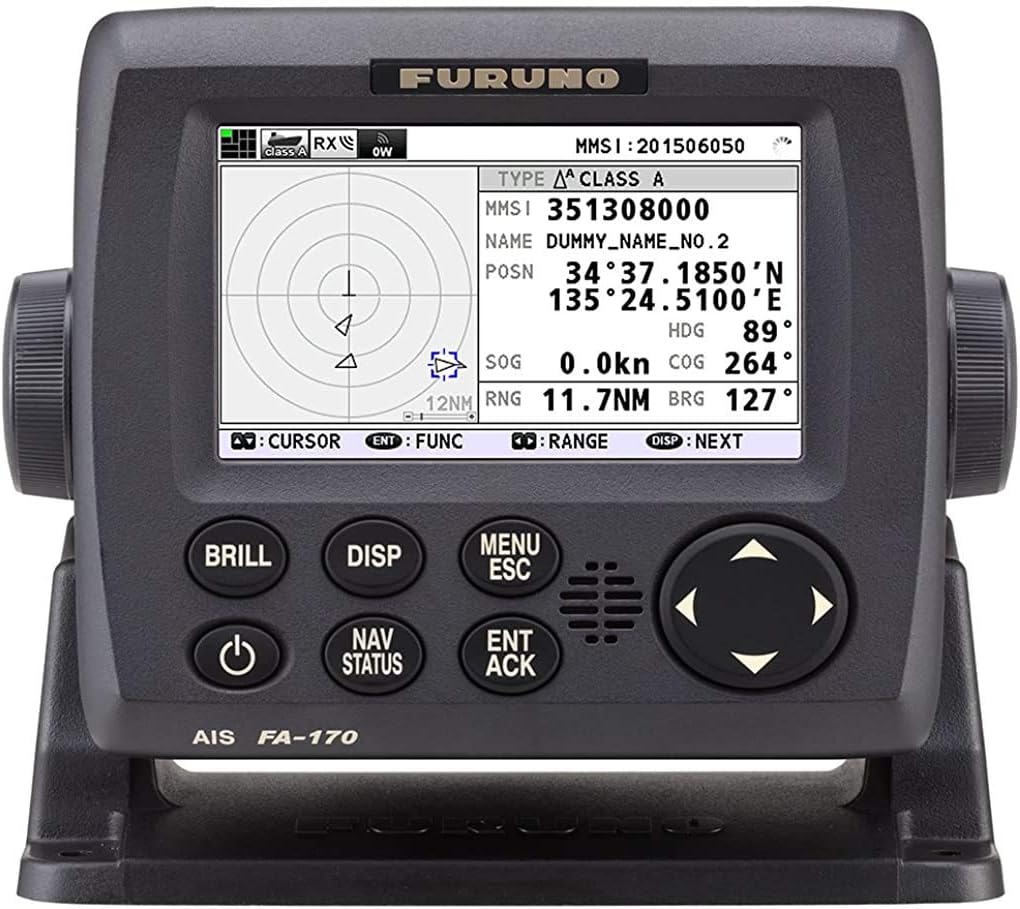
The Furuno FA170 is a professional-grade Class A transponder designed for vessels requiring robust data handling and integration. It offers extensive target storage and advanced collision avoidance features.
We may earn a commission when you buy through this link, at no additional cost to you.
Its ability to store over two thousand targets ensures comprehensive tracking of maritime traffic over extended periods. The dangerous target list feature provides immediate alerts for high-risk vessels enhancing overall safety protocols.
Integration is simplified through multiple ports including LAN and NMEA compatible connections. This allows seamless data sharing with chartplotters and radar systems for a unified bridge display.
This unit is best suited for commercial vessels or serious recreational boats needing top-tier performance. Its reliability and advanced features justify the investment for safety-critical applications.
The dangerous target list automatically flags vessels on conflicting courses to prevent accidents.
Multiple ports allow connection to complex marine networks without signal degradation.
We may earn a commission when you buy through this link, at no additional cost to you.
This RS-109M device is a specialized AIS transponder intended for buoys and fishing nets rather than vessel navigation. It provides real-time tracking for offshore equipment ensuring assets remain located in open waters.
We may earn a commission when you buy through this link, at no additional cost to you.
The waterproof housing meets rigorous standards allowing it to operate submerged without failure. Its ten nautical mile signal range ensures reliable communication with onboard receivers even at significant distances.
Battery life is impressive supporting two weeks of continuous transmission which reduces maintenance frequency. Real-time battery level transmission alerts operators before power depletion occurs.
Ideal for commercial fisheries or research applications requiring equipment tracking. It offers a cost-effective solution for securing valuable marine gear against loss or theft.
Real-time battery and position data helps prevent loss of expensive fishing gear or research buoys.
IPX7 sealed housing ensures functionality even if the device is temporarily submerged in water.
We may earn a commission when you buy through this link, at no additional cost to you.
This bundle combines a Raymarine VHF radio with AIS capabilities offering a streamlined installation for communication and tracking. It simplifies the cabling process for mounting both units on a vessel.
We may earn a commission when you buy through this link, at no additional cost to you.
The Ray90 VHF component ensures clear communication across marine channels while the integrated AIS provides traffic data. Fixed mount accessories included help secure the units in place for rough conditions.
While detailed AIS specifications are not listed the Raymarine ecosystem typically ensures compatibility with chartplotters. This makes it a convenient choice for boats upgrading both communication and safety systems simultaneously.
Consider this set if you need a reliable fixed mount solution from a trusted brand. It balances voice communication with traffic awareness efficiently.
Bundled cables and mounts reduce setup time for integrating both systems on your vessel.
We may earn a commission when you buy through this link, at no additional cost to you.
The ACR RESQLINK serves as a personal AIS transponder designed for man overboard situations rather than vessel navigation. It alerts nearby vessels and global satellites when activated by a user.
We may earn a commission when you buy through this link, at no additional cost to you.
The return link service confirms to the user that distress signals have been received providing peace of mind. NFC technology allows easy battery checks via mobile phones without special tools.
Its infrared strobe lights ensure visibility at night while the small design integrates with life jackets comfortably. No subscription fees are required for its global satellite coverage.
This beacon is essential for any water sports enthusiast or crew member. It provides a critical layer of personal safety that complements vessel-based AIS transponders.
The return link service verifies signal receipt to the user instantly reducing anxiety during emergencies.
NFC technology enables quick battery status checks using a smartphone without disassembly.
We may earn a commission when you buy through this link, at no additional cost to you.
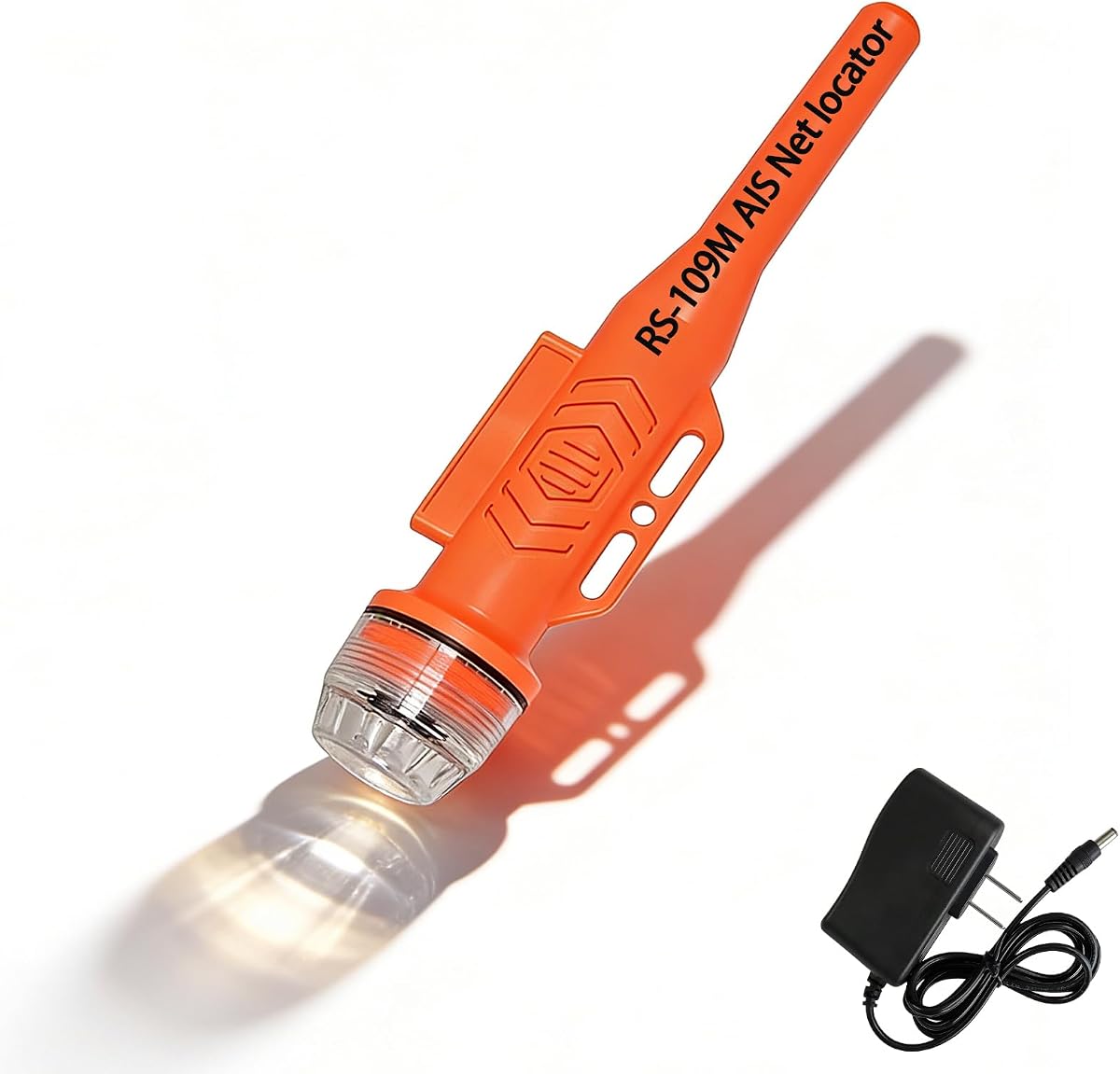
This single pack version of the RS-109M offers the same specialized buoy and fishing net tracking features as the two-pack variant. It is ideal for smaller fleets or individual asset monitoring.
We may earn a commission when you buy through this link, at no additional cost to you.
The waterproof housing and high sensitivity GPS ensure reliable location updates even in open seas. Its ten nautical mile range maintains consistent communication with shipboard receivers for timely alerts.
Battery life remains consistent at up to two weeks of continuous operation. Real-time battery transmission provides early warnings for power depletion to maintain tracking integrity.
Select this model if you need a reliable single unit for specific gear tracking. It delivers essential safety and asset management without complex installation requirements.
Perfect for monitoring single buoys or nets with consistent performance and long battery life.
We may earn a commission when you buy through this link, at no additional cost to you.
The Icom M94D is a handheld VHF transceiver featuring an integrated AIS receiver for traffic awareness. It combines communication and safety features in a portable unit for active crew members.
We may earn a commission when you buy through this link, at no additional cost to you.
The AIS receiver displays nearby vessel data directly on the screen which helps avoid collisions during close quarters navigation. The loud audio output ensures calls are heard clearly even in noisy engine rooms.
It includes safety features like the man overboard distress signal and float and flash function if dropped overboard. These additions make it a robust safety tool for recreational and commercial vessels alike.
Consider this radio if you need a compact communication device with built-in traffic awareness. It enhances situational awareness without needing separate AIS equipment on deck.
Integrated AIS receiver allows crew to see traffic data on a handheld device.
One thousand five hundred mW speaker power ensures calls remain clear in loud environments.
We may earn a commission when you buy through this link, at no additional cost to you.
This EVO series Icom VHF supports NMEA 2000 networking for seamless integration with modern marine electronics. It provides advanced control and data sharing capabilities for connected vessels.
We may earn a commission when you buy through this link, at no additional cost to you.
The AIS compatibility ensures traffic data flows through the network to compatible displays. This setup allows for centralized navigation management and enhanced safety monitoring on the chartplotter.
Its design prioritizes ease of use with streamlined interfaces for common tasks. The robust build quality suits demanding marine environments where reliability is paramount.
Ideal for vessel owners investing in a modernized electronics suite. It ensures your communication equipment can communicate effectively with other networked devices.
NMEA 2000 compatibility allows direct connection to multifunction displays without additional interfaces.
We may earn a commission when you buy through this link, at no additional cost to you.
The Raymarine AIS700 is a Class B transceiver designed for integration with Raymarine multifunction navigation displays. It offers reliable transmit and receive capabilities for enhanced situational awareness.
We may earn a commission when you buy through this link, at no additional cost to you.
A built-in antenna splitter simplifies installation by sharing the VHF antenna with the radio. This reduces cabling complexity and saves valuable space on smaller vessels or crowded decks.
NMEA 2000 compatibility ensures smooth data exchange within the Raymarine ecosystem. The SO-TDMA networking supports longer range performance for better detection of distant vessels.
This unit is best for Raymarine users seeking a streamlined installation. It provides essential AIS features without requiring external splitter hardware.
Built-in antenna splitter eliminates the need for external hardware and complex wiring setups.
SO-TDMA networking technology improves transmission range and speed for better coverage.
We may earn a commission when you buy through this link, at no additional cost to you.
Selecting the right transponder involves evaluating Class A versus Class B capabilities, antenna requirements, and integration with existing systems.
Class A transponders are mandated for commercial vessels and provide higher transmission power and update rates. Class B models are suitable for recreational boats and offer sufficient visibility for most small craft operations.
Choose Class A if you operate a commercial vessel or require maximum visibility. Class B is often more cost-effective for personal use.
Units with built-in displays allow direct traffic viewing without a chartplotter which can simplify navigation. Black box models rely on external displays but often save space and cost on smaller boats.
Consider a display unit if you lack a multifunction chartplotter. A black box works well if you already have a compatible screen.
Some transponders include internal antennas for easier installation on smaller boats. Others require external connections to ensure signal clarity over longer distances in open water.
Use internal antennas for convenience on small vessels. External antennas are better for larger ships with complex superstructures.
Check compatibility with your existing chartplotter and engine instruments via NMEA 0183 or NMEA 2000. Seamless integration ensures traffic data displays alongside your navigation charts.
Verify your chartplotter supports the chosen interface standard. Integration simplifies the bridge setup and reduces clutter.
Many modern transponders include integrated GPS which removes the need for external sensors. This ensures accurate position transmission without additional wiring or sensors.
Opt for integrated GPS to reduce installation complexity. External GPS sources add cost and potential points of failure.
Transponders consume different levels of power which impacts your electrical load on smaller boats. Check battery requirements for portable models versus continuous shore power needs for fixed units.
Calculate total power draw if you rely on batteries. Efficient models preserve energy for other critical systems.
Look for collision alarms anchor watch functions and DSC compatibility to enhance overall safety. These alerts notify you of potential risks before they become emergencies.
Prioritize models with collision alarms and anchor watch for added security. Safety features provide critical early warnings.
Consider the cabling and mounting requirements when choosing a unit. Simpler installation options save time and reduce the risk of wiring errors during setup.
Select models with clear instructions and necessary mounting kits. Professional installation may be required for complex systems.
Install the transponder in a dry sheltered location near your GPS antenna to ensure optimal signal performance. Secure it firmly to withstand vibrations from engines and waves during operation.
Configure your MMSI and vessel details correctly during the initial setup process. This data is crucial for other boats to identify you and for emergency services to locate your position.
Regularly update firmware and check battery levels to maintain reliable performance over time. Clean connectors with a dry cloth to prevent corrosion from saltwater exposure.
Class A transponders provide higher power and update rates required for commercial vessels. Class B models are designed for recreational use with slightly lower transmission intervals but sufficient visibility for small boats.
Most modern transponders include integrated GPS which eliminates the need for external sensors. If your unit does not have one you will need to connect it to an external GPS source.
Yes most AIS transponders connect via NMEA 0183 or NMEA 2000 to compatible chartplotters. Check your plotter compatibility to ensure data displays correctly on your navigation screen.
Range depends on antenna height and conditions but typically covers twenty to thirty nautical miles. Line of sight limitations may reduce effective range in calm waters.
Commercial vessels above specific tonnage thresholds must carry AIS transponders. Recreational boats are generally not required to carry them but using one enhances safety significantly.
A damaged antenna will degrade signal range and data accuracy. Inspect the cable and connector for corrosion or cracks and replace immediately to ensure reliable performance.
We highlighted ten distinct models ranging from specialized personal beacons to professional Class A transponders for commercial ships. Each offers unique strengths tailored to specific vessel types and safety requirements.
Prioritize integration capabilities and display features based on your existing marine electronics setup. A well-chosen unit enhances situational awareness without complicating your navigation workflow.
Always verify current availability and compatibility before purchasing to ensure a smooth installation process. Prices and inventory change frequently so checking the latest details is always recommended.