
AudioControl LC1i
4.7Editor score
Speaker-level to RCA converter
Compact slim chassis design
Selectable ground isolation
This guide compares the top 10 line driver car audio options to help you boost factory signals, reduce noise, and maximize aftermarket amplifier performance.
Upgrading your car audio system often requires bridging the gap between factory radios and powerful aftermarket amplifiers. Line drivers serve as essential signal processors that convert weak speaker-level outputs into robust line-level signals. This ensures your new components receive the clean power they need to deliver exceptional sound quality.
We evaluated ten top-rated line drivers based on signal purity, voltage output, feature sets, and ease of integration. Our analysis focuses on units that offer high voltage gain, low distortion, and compatibility with modern factory systems. Each product was assessed for its ability to enhance audio clarity without introducing unwanted noise.
Each pick in this list highlights specific strengths like bass restoration, equalization, or compact design. You will find detailed breakdowns of specs, pros, and cons to help you choose the right unit for your vehicle. Keep in mind that product availability and pricing can change frequently across online retailers.
4.7Editor score
4.8Editor score

4.5Editor score
The following table provides a side-by-side comparison of all ten line drivers included in this guide. Review the key specifications and features to identify which unit best matches your specific audio system requirements and installation constraints.



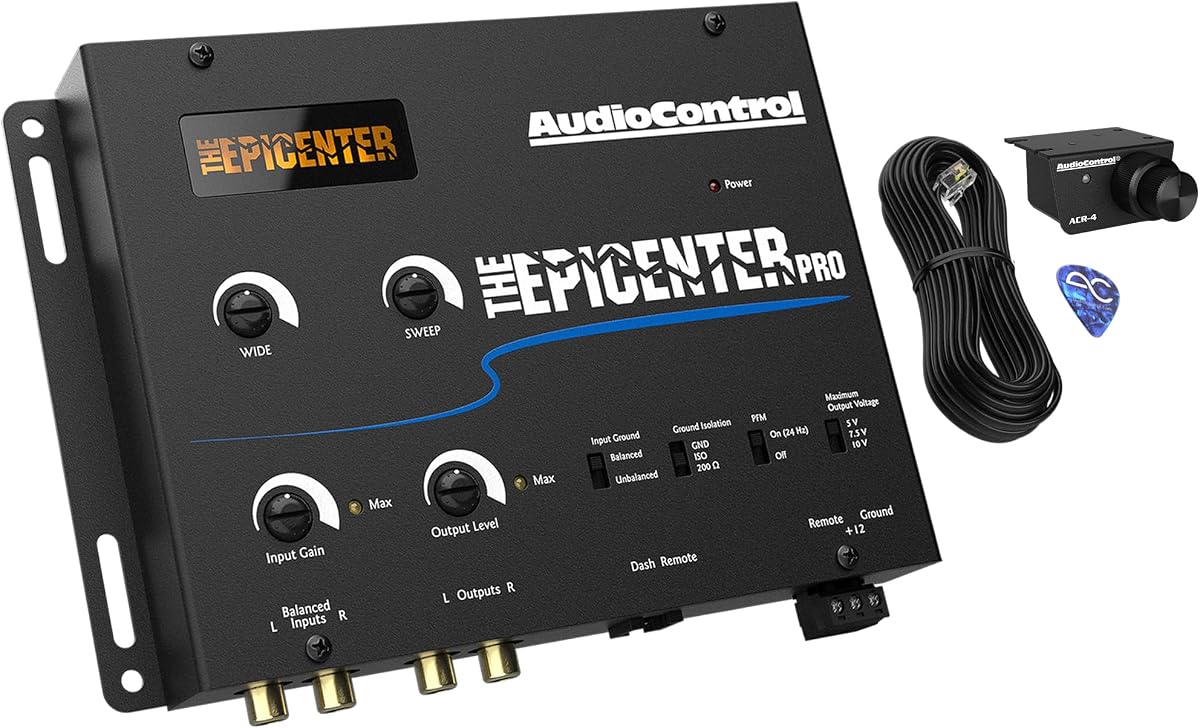
The AudioControl EPICENTER PRO stands out as a premium line driver and bass restoration processor. It holds a 4.8 rating and is highly regarded for its ability to recover lost low-end frequencies from factory audio sources. This unit combines signal boosting with advanced bass synthesis to deliver deep, impactful sound.
We may earn a commission when you buy through this link, at no additional cost to you.
Its patented bass restoration circuit detects upper-range harmonics to synthesize low frequencies that factory systems often filter out. The built-in line driver ensures a clean high-voltage signal reaches your amplifiers. Adjustable controls allow you to fine-tune the center frequency and bandwidth to match your vehicle's acoustics.
While it offers superior performance, the price reflects its advanced feature set. Some users may find the initial setup requires careful adjustment to avoid over-emphasis on bass. The included remote simplifies daily adjustments but the unit itself is compact and fits easily in tight spaces.
This product is ideal for enthusiasts seeking to upgrade factory systems without replacing the head unit. It delivers exceptional value for those needing both signal conversion and bass enhancement. For the best audio experience, we highly recommend this unit for complex setups.
The patented circuit analyzes harmonics to create low frequencies often lost in factory recordings.
Select output voltage levels to match amplifier inputs for maximum clean power and reduced noise.
We may earn a commission when you buy through this link, at no additional cost to you.
The AudioControl LC1i is a cost-effective solution for converting speaker-level signals to line-level outputs. It holds a 4.7 rating and is popular for its ease of use in modern vehicles with factory amplifiers. This unit ensures your aftermarket subs receive the right signal without losing factory functions.
We may earn a commission when you buy through this link, at no additional cost to you.
It features onboard load selection switches that allow factory amplifiers to continue detecting speakers. The built-in line driver boosts weak signals to optimal levels for downstream components. Selectable ground isolation helps eliminate buzzes or whine often introduced by wiring mismatches.
The unit is designed with a slim chassis to fit under seats or dash panels easily. However, the remote volume control is sold separately which might add to the total cost. Despite this, it remains one of the most accessible entry points for high-quality audio upgrades.
Best suited for budget-conscious users needing reliable signal conversion and gain control. It simplifies the integration process significantly. If you need a straightforward upgrade without complex tuning, this is a solid choice.
Load switches ensure factory amps remain active while passing clean audio to aftermarket gear.
Designed for quick installs with clear labeling and minimal wiring complexity.
We may earn a commission when you buy through this link, at no additional cost to you.
The AudioControl Matrix Plus delivers professional-grade performance with six independent line channels. It holds a 4.5 rating and is favored by audiophiles who need extensive control over their signal chain. This unit offers unmatched versatility for complex multi-zone audio systems.
We may earn a commission when you buy through this link, at no additional cost to you.
It boosts factory signals to 13V peak to ensure amplifiers run at peak efficiency without distortion. The programmable subsonic filter prevents wasted power on frequencies below speaker capabilities. Conformal coating on the PCB protects internal components from moisture and vibration common in vehicles.
While it offers extensive features, the larger size may require dedicated mounting space. Setup involves programming specific voltage and filter settings which can take time. However, the result is a robust, high-purity signal path that maximizes the potential of every component.
Ideal for custom builds or large systems requiring independent control for multiple zones. It provides the highest voltage output available in this category. For serious enthusiasts who demand total control over their audio quality, this is the ultimate tool.
Delivers 13V peak signal to fully utilize high-power amplifiers for dynamic range.
Conformal coating ensures longevity in harsh automotive environments.
We may earn a commission when you buy through this link, at no additional cost to you.
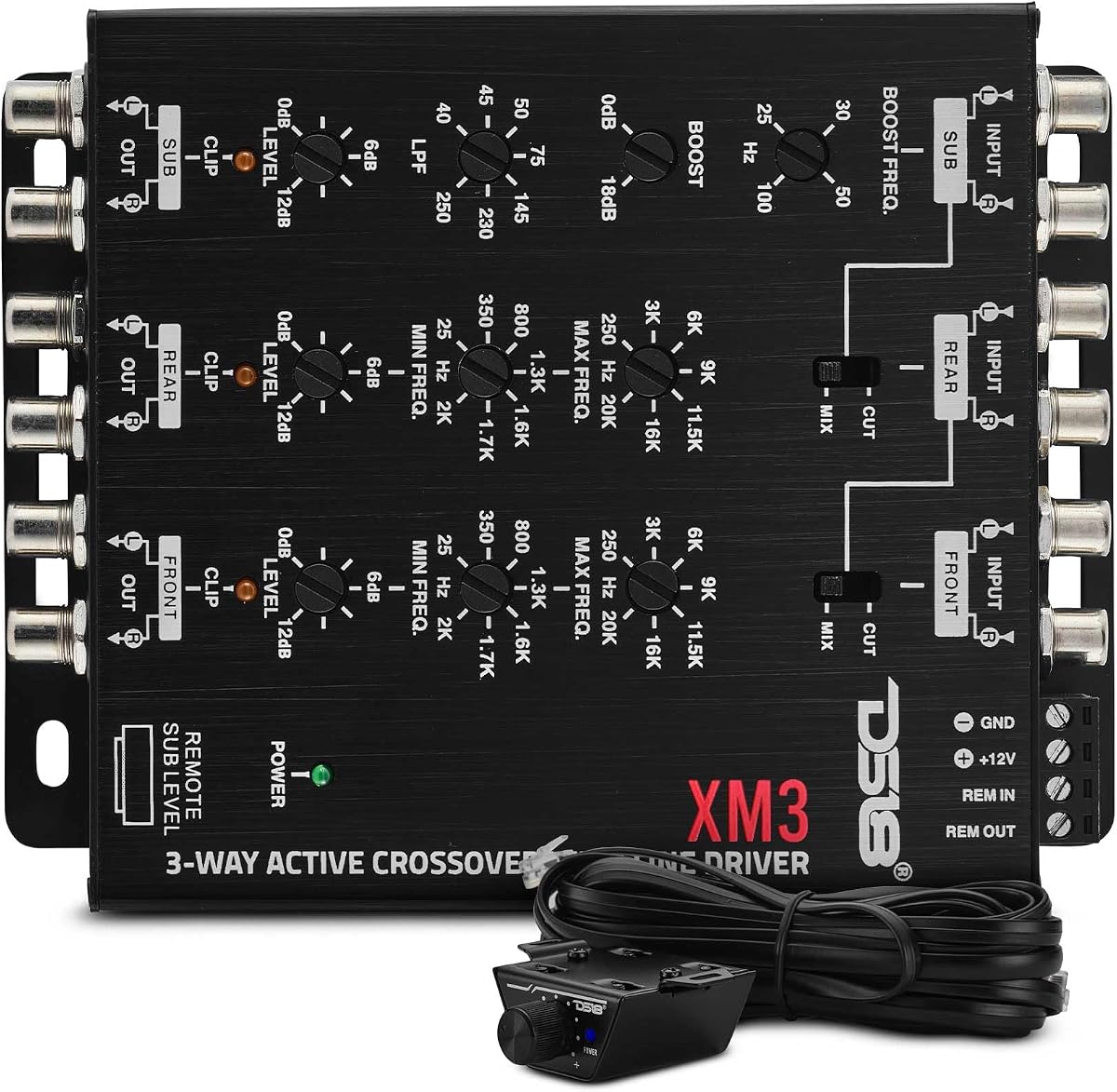
The DS18 XM3 combines a 3-way active crossover with a line driver for comprehensive frequency management. It holds a 4.1 rating and is known for its ability to handle front rear and subwoofer signals simultaneously. This unit helps tune distinct bands for balanced audio reproduction.
We may earn a commission when you buy through this link, at no additional cost to you.
It provides 11V output to ensure strong signal levels for downstream amplifiers. The included remote allows instant adjustment of subwoofer levels and bass boost to suit live environments. Premium connectors ensure secure connections that resist signal degradation over time.
While feature-rich, the crossover settings are less flexible than dedicated units. Users may need additional processing for complex sound staging requirements. However, for simpler setups needing all-in-one frequency separation, it offers practical convenience.
Best for users needing basic crossover functionality alongside signal boosting. It simplifies the signal chain significantly. If you want distinct control over bands without separate units, this is a solid option.
Active crossover splits audio into high mid and sub bands for precise tuning.
Remote control allows real-time bass adjustments for different music genres or moods.
We may earn a commission when you buy through this link, at no additional cost to you.
The Timpano TPT-EQ7 offers a graphic equalizer combined with a high-voltage line driver. It holds a 4.6 rating and is popular for its ability to tailor audio frequencies with simple adjustments. This unit lets you boost or cut specific bands to correct acoustic issues.
We may earn a commission when you buy through this link, at no additional cost to you.
It outputs 10V on RCA connectors to ensure clean signal transmission over long wire runs. The built-in high-level input simplifies connection to factory speaker wires without needing an external converter. Adjustments are made via sliders which are easy to access and operate.
The profile is slim to fit in tight spaces behind a dash or in a trunk. While it lacks advanced parametric features, it covers common frequency issues effectively. It is an excellent choice for those who prefer visual feedback during tuning.
Ideal for users wanting visual control over frequency response. It balances performance and cost well. If you need to shape tone alongside signal boosting this unit provides a clear path to better sound.
Graphic sliders let you see and adjust EQ settings quickly for immediate improvements.
Direct speaker wire connection removes the need for extra adapters during installation.
We may earn a commission when you buy through this link, at no additional cost to you.
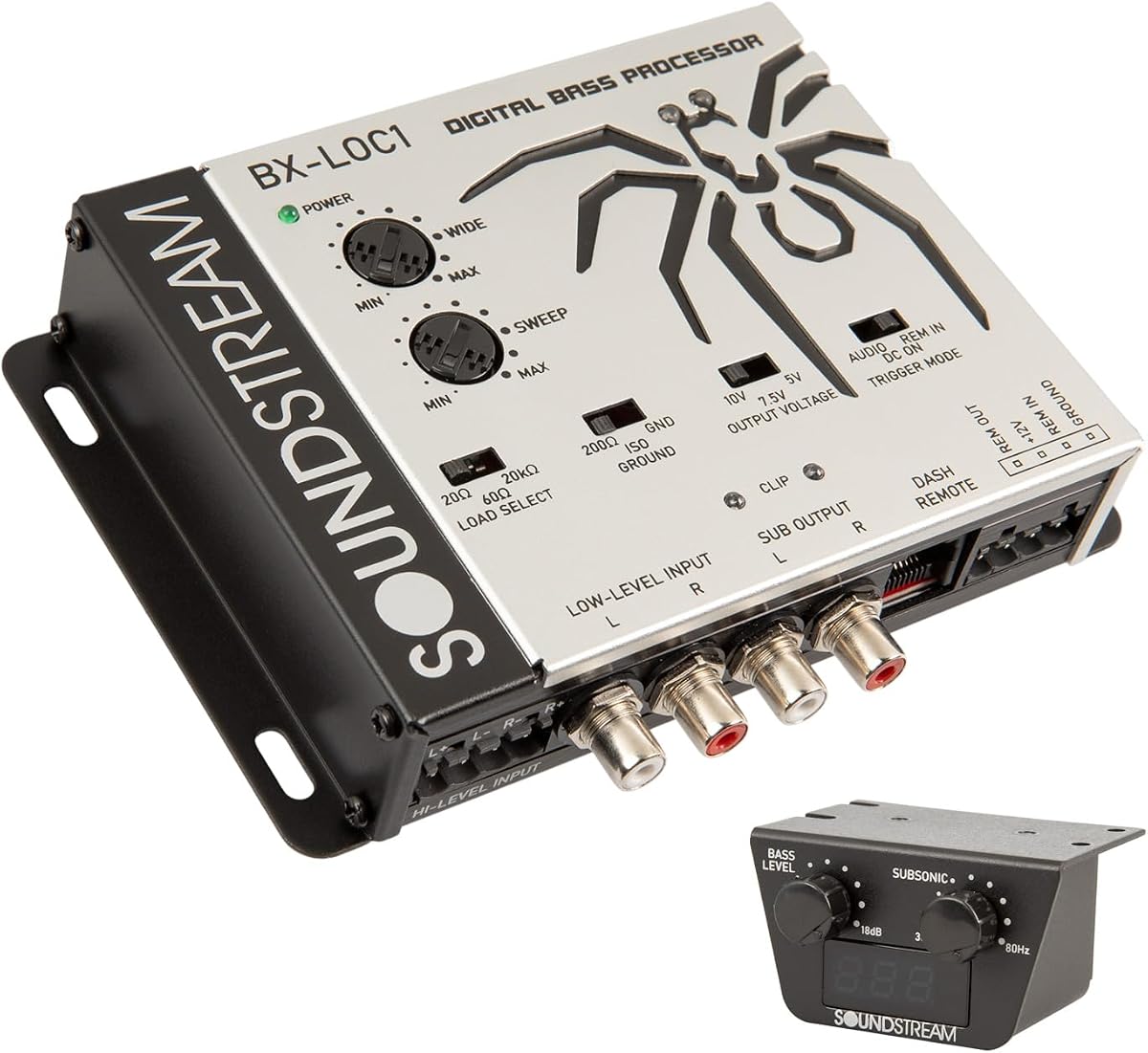
The Soundstream BX-LOC1 focuses on restoring low-end impact through digital processing. It holds a 4.2 rating and is designed for those who need to bring bass back to compressed factory audio. This unit combines line conversion with reconstruction technology.
We may earn a commission when you buy through this link, at no additional cost to you.
It delivers up to 9V output to ensure amplifiers have enough headroom for clear sound. Shielding and ground isolation reduce hiss and hum for a cleaner listening experience. The LED indicator helps users avoid clipping during high-volume playback.
Installation is straightforward with clear labeling on all terminals. While it is effective for basic needs it may lack the depth of advanced processors. Still it serves well for standard setups needing reliable signal improvement.
Best for users needing basic restoration without complex features. It integrates easily into existing systems. If you want to improve bass response without major changes, this is a practical tool.
Digital processing restores lost low frequencies to compressed audio sources.
LED indicator warns when the signal is too strong to protect your speakers.
We may earn a commission when you buy through this link, at no additional cost to you.
The AudioControl LC2i corrects bass roll-off common in factory radios as volume increases. It holds a 4.6 rating and is ideal for retaining factory features while adding powerful aftermarket subs. This unit ensures bass stays consistent across the full volume range.
We may earn a commission when you buy through this link, at no additional cost to you.
It converts speaker signals to high-quality pre-amp outputs for amplifiers and processors. The AccuBASS technology restores low frequencies that would otherwise disappear at higher volumes. Integrated brackets make mounting simple in tight spaces under dash panels.
While it offers robust conversion, additional remote control requires a separate purchase. It works best for standard 2-channel setups rather than complex multi-zone systems. For simple upgrades, it remains one of the most reliable options available.
Perfect for users wanting to retain factory steering wheel controls and sound. It delivers consistent low-end performance. If you want to keep your stock radio but get better bass this is the right choice.
AccuBASS ensures bass levels remain stable even at high volume settings.
Keeps factory volume and steering wheel controls functioning during the upgrade.
We may earn a commission when you buy through this link, at no additional cost to you.
The Wavtech linkDQ combines a line converter with a parametric equalizer for precise tuning. It holds a 4.7 rating and is valued for its ability to correct low-frequency deficiencies accurately. This unit offers advanced tools for audiophiles wanting detailed sound shaping.
We may earn a commission when you buy through this link, at no additional cost to you.
It features selectable bandwidth controls to target specific frequencies for correction. The RJ45 port allows easy remote upgrades for added convenience later. Auto turn-on via audio detect ensures the unit activates only when playing music.
Setup requires more attention than basic converters but provides superior flexibility. The load detect feature ensures compatibility with modern factory amplifiers seamlessly. For those needing targeted EQ corrections this unit is highly versatile.
Ideal for custom setups requiring specific frequency corrections. It offers more control than graphic equalizers. If you need precise adjustments for acoustic anomalies this is a strong option.
Parametric EQ allows narrow or wide corrections to fix exact acoustic issues.
Auto turn-on ensures reliable operation without extra wiring for activation.
We may earn a commission when you buy through this link, at no additional cost to you.
The AudioControl Epicenter Micro PRO delivers premium bass restoration in a small footprint. It holds a 4.8 rating and is designed for tight spaces where larger units cannot fit. This unit combines full feature functionality with compact construction.
We may earn a commission when you buy through this link, at no additional cost to you.
It achieves over 105dB signal-to-noise ratio to ensure noise-free audio performance. The included ACR-4 remote allows control from the driver seat. Its PCB is conformally coated to resist moisture and temperature swings common in cars.
It offers full restoration features in a chassis that fits almost anywhere. The programmable subsonic filter protects subs while maximizing power. For detailed installations this unit provides high performance without bulk.
Ideal for builds with limited installation space. It offers high performance without bulk. If you need bass restoration where room is tight this is the best choice.
Mini form factor allows installation in tight spaces without sacrificing features.
Included dual knob remote allows immediate control without extra purchases.
We may earn a commission when you buy through this link, at no additional cost to you.
The AudioControl Matrix Plus (older version) focuses on top-mounted controls for easy gain adjustment. It holds a 3.6 rating and provides 6-channel support for multi-zone audio systems. This unit prioritizes accessibility and visual feedback for installers.
We may earn a commission when you buy through this link, at no additional cost to you.
It offers up to 24dB of gain to match amplifier requirements precisely. Top-mounted LEDs show output voltage levels so you can optimize settings. The layout allows quick adjustments without reaching into deep trunk spaces.
While newer models exist, this version remains functional for standard setups. It is less refined in terms of advanced features compared to newer releases. For basic gain matching and multi-channel needs it serves well.
Best for installers who need quick access to adjustments. It simplifies tuning significantly. If you need a robust driver with visible indicators this unit delivers on those front.
Top-mounted controls allow immediate adjustments without disassembly or deep access.
Output voltage lights ensure you stay within safe limits during adjustments.
We may earn a commission when you buy through this link, at no additional cost to you.
Selecting the right line driver depends on your factory system, desired features, and installation constraints. Here are key factors to consider before purchasing.
Voltage output determines how much gain the line driver provides to your amplifiers. Look for units offering 10V to 13V for high-end systems that need full headroom. Higher voltage ensures clean signals over long wiring runs without distortion.
Choose higher voltage for performance systems to maximize amplifier potential and maintain signal integrity.
Determine if you need 2-channel or 6-channel outputs for your speaker configuration. Multi-channel drivers allow separate control for front rear and subwoofer signals. This helps avoid signal degradation from daisy-chaining RCA cables.
Select a driver with enough channels to match your amplifier inputs for optimal wiring.
Bass restoration processors add low-frequency details lost in compressed factory recordings. Look for units with selectable filters or restoration controls if you prioritize impactful low-end. This feature can replace a separate equalizer in simpler setups.
Prioritize bass restoration if your factory audio sounds thin or lacks depth at low volumes.
Modern cars often use factory amplifiers that require specific load detection. Ensure the unit supports OEM load switches to avoid silent channels or system errors. This maintains factory safety features like automatic volume adjustment.
Verify OEM compatibility switches to ensure your factory system remains functional after installation.
Ground loops cause buzzing or humming in audio systems due to electrical interference. Units with selectable ground isolation switches help eliminate these noise sources. Look for options that allow you to toggle between common and isolated grounding modes.
Always look for a ground isolation switch if you experience electrical noise in your setup.
Dash-mounted remotes allow easy adjustment of volume or bass without reaching to the trunk. Some units include remotes while others sell them separately. Check if a remote is needed for your daily usage patterns.
Prioritize models with included remotes if you frequently adjust volume or bass while driving.
Installation space is often limited in modern vehicles. Slim or mini chassis designs fit easily under seats or in tight compartments. Larger units may require extensive fabrication or relocation of other components.
Measure your available space before buying to ensure a hassle-free installation process.
Look for units with clear labeling and plug-and-play wiring harnesses. Tools should be minimal and connectors should be secure. Good documentation can save hours during setup and troubleshooting.
Choose units with clear labeling and simple wiring to reduce setup complexity.
Install the unit in a dry, ventilated area to prevent overheating. Use zip ties to secure wires away from moving parts like seat rails or pedals. Ensure all connections are tight to avoid signal loss or intermittent noise during driving.
Turn up the factory volume to 75 to set the input signal correctly. Adjust gain controls until the output LEDs indicate maximum clean levels without clipping. This ensures the amplifier receives optimal signal levels for best performance.
Periodically check connections for corrosion or loose terminals especially in humid climates. Clean the casing gently with a soft cloth if dust accumulates around ports. Keep the unit free from moisture and direct sunlight to extend its lifespan.
A line driver boosts weak speaker-level signals from factory radios to high-voltage line-level outputs. This ensures aftermarket amplifiers receive strong clean signals to produce clear full-range audio. It acts as a bridge between stock electronics and upgraded components.
No you usually do not need a line driver if you install a new aftermarket stereo. Most aftermarket head units already provide strong RCA preamp outputs that amplifyifiers accept directly. Line drivers are mainly for factory radios with weak speaker outputs.
No line drivers generally do not damage speakers when installed correctly. They only amplify voltage levels without adding power. However setting gain too high can cause clipping which leads to distortion and potential damage.
Start with the factory radio volume at 75 and adjust the gain until output indicators show maximum. Avoid turning gain to the top where clipping LEDs light up. Proper settings ensure clean full-range audio without distortion.
Not all drivers work with every factory system. Check compatibility for load detection and wiring styles. Some vehicles require adapters or specific configurations to integrate seamlessly with the stock electronics.
Converters change speaker-level signals to RCA outputs. Line drivers go further by boosting that voltage to higher levels. A unit with both features simplifies your system by reducing extra components.
Bass restoration analyzes upper harmonics to recreate low frequencies removed from factory recordings. It adds these synthetically back into the signal path. This creates a fuller richer sound without needing a full equalizer.
Yes line drivers work well with digital signal processors. They ensure the DSP receives strong clean input for accurate tuning. Place the driver before the DSP to maintain signal integrity throughout the chain.
We highlighted top picks like the EPICENTER PRO for bass restoration and LC1i for budget needs. These units cover a range of features suitable for factory upgrades and custom builds. Choosing the right model depends on your specific performance requirements.
Prioritize high voltage output and factory compatibility for the best results. Ensure the unit matches your system's channel count and tuning needs. Consider physical size and remote controls for practical daily usability.
Prices and availability may change across retailers so check current listings before buying. Always read the latest reviews to confirm recent compatibility with your vehicle model. With the right line driver your car audio will sound richer and more dynamic.