
Zigbee Human Presence Sensor
3.2Editor score
24GHz radar sensing
Long battery life
Wide Zigbee compatibility
Stationary person detection
Compare the top 10 mmwave human presence sensors for smart homes. We review radar accuracy, connectivity, battery life, and automation features to help you
Modern smart homes need reliable occupancy detection that goes beyond simple motion triggers. mmWave human presence sensors use radar to detect subtle movements like breathing, ensuring lights stay on while you read or sit still.
We evaluated ten leading models based on detection range, connectivity options, power source, and ecosystem compatibility. Our analysis focuses on real-world performance, ease of setup, and integration with popular platforms like Home Assistant and Alexa.
Each pick highlights key strengths and trade-offs to match different automation needs. Remember that prices and availability fluctuate, so check current listings before purchasing to ensure you get the best deal for your specific setup.
3.2Editor score

5.0Editor score

4.3Editor score
This side-by-side comparison breaks down the key specifications and capabilities of each model. Use this table to quickly identify which sensor matches your hub requirements and room size.




The Fermion C4002 stands out as the top pick for smart home enthusiasts who prioritize precise automation. With a perfect 5.0 rating, this module offers native ESPHome integration and detects static human presence up to 10 meters away, solving the common issue of lights turning off while you sit still.
We may earn a commission when you buy through this link, at no additional cost to you.
Its standout feature is the verified ESPHome YAML configuration files, which eliminate the need for complex coding or reverse-engineering. The sensor tracks occupancy, distance, energy, and illuminance directly within Home Assistant. The built-in adaptive background noise learning algorithm filters out interference from fans or curtains, ensuring only real human presence triggers your automations.
While the module requires an ESP32 controller via UART, the setup process is streamlined with comprehensive documentation and setup guides. The integrated light sensor allows for condition-based automations like turning on lights only when ambient light is below 15 lux. This makes it an ideal choice for users comfortable with a DIY approach who want maximum control.
This sensor is best suited for tinkerers and Home Assistant users who want reliable, local-first detection without cloud dependencies. Its ability to distinguish between motion, static presence, and micro-motion ensures your home responds intuitively to your needs. For those building a custom smart home system, this module delivers unmatched performance and flexibility.
No complex coding is required as verified YAML files enable instant access to occupancy and illuminance entities.
The adaptive background noise learning algorithm automatically filters non-human interference like swaying curtains.
We may earn a commission when you buy through this link, at no additional cost to you.
This affordable Zigbee sensor introduces mmWave technology to budget-conscious users who want reliable presence detection. With a 24GHz radar, it detects human presence even when sitting still, ensuring lights stay on during reading or sleeping. It works seamlessly with major Zigbee hubs like SmartThings and Echo devices.
We may earn a commission when you buy through this link, at no additional cost to you.
The primary strength lies in its cost-effectiveness and simplicity. Users can create true presence automations without needing to wave hands to keep lights on. It offers a detection range of up to 20 feet, suitable for most bedrooms and living rooms. The device is powered by two AAA batteries that last for years, reducing maintenance needs.
While it lacks advanced features like air quality monitoring or multi-sensor integration, it delivers core functionality effectively. Its compatibility with Hubitat and Home Assistant makes it a versatile option for diverse ecosystems. The main trade-off is a lower user rating compared to premium alternatives, suggesting potential variability in long-term stability.
Ideal for beginners or those expanding their smart home network affordably, this sensor provides a straightforward solution to the limitations of PIR motion detectors. It ensures your automation respects your actual presence rather than just movement. For basic lighting control and room occupancy tracking, it remains a solid value proposition.
Works with Echo devices, SmartThings, and Home Assistant via standard Zigbee protocols.
Solves the lights turning off issue by detecting stationary persons reliably.
We may earn a commission when you buy through this link, at no additional cost to you.
The LWR02 Presence Sensor delivers premium performance with its innovative 5-in-1 design, tracking presence, motion, temperature, humidity, and light in one device. Powered by Matter over Thread, it ensures compatibility across Apple Home, Alexa, and Google Home ecosystems. The dual sensor design combines mmWave radar and PIR for unmatched accuracy.
We may earn a commission when you buy through this link, at no additional cost to you.
Its standout quality is the ability to reduce false triggers effectively. The mmWave radar senses static presence like breathing, while the PIR catches larger movements. This ensures the device reports occupied even when someone sits still at a desk. The IPX3 splash-proof rating allows installation in bathrooms where standard sensors often fail.
Users benefit from two years of battery life and flexible mounting options. While it requires a Thread border router, the local-first architecture ensures privacy by keeping data within your network. The 120-degree field of view covers large rooms easily. The trade-off is the higher cost compared to single-purpose sensors.
This sensor is perfect for users seeking a robust, future-proof smart home solution. It offers comprehensive environmental context and reliable presence detection across multiple platforms. For those willing to invest in quality and interoperability, the LWR02 sets a high standard for modern occupancy sensing.
Combines radar for static presence and PIR for motion to minimize false triggers.
Works with major ecosystems via existing Thread border routers without new hubs.
We may earn a commission when you buy through this link, at no additional cost to you.
The SONOFF SNZB-06P24 offers advanced customization through its 7-zone detection feature. This allows users to ignore specific areas like windows or hallways while focusing on key zones such as desks. The 24GHz radar ensures reliable detection of micro-movements like breathing. It works with Home Assistant and Alexa.
We may earn a commission when you buy through this link, at no additional cost to you.
A unique feature is the self-learning calibration which helps reduce false triggers caused by airflow or appliances. The ambient light sensor enables precise automation based on real-time brightness. The device is powered via USB-C, ensuring continuous operation without battery replacements. It also records historical data for better automation logic.
However, the reliance on USB-C power may limit placement options compared to battery units. Users must have a Zigbee hub nearby. Despite this, its zone positioning capability makes it excellent for large rooms with mixed activity levels. The 3.8 rating reflects a balance of advanced features and occasional connectivity quirks.
Ideal for users needing granular control over detection areas, this sensor delivers reliable performance for lighting and security scenes. Its ability to adapt to the environment makes it a strong contender for offices or living spaces. For those prioritizing customization, the SNZB-06P24 offers distinct advantages over standard models.
Configure up to 7 zones to focus on key areas and ignore others like windows.
Adaptive detection helps reduce false triggers from interference like airflow.
We may earn a commission when you buy through this link, at no additional cost to you.
The Akamatis Litos v3 is designed specifically for Home Assistant users seeking Wi-Fi connectivity without a hub. It features the HLK-LD2401 24GHz radar, capable of detecting both motion and stationary objects up to 20 feet. The integrated light sensor matches human eye sensitivity for accurate readings.
We may earn a commission when you buy through this link, at no additional cost to you.
Its refined design includes a light-permeable front panel that allows ambient light to pass through naturally. This ensures accurate light measurements for automations like turning on lights when the room is dark. Setup is straightforward with pre-flashed ESPHome firmware. No manual configuration is needed.
While it does not support Zigbee or Thread, the direct Wi-Fi link offers a simple installation process. Users need an existing Home Assistant installation. The 3D-printed filament adds a modern aesthetic to any room. The trade-off is its exclusivity to one ecosystem, limiting flexibility for multi-platform homes.
Perfect for dedicated Home Assistant environments, this sensor provides reliable local control and precise data. It excels in scenarios where lighting conditions matter as much as occupancy. For users comfortable with local smart home setups, the Litos v3 delivers a streamlined and effective experience.
Integrated sensor matches human eye sensitivity for accurate ambient light readings.
No manual flashing required; connects directly via Home Assistant setup.
We may earn a commission when you buy through this link, at no additional cost to you.
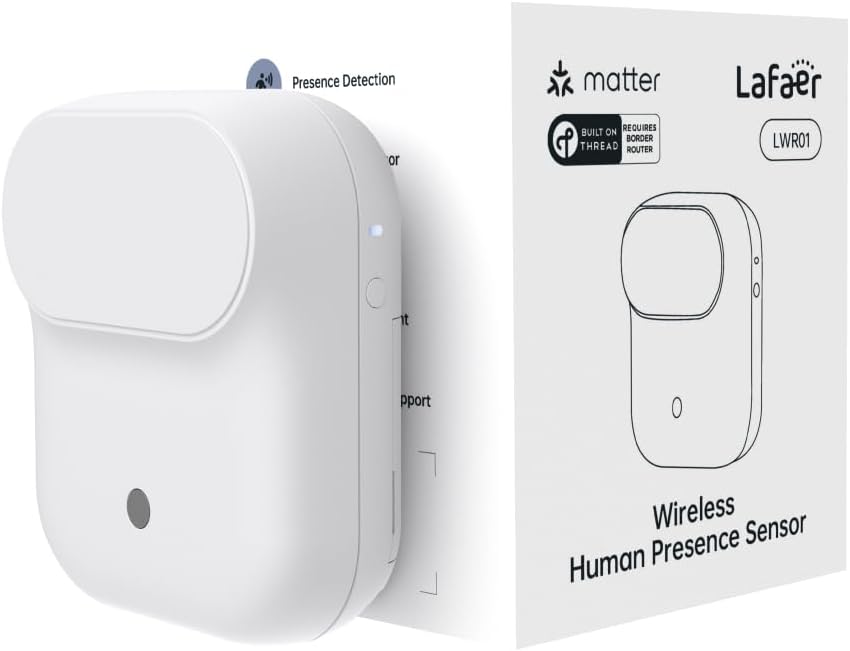
The LWR01 Wireless brings Matter over Thread technology to battery-powered presence sensing. It detects subtle movements and stillness up to 3.5 meters, ensuring you remain detected while binge-watching TV. The IPX3 rating makes it suitable for bathrooms and moisture-prone areas.
We may earn a commission when you buy through this link, at no additional cost to you.
Its design supports both battery and wired power options for continuous high-performance use. Built-in ambient light sensing prevents lights from turning on unnecessarily during the day. It operates with Apple Home, Google Home, and Alexa via existing Thread routers. This avoids the need for a dedicated hub.
The static detection range is slightly shorter than premium models at 3.5 meters. Users must have a Thread border router in their network. Despite this, its future-proof protocol support is a significant advantage. The lightweight design allows for versatile mounting without wiring hassles.
Ideal for users invested in the Matter ecosystem, this sensor offers privacy and efficiency through local processing. It balances convenience with reliable detection capabilities. For those looking to upgrade to Matter without complex setups, the LWR01 provides a smooth transition path.
Splash-proof housing allows use in bathrooms and other moisture-prone environments.
Built-in sensor cuts energy bills by detecting natural light levels.
We may earn a commission when you buy through this link, at no additional cost to you.
The THIRDREALITY R2 distinguishes itself with five adjustable sensitivity levels. Users can switch between high sensitivity for detecting small gestures or low sensitivity to ignore minor movements. It utilizes 24GHz radar to detect through non-metallic materials like wood. This ensures consistent performance regardless of temperature.
We may earn a commission when you buy through this link, at no additional cost to you.
AI-enhanced environment learning adapts to your space to reduce false triggers from airflow or curtains. The device is powered by three AA batteries, allowing placement in any cabinet or hallway without outlets. It integrates seamlessly with Home Assistant and Echo devices. Privacy is prioritized over camera-based solutions.
Strong repetitive motions like fans may still trigger detection despite AI filtering. The Zigbee hub requirement is a standard limitation for this protocol. The adjustable sensitivity makes it versatile for diverse rooms like hallways versus bedrooms. It offers a balanced solution for varied home environments.
This sensor is suitable for users who need flexibility in detection settings. Its AI learning helps stabilize performance in dynamic spaces. For those seeking a privacy-focused and adaptable solution, the R2 provides reliable presence tracking across multiple ecosystems.
Users can switch between 5 sensitivity levels according to actual needs.
Eliminates need for power outlets allowing place it anywhere you want.
We may earn a commission when you buy through this link, at no additional cost to you.
The Akamatis v2.2 builds on its predecessor with an external Wi-Fi antenna for improved range. It uses the HLK-LD2410B radar module for precise motion detection. Setup is straightforward with ready-to-use ESPHome firmware. Users only need to connect to the hotspot and enter credentials.
We may earn a commission when you buy through this link, at no additional cost to you.
The external antenna helps overcome connectivity issues in larger homes. FCC certification ensures reliable operation and compliance. It operates on USB-C power, requiring a constant connection. The compact design fits seamlessly into any room. This model focuses on stability and ease of integration.
While it is restricted to Home Assistant, it offers excellent local control capabilities. The pre-flashed firmware simplifies the setup process significantly. For those prioritizing range and ease of use over multi-ecosystem support, this is a strong choice. It delivers consistent performance for lighting automation.
Ideal for Home Assistant users seeking improved connectivity, the v2.2 provides stable detection and local processing. Its design ensures it works efficiently even in challenging Wi-Fi environments. For reliable indoor presence tracking, this sensor offers solid value and straightforward functionality.
External antenna improves Wi-Fi range and stability compared to standard units.
FCC-certified main components ensure reliable operation and compliance.
We may earn a commission when you buy through this link, at no additional cost to you.
The THIRDREALITY R3 utilizes advanced 60GHz mmWave radar for precise human presence detection. Its built-in RGB light acts as a visual indicator for occupancy or system status. It also functions as a Zigbee repeater to strengthen your mesh network. The sensor includes air quality monitoring for added insights.
We may earn a commission when you buy through this link, at no additional cost to you.
Simplified parameter adjustments make setup easy. You only need to set the detection distance. The ambient light sensing combined with presence data creates natural automations. It requires USB-C power but offers stable operation. Integration with Home Assistant and SmartThings is seamless via Zigbee 3.0.
While it requires constant power and a hub, its repeater function adds value to larger homes. The air quality alert via red flashing light provides safety benefits. It is less versatile than battery models but offers continuous monitoring. The visual indicator adds a unique layer of feedback for users.
This sensor suits users who need a Zigbee repeater and visual feedback. Its radar technology ensures comfort even in quiet spaces. For those prioritizing network stability and visual cues, the R3 provides a functional and reliable presence solution.
Functions as a Zigbee repeater to help strengthen your mesh network.
RGB light shows occupancy or system status clearly at a glance.
We may earn a commission when you buy through this link, at no additional cost to you.
This Zigbee sensor uses 24G radar to detect not only moving but also still humans. It offers faster response and more accurate distance detection compared to older radars. Zigbee2mqtt integration provides extensive control over functions like presence sensitivity. It works via a Tuya ZigBee gateway.
We may earn a commission when you buy through this link, at no additional cost to you.
Intelligent scene linking automates lighting based on presence and time of day. The sensor is powered by USB 5V1A and can be mounted on walls or ceilings. It supports Tuya ZigBee hubs, which serve as a central bridge for smart devices. Signal stability is excellent for home control.
Users must note the need for constant power and a compatible Zigbee hub. While it lacks advanced customization zones, it performs its core function well. The 4.0 rating suggests reliable performance for simple automation needs. It is a solid choice for entry-level presence detection.
Ideal for users with Tuya ecosystems seeking basic presence sensing, this model offers accurate detection and ease of setup. Its support for Zigbee2mqtt allows for advanced users to customize behavior. For straightforward automation needs, it provides a dependable and cost-effective solution.
Recommend using Zigbee2mqtt for better collaboration and full function access.
Automatically lights up when going home or waking up at night.
We may earn a commission when you buy through this link, at no additional cost to you.
Selecting the right presence sensor depends on your smart home ecosystem, room size, and power requirements. This guide breaks down the key factors to ensure you choose a model that fits your automation needs.
First, check which hub or protocol your home uses. Many mmWave sensors require Zigbee, Thread, or Wi-Fi. Some like Akamatis work exclusively with Home Assistant while others support multiple platforms like Alexa or Google Home. Ensure the device integrates seamlessly with your existing infrastructure.
Choose a sensor that matches your hub to avoid compatibility issues. If you use Home Assistant, look for native support. For broader compatibility, pick models supporting Matter or Zigbee.
MmWave radar is superior to PIR because it detects micro-movements like breathing. This prevents lights from turning off when you are sitting still. Look for models with 24GHz or 60GHz radar for better accuracy. Some devices combine radar with PIR to reduce false triggers from pets.
Opt for mmWave technology to ensure true presence detection. Avoid PIR-only sensors if you want automation to work while you are stationary.
Sensors come in battery-powered or wired options. Battery units offer flexible placement but require periodic replacements. Wired models powered by USB-C provide continuous operation. Consider your room layout and accessibility to power outlets when deciding.
Select battery for flexibility or wired for constant reliability. Evaluate placement options against your home's wiring capabilities.
The detection range determines how far the sensor can detect movement. Most models offer 10 to 20 feet for static presence. Larger rooms require sensors with extended range or multiple units. Measure your space before purchasing to ensure full coverage.
Pick a sensor with adequate range for your room size. Larger rooms may need multiple units or high-range models.
Advanced models offer features like ambient light sensing, air quality monitoring, or noise filtering. Light sensors help automate lights based on natural illumination. Noise filtering reduces false alarms from fans or curtains. These features add value for complex automations.
Look for integrated sensors like light or air quality for deeper automation control. Check for noise filtering to improve stability.
Some sensors require technical expertise to flash firmware or configure zones. Others offer plug-and-play setups. DIY enthusiasts may prefer customizable models while others want simplicity. Consider your technical comfort level when choosing.
Choose a setup complexity that matches your skills. Simple plug-and-play models suit beginners while flashable ones suit experts.
Radar sensors offer better privacy than cameras since they do not capture images. Local-first architectures ensure data stays in your network. Check if the device supports cloud-free operation to protect your occupancy data.
Prioritize local processing and privacy features for secure smart home automation. Avoid cloud-dependent sensors if privacy is a concern.
IP ratings indicate resistance to dust and water. IPX3 rated models can be used in bathrooms. Choose a durable housing if you plan to install in high-humidity areas. Standard indoor models may not withstand moisture.
Select a sensor with suitable IP ratings for your environment. Bathrooms require splash-proof housing for long-term use.
Mount the sensor at a height of 6 to 8 feet to maximize coverage. Ensure it has a clear line of sight to the area you want to detect. Avoid placing it directly behind glass or metal which can block signals. Adjust sensitivity settings to match room activity.
Calibrate the sensor after installation to account for environmental interference. Allow the device to learn background noise patterns like airflow. Use zoning features if available to exclude specific areas like windows. This reduces false triggers effectively.
Regularly check for firmware updates to maintain optimal performance. Clean the sensor surface gently with a dry cloth to remove dust. Monitor battery levels if using wireless models. If using wired models, check connections periodically to ensure stability.
mmWave detects subtle movements like breathing whereas PIR detects heat changes from motion. This means mmWave keeps lights on while you are reading or sitting still. It offers higher precision for stationary presence compared to traditional motion sensors.
Yes mmWave sensors operate independently of light conditions. They do not rely on infrared heat signatures that can be affected by ambient temperature. This ensures reliable detection even in completely dark environments like bedrooms.
Most mmWave sensors are designed for indoor use due to interference from wind or rain. Some models have IPX3 ratings for bathrooms but are not fully waterproof for outdoor exposure. Check specific IP ratings before outdoor installation.
Zigbee and Thread sensors need a hub to communicate with your smart home network. Wi-Fi sensors connect directly to your router. Hubs act as bridges to translate signals into commands your smart home platform understands.
Battery life varies by usage but most models offer up to two years on standard AAA or AA batteries. High-frequency use or connected features may reduce this duration. Wired models eliminate battery concerns for continuous operation.
These sensors indicate occupancy presence rather than tracking exact movements like security cameras. They provide binary states like occupied or vacant. This protects privacy while enabling effective automation logic.
The Fermion C4002 leads our list for Home Assistant users who demand high customization and accuracy. For broader compatibility, the 5-in-1 LWR02 offers Matter support and comprehensive environmental tracking. Budget buyers can rely on the simple yet effective Zigbee options available.
Prioritize ecosystem integration and power source when making your decision. A sensor that fits your hub will save you setup time and frustration. Ensure the detection range matches your room size to avoid blind spots.
Remember that technology evolves quickly so always check current prices and compatibility before buying. These sensors represent a significant upgrade over traditional motion detectors by understanding true human presence.