
Handheld Fish Finder Portable Fishing Kayak
4.2Editor score
Portable handheld design
4 AAA battery power
200 kHz sonar frequency
Finding the right tool to locate fish underwater can transform your angling experience. A good cheap fishfinder provides essential data like depth and structure without breaking the bank.
We evaluated ten top-rated models based on sonar clarity, ease of use, portability, and user feedback. This list covers everything from compact handhelds to mounted units with GPS.
Each selection highlights key strengths and ideal use cases for different anglers. Note that availability and pricing fluctuate regularly, so check current listings before purchasing.
4.2Editor score
4.5Editor score

4.7Editor score
As an Amazon Associate we earn from qualifying purchases.
This side-by-side comparison highlights the core specifications and capabilities of each selected model to help you choose the best fit for your fishing style.


This unit stands out as a reliable choice for anglers seeking quality sonar performance without a high price tag. It earns a strong rating from users who appreciate its straightforward operation.
We may earn a commission when you buy through this link, at no additional cost to you.
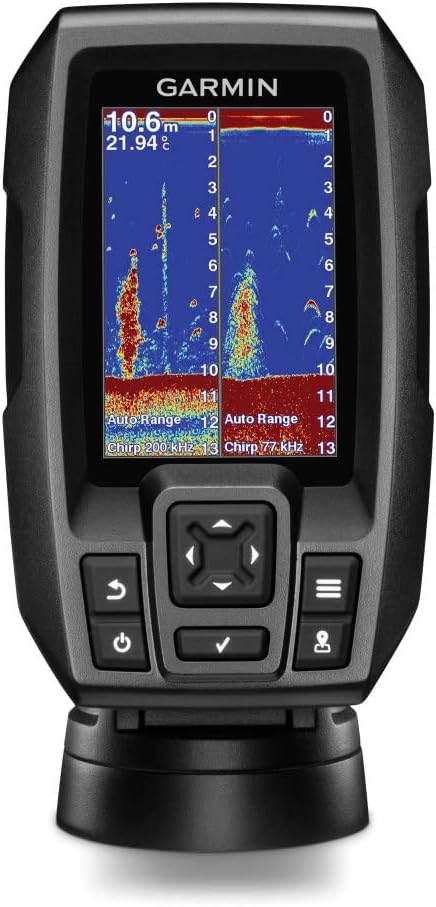
The Clear Vu scanning sonar provides detailed images of underwater structures and fish, making identification significantly easier. The Chirp technology ensures crisper arches for better target separation in various water conditions.
While it lacks advanced mapping capabilities found in higher-end models, its waypoint map is sufficient for marking key spots like brush piles or docks. The compact size may limit visibility for some users in bright light.
Ideal for small boats or kayaks, this device balances functionality with simplicity. It is a highly recommended option for those prioritizing reliable sonar clarity over complex navigation features.
High frequency sonar delivers near photographic images of objects and fish below the boat for precise navigation.
Dedicated buttons and an intuitive interface make setup and use effortless for anglers of all experience levels.
We may earn a commission when you buy through this link, at no additional cost to you.
This model is recognized for its screen clarity, ensuring anglers can see data clearly even in harsh sun. Users praise the ease of use provided by automatic tuning features.
We may earn a commission when you buy through this link, at no additional cost to you.
The included Bullet Skimmer transducer offers a broad 44-degree beam which is excellent for covering wide areas under small boats. The portrait orientation saves space on the console without sacrificing screen real estate.
While it lacks sophisticated mapping or network connectivity, its core sonar performance is robust. The auto-tuning feature reduces the need for manual adjustments, letting you focus on fishing rather than dialing in settings.
Best suited for casual anglers or those new to fish finders, this unit delivers essential data efficiently. It is a solid choice for anyone prioritizing screen visibility and quick setup.
The IPS portrait screen remains clear in bright sunlight and polarized sunglasses for reliable viewing at any angle.
Auto-Tuning Sonar automatically optimizes settings so you can focus on finding fish without manual configuration.
We may earn a commission when you buy through this link, at no additional cost to you.
This device offers a very accessible entry point for anglers who want to know what is below the surface. It is highly rated for its portability and low cost compared to boat-mounted units.
We may earn a commission when you buy through this link, at no additional cost to you.
Powered by standard AAA batteries, it is ready to use without complex wiring. The sonar provides depth readings and detects fish size and bottom structure effectively in most freshwater and saltwater environments.
The lack of GPS means navigation relies on your own skills, but for shore or kayak fishing, this is often sufficient. The display is functional but small enough that reading fine details may require close inspection.
It is perfect for travelers or those with limited boat space. If you need a quick tool to check depth and fish presence, this unit delivers good value for money.
Compact size and neck strap allow you to carry the finder easily around the neck or store it in a tackle box.
Suitable for kayak fishing, dock fishing, and ice fishing across both fresh and salt water environments.
We may earn a commission when you buy through this link, at no additional cost to you.
This model brings premium features to a compact package, earning a top rating for its visual quality. The color display makes distinguishing fish from structure much more intuitive than monochrome screens.
We may earn a commission when you buy through this link, at no additional cost to you.
Built-in Quickdraw contours provide useful mapping data without needing additional subscriptions. The Vivid scanning sonar offers detailed views that help identify specific types of bottom cover and fish arches accurately.
While it costs more than basic options, the added clarity and navigation tools justify the expense for serious anglers. The tilt/swivel mount ensures you can view the screen from multiple angles comfortably.
Best for those who want a balance of performance and value without the bulk of large consoles. It stands out as a top choice for kayakers and small boat owners seeking color sonar.
New vivid scanning sonar color palettes make it easy to distinguish fish and structure clearly on the screen.
Built-in Quickdraw Contours mapping helps you create maps of your favorite fishing spots for future trips.
We may earn a commission when you buy through this link, at no additional cost to you.
This unit is designed for straightforward functionality, offering dual beam sonar to switch between detail and coverage. It maintains a solid reputation among anglers for reliability and ease of use.
We may earn a commission when you buy through this link, at no additional cost to you.
The tilt and swivel mount allow you to adjust the viewing angle quickly to suit your position. You can choose a narrow beam for detail or a wide beam for general coverage depending on current conditions.
While it lacks modern GPS mapping, the core sonar function is robust for locating fish and structure. The simple interface reduces distraction, keeping attention on the water and the screen.
Ideal for those who want a no-nonsense tool without extra features they will not use. It is a great choice for budget-conscious buyers who still want trusted brand quality.
Choose between narrow and wide beams to get great detail or generous coverage area as needed.
Tilt and swivel mount allows quick adjustment of viewing area angle for optimal visibility.
We may earn a commission when you buy through this link, at no additional cost to you.
This device is tailored specifically for kayak and small boat use, offering portability and simple operation. Users appreciate its lightweight design that does not clutter limited space on a kayak.
We may earn a commission when you buy through this link, at no additional cost to you.
The 5 level sensitivity adjustment helps adapt to clear or turbid water conditions. The fish alarm alerts you to passing schools, which is helpful when you cannot constantly monitor the screen.
Battery life is decent but can be extended with save mode. The depth range covers most standard fishing scenarios, making it versatile for freshwater and saltwater environments alike.
Best for anglers who want to check depth and fish location without mounting a permanent unit. It is an excellent gift option for friends who enjoy casual kayaking.
Small size and neck strap allow you to wear it around your neck while busy on the kayak.
Five levels of sensitivity adjustment make fishing possible in both clear and turbid water conditions.
We may earn a commission when you buy through this link, at no additional cost to you.
This model steps up the capabilities with advanced GPS navigation and detailed sonar. It is well rated for its chartplotting features and ability to map your own contours.
We may earn a commission when you buy through this link, at no additional cost to you.
AutoChart Live allows you to create maps of bottom contours and vegetation while boating. The Dual Spectrum CHIRP sonar provides clear views of fish arches and holding structure in narrow or wide modes.
The included Basemap covers thousands of lakes, though premium charts expand the utility further. While more expensive than basic models, the navigation tools offer significant value for long days out.
Ideal for anglers who spend a lot of time exploring new waters. It combines reliable sonar with strong mapping in one compact unit.
AutoChart Live creates maps of depth contours and vegetation while boating with built-in recording time.
Dual Spectrum CHIRP Sonar delivers views of fish arches and structure with precise target separation.
We may earn a commission when you buy through this link, at no additional cost to you.
This unit offers a wireless solution that eliminates the need for drilling holes in your boat hull. Users like the convenience of tossing the sensor onto the water without wiring.
We may earn a commission when you buy through this link, at no additional cost to you.
The color display is easy to read in both sunlight and darkness thanks to selectable background colors. It detects fish size, depth, and bottom contour accurately within its specified range.
Battery life requires planning for long outings but charging is straightforward. The wireless setup makes it ideal for rentals or boats where permanent installation is not desired.
Best for anglers looking for flexibility and ease of setup. It is a practical choice for shore fishing or boats where you cannot modify the hull structure.
No need to drill holes to install the sensor and you can cast it onto the water with a line.
Color LCD display with selectable background colors enables reading in bright sunlight or darkness.
We may earn a commission when you buy through this link, at no additional cost to you.
This model features a large color LCD screen that provides clear visual feedback for depth and fish icons. The sensor includes a light feature designed to attract fish, though utility varies by species.
We may earn a commission when you buy through this link, at no additional cost to you.
It covers up to 147 feet of depth which is sufficient for many recreational boats. The rechargeable battery system reduces waste compared to disposable batteries used in some competitors.
While the lamp may not consistently help catch fish, the core sonar functions work reliably. The interface supports multiple languages, making it accessible for non-native English speakers.
Ideal for anglers who want a modern look and easy-to-read display. It is a good gift option for those who value style alongside functionality.
Portable fish finder with colorful LCD Screen provides clear display fish size icon with depth and temperature.
Wireless sonar sensor includes an attractive lamp that automatically turns on when touching water.
We may earn a commission when you buy through this link, at no additional cost to you.
This model uses both sonar and radio frequencies to allow fine-tuned readings without complex setup. It offers a reliable way to detect fish size and bottom contours for shore fishing.
We may earn a commission when you buy through this link, at no additional cost to you.
The dual frequencies give flexibility to adjust sonar readings based on water conditions. The LED display with selectable backgrounds ensures visibility day or night without eye strain.
You can mount the sensor on a rod or float it to accessible areas, offering versatility in how you use the device. Just ensure the sensor floats properly for accurate battery indication.
Best for anglers needing a portable and versatile tool for various environments. It is a solid option for those who want temperature data alongside standard sonar info.
Equipped with two functional airwave frequencies to fine tune sonar readings without complexity.
Sensor can be mounted on boat or fishing rod with string or floated to accessible area.
We may earn a commission when you buy through this link, at no additional cost to you.
Selecting the right fishfinder depends on your fishing style and specific needs. Consider these key factors to find a model that fits your budget and gear.
The screen size affects how easily you can read data while on the water. Larger color displays offer better contrast and clarity than smaller monochrome screens.
Choose a size that fits your boat layout and viewing distance.
Higher frequencies provide detailed images of structures and fish but cover a narrower area. Lower frequencies cover more ground with less detail.
Look for models offering a balance or dual frequency to adapt to conditions.
Handheld units are ideal for kayaks or shore fishing where permanent mounting is not possible. Boat units need secure mounting brackets to withstand movement.
Ensure the mounting hardware included meets your vessel requirements.
Battery life dictates how long you can fish without recharging or swapping cells. Some models use standard batteries while others have rechargeable packs.
Consider your typical trip duration when evaluating power options.
Ensure the maximum depth rating meets the typical depths of your fishing spots. Accuracy is key to identifying fish locations correctly.
Check reviews for real world depth performance notes.
GPS allows you to mark waypoints and navigate to productive spots efficiently. Some units include basic mapping while others require additional subscriptions.
Decide if navigation tools are worth the extra cost.
Boat electronics are exposed to splashes and rain so water resistance is crucial. Look for IPX7 or higher ratings to ensure durability.
This feature protects your investment from accidental water damage.
Establish a spending limit but consider long term value through warranty support. Reputable brands often provide better customer service and repair options.
Balance the upfront cost with expected lifespan and reliability.
Start by reading the manual to understand the specific controls on your model. Proper setup of the transducer angle can significantly impact signal quality and image clarity.
Keep the screen clean and free of salt residue or dirt after every outing. Use a soft cloth and fresh water to wipe down both the display and the sensor unit.
Store your device in a dry, cool place to prevent battery drain and internal damage. Regularly check battery contacts and connections to ensure consistent performance.
A fishfinder uses sonar to detect fish and underwater structure in addition to showing depth. A depth finder primarily measures water depth. Many modern cheap fishfinders combine both functions seamlessly.
Yes, most models are designed for both freshwater and saltwater. Ensure the unit has the appropriate water resistance rating and rinse it thoroughly with fresh water after exposure to salt.
GPS is not mandatory for finding fish but it helps mark productive spots. If you frequent large bodies of water, GPS features can save time on navigation and location tracking.
Most affordable units detect depths up to 300 feet or more. Check the specific model specifications as performance varies based on water conditions and sensor type.
Handheld models often use standard AAA batteries while mounted units typically run on boat power. Some portable models feature rechargeable internal batteries for convenience.
Keep the transducer surface clean from algae and debris. Check for any scratches that might affect sonar waves and store it safely to prevent cracks or breaks.
We highlighted ten reliable models ranging from basic handhelds to advanced GPS units. The Garmin Striker 4 and Lowrance Eagle lead in clarity and usability for most anglers.
Prioritize sonar quality and display visibility over extra features if you fish in varied light conditions. Portability matters most for kayakers or shore anglers.
Always check current prices and availability before purchasing as offers change frequently. Select a unit that matches your specific fishing style and budget.