
Digital Soil pH Meter with App, Waterproof PH Tester Hydroponics, Garden, Pool, Aquarium, Wine, 0-14 Range, ATC, Backlight
Connects to smartphone app
Automatic temperature compensation
Suitable for multiple liquids
This guide compares the top Bluetooth soil pH meters for accurate, wireless plant monitoring. Find the best tools for gardening, hydroponics, and agriculture
Finding the right way to monitor your soil health is crucial for thriving plants. Bluetooth soil pH meters offer modern convenience by sending data directly to your phone. These devices help you track acidity levels without guesswork or messy lab tests.
We have carefully selected ten top-rated models that cover various needs and budgets. Our comparison includes devices with app connectivity, multi-parameter testing, and rugged designs. Each option brings unique features to help you manage your garden or farm effectively.
Each pick in this list highlights specific strengths and ideal use cases for growers. You will see detailed reviews, pros and cons, and key specifications for every model. Please note that product availability and pricing may change over time on retailers.

4.4Editor score

4.0Editor score
This section provides a side-by-side look at the key specifications and features of all ten models. Use this table to quickly compare capabilities like connectivity, probe types, and testing range before making a decision.





This 7-in-1 digital soil tester stands out for its comprehensive feature set and easy-to-read display. With a rating of 4.4 stars, it is a popular choice for gardeners who want more than just pH data. The device combines moisture, fertility, and light analysis into one handheld tool.
We may earn a commission when you buy through this link, at no additional cost to you.
The large LCD screen with white backlight makes reading data effortless even in dark corners or at night. Users appreciate the fast probe technology that gives accurate readings within seconds of insertion. The intuitive design means even beginners can understand the symbols without needing a manual.
While it offers many functions, the probe is not meant for direct liquid measurement, which is a limitation for hydroponic users. Additionally, it relies on AAA batteries that must be replaced occasionally. These trade-offs are acceptable given the versatility and clear display it provides for soil analysis.
If you want a reliable multi-purpose tool for indoor and outdoor plants, this model is an excellent recommendation. It helps you make data-driven decisions about watering and fertilizing without complex lab setups. It is a solid starting point for anyone serious about plant care.
The device measures moisture, pH, temperature, and light to give a full picture of your plants environment.
The extra-large backlit screen ensures you can read parameters clearly in any lighting condition.
We may earn a commission when you buy through this link, at no additional cost to you.
This digital pH meter offers a budget-friendly way to get accurate soil acidity readings with modern connectivity. Although specific ratings are not available, its feature set suggests a strong value for growers needing pH tracking. The Bluetooth connection allows you to store and view data on your phone easily.
We may earn a commission when you buy through this link, at no additional cost to you.
A key strength is the robust conical steel probe that protects the electrode from dirt and damage. Automatic Temperature Compensation ensures the readings remain accurate despite varying soil temperatures. The backlight feature helps you see the display clearly even in shaded garden areas or dark greenhouses.
On the downside, the lack of a visible rating score makes it harder to judge past user satisfaction at a glance. You will also need to install and set up the companion app to unlock the full data storage potential. These are minor hurdles for a device at this price point.
This model is ideal for budget-conscious gardeners who still want to track pH trends over time digitally. It is versatile enough for garden soil, pools, and aquariums, making it a flexible tool for multiple tasks. It bridges the gap between analog simplicity and modern digital monitoring.
Connecting to the app allows you to store readings and compare pH levels over time effortlessly.
The conical steel probe shields the sensitive electrode to ensure longevity in tough soil conditions.
We may earn a commission when you buy through this link, at no additional cost to you.
This wireless system is designed for growers who want to monitor multiple areas without constant probe insertion. The solar-powered probes stay in the soil, sending data wirelessly to a central controller. It covers moisture, fertility, and pH along with air temperature and light intensity.
We may earn a commission when you buy through this link, at no additional cost to you.
The ability to expand up to 32 probes makes it a strong choice for large gardens or greenhouse rows. Automatic refresh every twenty minutes keeps you updated on soil conditions without manual checks. The controller captures air conditions while probes focus on the soil for a holistic view.
However, the product carries a lower rating compared to others, which may indicate reliability or usability challenges. Also, the package includes only one probe, so you must buy extra for broader coverage. This increases the total cost for full multi-point monitoring setups.
For those with large plant beds, this system saves time by automating the data collection process. It is particularly useful for tracking changes in soil conditions over days or weeks. Consider it if you need long-term monitoring over a wide area.
The probes run on solar power so you never need to replace batteries in the field.
Supporting up to 32 probes lets you track different zones without moving one device.
We may earn a commission when you buy through this link, at no additional cost to you.
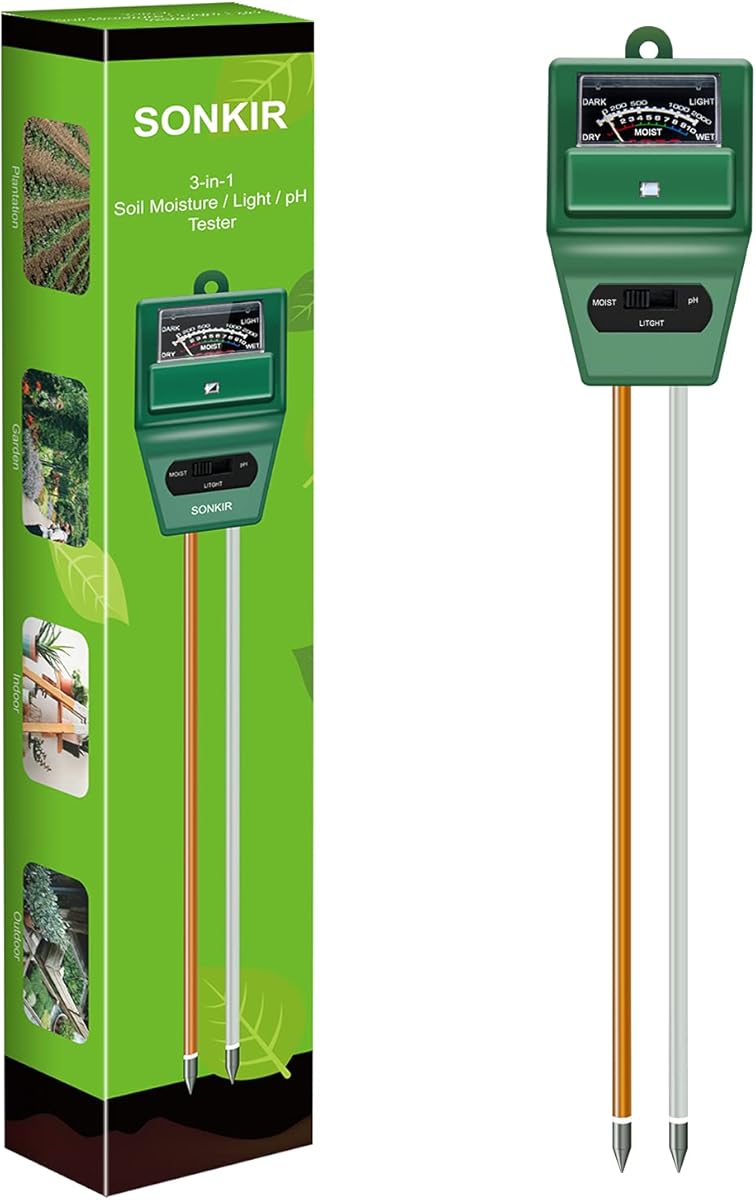
This 3-in-1 analog tester is a classic tool for gardeners who prefer simplicity over digital features. It measures moisture, pH, and light with a simple switch on the device. The lack of batteries means it is always ready to use without worrying about power levels.
We may earn a commission when you buy through this link, at no additional cost to you.
Its sturdy design and scientific construction ensure it lasts for long-term outdoor use. The compact size makes it easy to carry in a pocket or small tool belt. It is perfect for quick spot checks across a lawn or garden bed.
On the flip side, it does not connect to any app or store data for later review. Also, the manual notes that dry soil must be moistened before testing for the needle to move. This extra step can be tedious if you test dry soil often.
This meter is a great entry-level option for basic soil monitoring without any electronic complexity. It is ideal for users who want a reliable tool that works immediately on insertion. It represents a timeless design for plant care.
Since it needs no batteries, you can take it anywhere without charging or buying power cells.
A single button switch lets you toggle between pH moisture and light tests easily.
We may earn a commission when you buy through this link, at no additional cost to you.
This digital pH meter focuses on delivering precise acidity readings for potted plants and garden soil. With a 4.4 star rating, it is well-liked for its ease of use and instant results. The tapered plastic dibber protects the electrode while allowing quick insertion into various soil types.
We may earn a commission when you buy through this link, at no additional cost to you.
The companion app allows you to store up to 1000 data points and add notes for each sample. This feature helps you track changes in soil pH over time to see if your care routine is working. The included calibration powder ensures your readings stay accurate over the long term.
Unlike multi-function testers, this unit specializes in pH which limits its use for other soil metrics. It also requires batteries to operate, so you must ensure they are charged when needed. These limitations are minor for users who primarily need pH monitoring.
This tool is highly recommended for indoor plant enthusiasts who want to track acidity without complex setups. It simplifies the process by removing the need for mixing soil solutions. It is a focused device for plant health tracking.
Store and review your soil pH history on your phone to spot trends in plant care.
The tapered plastic tip shields the electrode from damage during insertion into hard soils.
We may earn a commission when you buy through this link, at no additional cost to you.
This combo kit provides both a pH meter and a moisture tester to cover essential soil metrics separately. With a high rating of 4.5 stars, it offers reliable performance for gardeners who need specific data for each parameter. The moisture meter uses FDR technology for better accuracy than older methods.
We may earn a commission when you buy through this link, at no additional cost to you.
The pH meter includes a tapered stainless steel dibber that is durable and protects the electrode. You can test soil and water alike, which is useful for hydroponics and general gardening. The package also comes with calibration solutions and a brush to keep the probe clean.
The main trade-off is that it costs more than basic single-function testers. Managing two separate devices can also be slightly less convenient than a single handheld unit. However, the improved accuracy and dedicated design justify the extra cost for many users.
This kit is a strong choice if you want professional-grade moisture and pH monitoring in one purchase. It is ideal for those who need precise control over soil conditions. Consider it if you prioritize accuracy and versatility.
The FDR method for moisture detection offers more accurate results than simple conductivity sensors.
Included calibration solutions help you keep the pH meter accurate for precise testing.
We may earn a commission when you buy through this link, at no additional cost to you.
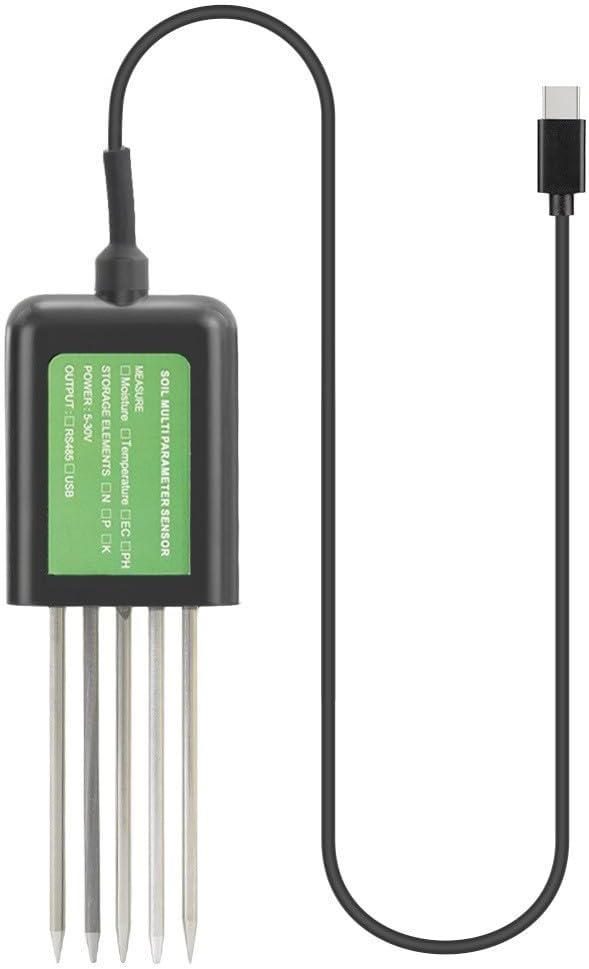
This USB sensor offers a wide range of measurements including NPK nutrients which are often missing in other meters. It plugs directly into an Android device so you can view and export data instantly. The design is built for durability with IP68 rating and flame-retardant epoxy.
We may earn a commission when you buy through this link, at no additional cost to you.
It delivers laboratory-grade accuracy for critical parameters like pH moisture and temperature. The lack of batteries means you can test continuously as long as your device has power. This makes it useful for long field sessions in agriculture or research.
However, the product has a lower rating which may indicate usability issues or hardware limitations. Connecting via USB might not be compatible with all phones or adapters which could limit accessibility. This could be a hurdle for casual users.
For professional growers or researchers who need detailed nutrient data, this sensor is a powerful tool. It simplifies data collection for large projects by providing export capabilities. Consider it for specialized agricultural applications.
This sensor provides NPK nutrient levels in addition to pH for a complete soil profile.
Connecting via USB allows instant viewing and saving of data on your mobile device.
We may earn a commission when you buy through this link, at no additional cost to you.
This premium meter offers fast and accurate readings for pH EC and temperature in one tool. With a high build quality it is designed for professional growers who need reliability. The replaceable probe simplifies maintenance and extends the life of the device.
We may earn a commission when you buy through this link, at no additional cost to you.
Bluetooth connectivity allows you to sync data with the Edenic app to track growth history. This feature supports data-driven decisions and makes sharing info with other tools easy. The device is waterproof and durable so you can use it in any environment.
The main drawback is the higher price compared to other meters on the market. It focuses on only three parameters so it may not suit those needing more detailed nutrient analysis. For serious growers this cost is usually acceptable for the quality.
If you want a durable and connected tool for hydroponics or garden management this is a top choice. It combines accuracy with modern features to streamline your workflow. It is an investment in professional-grade monitoring.
Built from premium materials with IP68 rating it stands up to tough field conditions.
Sync your test data to the app to track growth history over time easily.
We may earn a commission when you buy through this link, at no additional cost to you.
This classic meter has been a trusted tool for gardeners who need reliable pH and moisture readings. It requires no chemical or electrical power so it works whenever you need it. The analog dial makes it easy to see trends at a glance.
We may earn a commission when you buy through this link, at no additional cost to you.
It measures soil moisture from zero to one hundred percent and pH within a standard range. The simple design means it is easy to carry and use across large areas. Many users appreciate the straightforward operation without any tech complexity.
The main limitation is the lack of digital connectivity or data logging capabilities. You will need to manually record readings if you want to track changes over time. Also it does not measure nutrient levels or other advanced parameters.
For traditional gardeners who value simplicity and reliability this is a great choice. It is a low-maintenance tool that works well for general soil checks. Consider it if you prefer analog simplicity over digital features.
Since it needs no power source you can keep it ready to use without charging.
The meter covers 0 to 100 percent moisture to suit many soil conditions.
We may earn a commission when you buy through this link, at no additional cost to you.
This industrial-grade tester offers comprehensive analysis including NPK nutrients which are vital for crop yields. It has a perfect rating in the data provided and supports massive data storage for large projects. The full-color screen helps you view complex data clearly in the field.
We may earn a commission when you buy through this link, at no additional cost to you.
The device allows you to export data to Excel for easy editing and printing. This feature is excellent for detailed reports in agriculture or research. It is built with a durable design that includes a clip for portability.
The main drawbacks are its higher cost and the complexity of handling so many parameters. Users may need time to learn all the functions and buttons. It is also heavier than handheld garden tools which can be less convenient for casual users.
If you run a farm or need serious data for crop management this is a top-tier choice. It gives you the insights needed to optimize soil conditions and increase yields. Consider it for professional agricultural applications.
Export stored data to Excel to create reports or share with team members.
The system has a high availability rate to ensure reliable operation when you need it.
We may earn a commission when you buy through this link, at no additional cost to you.
Choosing the right soil pH meter involves considering your specific needs and the features that matter most for your gardening or farming goals.
Bluetooth or USB connectivity allows you to sync data with your phone or computer for long-term tracking. If you want to log results over time look for models with app support or direct USB output. Without this feature you will need to manually record readings.
Look for devices that offer seamless integration with mobile apps to simplify data management.
Some testers measure only pH while others include moisture temperature and nutrient levels like NPK. Decide which parameters are essential for your plants to avoid paying for features you do not need. More parameters often mean a higher cost.
Choose a meter that covers all metrics you need to make informed soil care decisions.
The probe is the part that touches the soil so it should be made of durable materials. Steel probes with protective coatings resist rust and wear better than plastic ones. Check if the probe is replaceable to extend the life of your device.
Select a model with a robust probe design to ensure accurate readings over many uses.
Digital meters vary widely in how much data they can store locally or in the cloud. For professional use look for models that support exporting to Excel or CSV files. Gardeners may prefer simpler tools with just enough memory for a season.
Ensure the device has enough storage to meet your record-keeping requirements.
A simple interface with clear displays makes it easier to read results quickly in the field. Consider if you need backlight for low light conditions or if you prefer analog dial displays. User-friendly designs reduce the chance of errors during testing.
Prioritize models with intuitive displays and straightforward operation for daily tasks.
Most digital pH meters require regular calibration to maintain accuracy. Check if the package includes calibration powder or solutions to get started immediately. Some models allow for automatic calibration which saves time and effort.
Choose a device that offers easy calibration steps to keep your readings reliable.
Devices are either battery powered or draw power from a connected device via USB. Battery models are portable but need replacements while USB models are convenient for mobile use. Select a power option that fits your usage patterns.
Opt for a power source that ensures your tool is ready when you need to test.
Soil testing often involves wet conditions so water resistance is important for longevity. Look for IP68 ratings if you plan to use the device in damp soil or near water features. Waterproofing protects the internal electronics from damage.
Ensure the meter has adequate water resistance to withstand garden conditions.
To start testing insert the probe into the soil about ten centimeters deep in a representative spot. Wait for the reading to stabilize on the screen or app before recording the value. For best results test multiple spots to get an average reading for the area.
Clean the probe after each use with a soft brush to remove soil and debris. If your model requires calibration use the included buffer solutions to adjust the device every few months. Store the probe in a dry place to prevent corrosion and prolong its life.
For devices with Bluetooth sync ensure your phone is paired and the app is updated. Regularly export your data to back up your records and review trends over time. Proper maintenance ensures your meter continues to deliver accurate readings for years.
Not all models need a smartphone to function. Some can show readings directly on a built-in screen without any app. However to use the Bluetooth features and store data on your phone you will need the companion app installed.
Yes many of these meters can test water solutions for hydroponics. Look for models that explicitly state they work with liquids. Some devices offer a specific hydroponic mode for nutrient solution monitoring.
You should calibrate your digital pH meter every three to six months depending on usage. Frequent testing may require more regular calibration to maintain accuracy. Always follow the manufacturer's instructions for the best results.
Many models are designed to be water resistant or waterproof for outdoor conditions. Check the IP rating on the device to confirm its resistance level. Waterproof designs protect against rain and damp soil environments.
Battery life varies by model and usage frequency but many last for months on standard batteries. Bluetooth enabled models may drain power faster if constantly syncing data. Some devices offer rechargeable options for longer use.
Devices with app connectivity allow you to track pH levels over time. They store historical data so you can see trends and changes in soil health. This is useful for planning fertilization and watering schedules.
We reviewed ten top models ranging from simple analog tools to advanced NPK testers. Each option serves different needs from casual gardening to professional agriculture with unique features.
Prioritize factors like connectivity and probe durability to match your specific growing goals. The best choice depends on whether you want basic data or comprehensive nutrient analysis.
Always check current pricing and availability since they can change across retailers. Use the links in this guide to find the best deal for your preferred model today.