
VEVOR 12 in Shutter Exhaust Fan
4.5Editor score
1347 CFM airflow capacity
Automatic louvers for protection
Low noise AC motor operation
Choosing the right ventilation system is crucial for maintaining optimal growing conditions. A quality greenhouse fan ensures proper air exchange, prevents heat buildup, and reduces the risk of fungal diseases that thrive in stagnant environments.
We evaluated ten top-rated models based on airflow capacity, energy efficiency, noise levels, and build quality. Our comparison covers wall-mounted exhaust units, circulation fans, and clip-on options suitable for various greenhouse sizes and growing setups.
Each selection highlights specific strengths like thermostat integration, variable speed control, and durable construction. While prices fluctuate due to market demand and seasonal promotions, these models represent the most reliable choices for serious gardeners this season.
4.5Editor score

4.6Editor score
4.7Editor score
As an Amazon Associate we earn from qualifying purchases.
This side-by-side comparison examines key specifications across all ten selected models. Use this table to quickly identify which fan matches your specific space requirements and budget constraints.




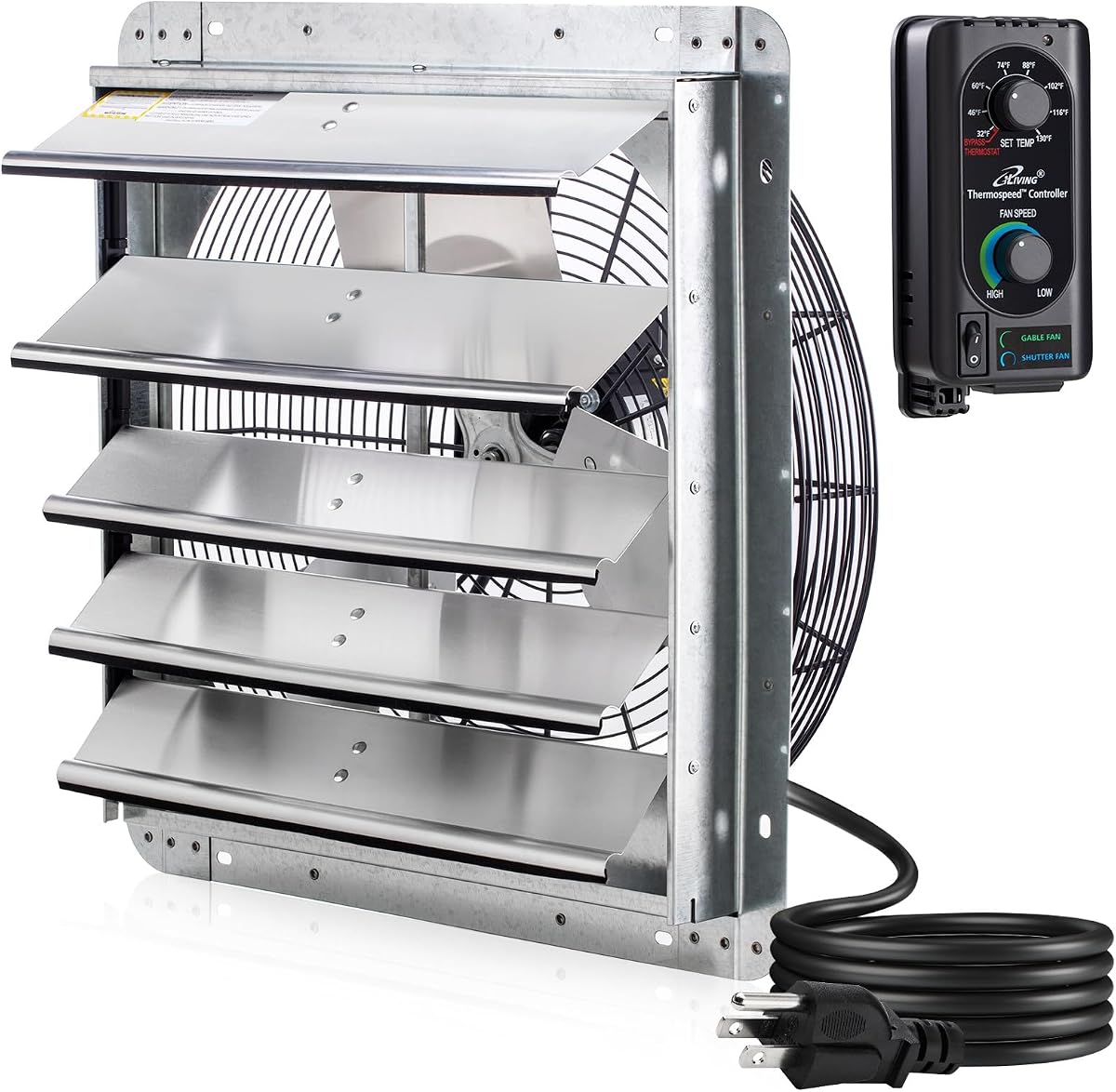
This iLIVING model stands out as the top choice for greenhouse owners seeking reliability and performance. With a rating of 4.6 stars, it consistently delivers strong air movement while maintaining precise temperature control.
We may earn a commission when you buy through this link, at no additional cost to you.
The inclusion of a Thermospeed thermostat allows users to automate ventilation based on exact temperature thresholds. This automation ensures plants are never exposed to heat stress without requiring constant manual adjustments.
While it costs more than basic options, the build quality justifies the investment. The galvanized steel frame resists corrosion, which is essential for humid greenhouse environments where rust can degrade performance quickly.
Growers managing medium to large spaces will appreciate the 1400 square foot coverage. It balances airflow power with quiet operation making it suitable for spaces attached to living areas.
The thermostat range allows you to set specific high and low thresholds ensuring the fan activates only when necessary to maintain ideal growing conditions.
Built with heavy duty materials this fan is designed to withstand continuous operation in demanding environments without losing efficiency over time.
We may earn a commission when you buy through this link, at no additional cost to you.
For budget conscious gardeners the VEVOR 12 inch fan offers exceptional performance per dollar. It delivers over 1300 CFM of airflow making it competitive with units that cost significantly more.
We may earn a commission when you buy through this link, at no additional cost to you.
The steel housing provides robust protection against the elements which is crucial for outdoor or semi outdoor ventilation needs. The automatic louvers open and close efficiently to prevent back drafts when off.
It lacks a built-in thermostat so users must pair it with an external timer or sensor for full automation. This trade off keeps the price low but requires a bit more setup effort.
This model is ideal for smaller to medium greenhouses where simple high volume air exchange is the primary goal. The low noise profile ensures it won't disrupt nearby work or living spaces.
This fan moves a large volume of air quickly helping to dissipate heat and humidity spikes effectively during the hottest parts of the day.
With straightforward controls and a plug and play design setup is quick and requires minimal technical knowledge or specialized tools.
We may earn a commission when you buy through this link, at no additional cost to you.
This large 18 inch model is engineered for expansive growing spaces that demand high volume air exchange. Its 4.7 rating reflects superior build quality and consistent performance under heavy loads.
We may earn a commission when you buy through this link, at no additional cost to you.
With a capacity to cover up to 2600 square feet it outperforms most standard options. The permanent lubricated motor reduces maintenance needs while ensuring long term reliability.
The physical size means you need a larger wall opening which can complicate installation in existing structures. It is also heavier than smaller units requiring secure mounting hardware to prevent vibration.
Commercial growers or those with very large hoop houses will find this the most capable option available. The thermostat and variable speed controller provide precise control over such a large ventilation system.
The 18 inch blades generate high static pressure and volume moving massive amounts of air to cool large environments efficiently.
Industrial grade components like the permanently lubricated motor ensure this unit can run for thousands of hours without needing service.
We may earn a commission when you buy through this link, at no additional cost to you.
Amico brings modern efficiency to greenhouse ventilation with this DC motor equipped unit. It delivers strong airflow while consuming significantly less energy than traditional AC motors.
We may earn a commission when you buy through this link, at no additional cost to you.
The 8 speed settings offer granular control allowing you to fine tune airflow for delicate seedlings or aggressive heat removal. The smart thermostat includes a probe for accurate ambient temperature readings.
Energy savings accumulate over time especially in climates requiring continuous ventilation. However the initial cost is higher and the DC motor may require specific replacement parts if issues arise.
This fan is best for eco conscious growers or those running systems continuously. The whisper quiet operation makes it ideal for grow rooms near living quarters.
The brushless DC motor technology cuts consumption drastically helping you maintain lower monthly utility bills compared to older fan models.
Multiple speed settings give you complete control over air movement ensuring gentle circulation for sensitive plants.
We may earn a commission when you buy through this link, at no additional cost to you.
This circulation fan focuses on internal air movement rather than exhausting air to the outside. It features an LCD panel and supports temperature and humidity monitoring for advanced climate management.
We may earn a commission when you buy through this link, at no additional cost to you.
The 10 speed options and scheduled air exchange modes allow for highly customized ventilation cycles. This is useful for creating specific microclimates within large greenhouses.
While powerful its lower rating suggests potential reliability concerns compared to other brands. The humidity feature works best with dedicated probes which add to the setup complexity.
It is suitable for large areas where stagnant air is a major issue. Use it in combination with exhaust fans for a complete climate control strategy.
The LCD display provides clear feedback on environmental metrics helping you make informed adjustments to your ventilation schedule.
Set specific on and off times to manage energy use and ensure plants get air movement exactly when needed.
We may earn a commission when you buy through this link, at no additional cost to you.
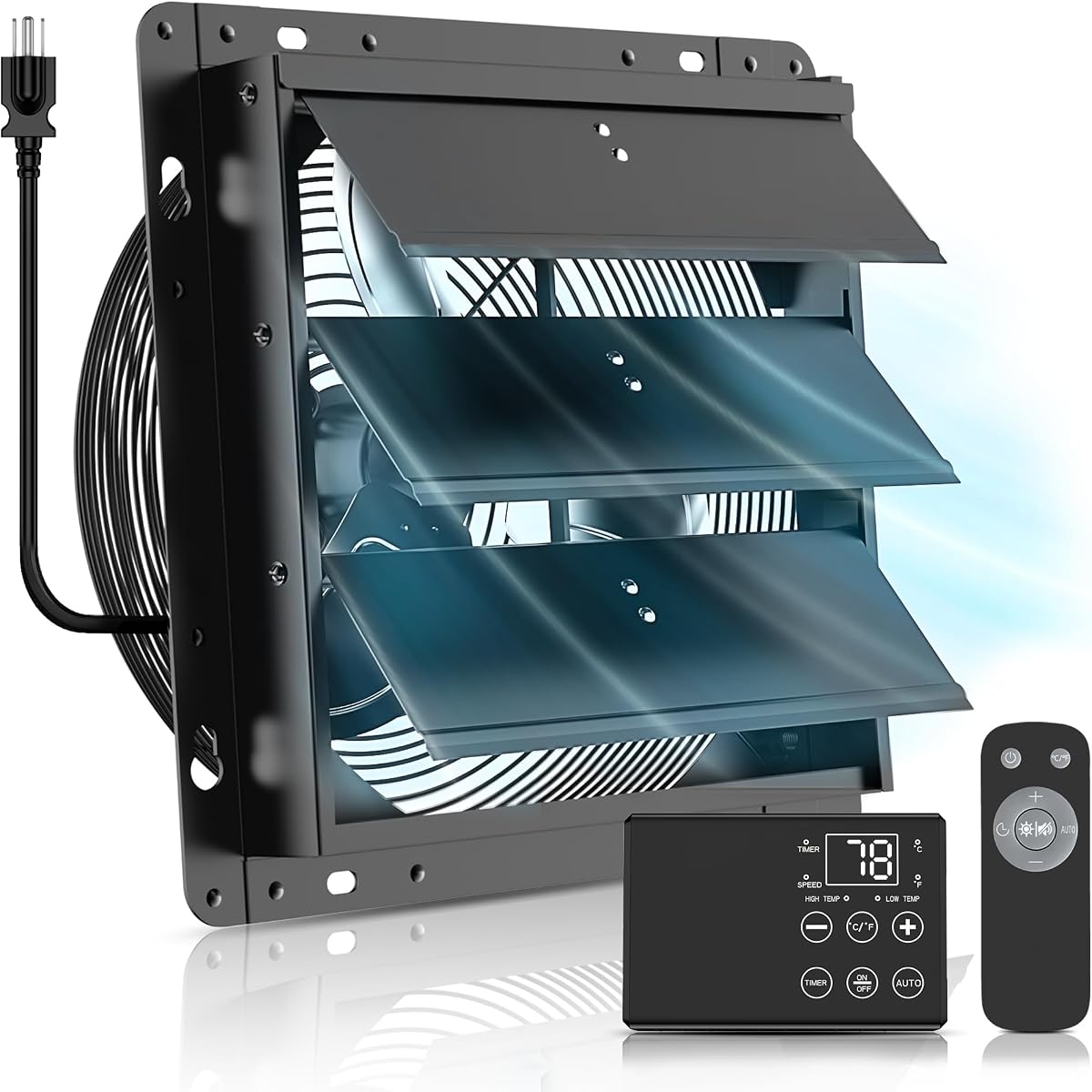
For small greenhouses or sheds the Ehiair 8 inch fan provides effective ventilation without taking up too much space. The remote control allows adjustments without needing to climb a ladder.
We may earn a commission when you buy through this link, at no additional cost to you.
It offers automatic thermostat modes similar to larger units making automation accessible even for compact setups. The noise level is particularly low which is great for quiet environments.
With only 760 CFM it struggles in larger spaces but excels in enclosed rooms. The remote is a nice touch for users who want hands free operation from a distance.
This is an ideal choice for hobbyists with smaller grow rooms. It balances performance and convenience well for its size class.
Adjust speeds or settings from anywhere in the room using the included remote which is perfect for hard to reach installations.
Noise levels stay around 40 dB ensuring the fan operates quietly without distracting from daily activities nearby.
We may earn a commission when you buy through this link, at no additional cost to you.
This larger model is engineered for expansive growing spaces that demand high volume air exchange. Its 4.7 rating reflects superior build quality and consistent performance under heavy loads.
We may earn a commission when you buy through this link, at no additional cost to you.
With a capacity to cover up to 2600 square feet it outperforms most standard options. The permanent lubricated motor reduces maintenance needs while ensuring long term reliability.
The physical size means you need a larger wall opening which can complicate installation in existing structures. It is also heavier than smaller units requiring secure mounting hardware to prevent vibration.
Commercial growers or those with very large hoop houses will find this the most capable option available. The thermostat and variable speed controller provide precise control over such a large ventilation system.
The 18 inch blades generate high static pressure and volume moving massive amounts of air to cool large environments efficiently.
Industrial grade components like the permanently lubricated motor ensure this unit can run for thousands of hours without needing service.
We may earn a commission when you buy through this link, at no additional cost to you.
This dual fan system is designed for targeted circulation within tents or small greenhouse corners. The two fans allow you to direct airflow in multiple directions simultaneously.
We may earn a commission when you buy through this link, at no additional cost to you.
It uses brushless DC motors for longevity and efficiency. The IP54 waterproof rating ensures it can handle humid conditions without electrical failures.
The airflow is relatively low making it unsuitable for whole room cooling. It is best used to supplement main exhaust fans by preventing hot spots.
Perfect for seedling areas or dense plant canopies where air movement is restricted. The long cords allow easy placement without extension cords.
The dual head design allows you to cover two specific zones with one power source improving efficiency in tight spaces.
Waterproof construction protects the internal components ensuring reliable operation even in high humidity environments.
We may earn a commission when you buy through this link, at no additional cost to you.
VIVOSUN offers a reliable oscillating clip fan for those needing wide coverage in a small form factor. The Auto oscillation feature helps prevent motor jamming when obstacles are detected.
We may earn a commission when you buy through this link, at no additional cost to you.
It integrates with smart apps for remote control adding convenience for tech savvy growers. The quiet operation is a major plus for indoor or attached greenhouses.
The clamp is robust but limits mounting options to poles or frames. It is not intended for wall mounting or high volume exhaust needs.
Use this to circulate air around plants to strengthen stems. It pairs well with larger exhaust fans to improve internal air movement.
Control the fan remotely via an app allowing you to adjust settings without physically accessing the unit during growth cycles.
Safety features ensure the fan stops smoothly if it hits an object preventing damage to the motor or surrounding plants.
We may earn a commission when you buy through this link, at no additional cost to you.
This affordable dual unit is great for providing gentle airflow across multiple areas. It features strong quiet airflow thanks to the brushless motor technology.
We may earn a commission when you buy through this link, at no additional cost to you.
The adjustable clamps make it easy to position fans on grow tent poles or table edges. It is compatible with timers and smart plugs for easy automation.
USB power is convenient but limits usage to near power sources. For larger setups you might need multiple sets of these fans to achieve full coverage.
Ideal for budget growers needing supplemental circulation. It works well to dry out wet soil surfaces and prevent mold on leaves.
Getting two fans at one price makes it cost effective to cover multiple zones in your growing space.
Three speed settings allow you to adjust intensity based on plant needs without complex wiring or electronics.
We may earn a commission when you buy through this link, at no additional cost to you.
Selecting the right fan requires understanding your space size, climate needs, and automation requirements. This guide breaks down the key factors to consider before purchasing.
CFM or Cubic Feet per Minute measures how much air the fan moves. You need enough CFM to exchange the entire volume of air in your greenhouse every 1 to 3 minutes during peak heat.
Calculate your greenhouse volume by multiplying length times width times height then divide by the desired exchange time to find the required CFM.
Manufacturers list a coverage area which estimates how much space the fan can effectively cool. Ensure this number matches or exceeds your actual greenhouse square footage.
Oversizing slightly is better than undersizing because a fan running at maximum capacity will wear out faster and use more energy.
A built-in thermostat automates operation so the fan runs only when temperatures exceed your set point. This saves energy and prevents over-ventilation during cooler nights.
If the unit lacks a thermostat you will need to purchase a separate sensor and timer to achieve the same level of automation.
Noise levels are measured in decibels. For greenhouses near living spaces look for fans rated under 60 dB to avoid disturbing conversations or sleep.
DC motors generally operate quieter than AC motors making them a better choice for noise sensitive environments.
Look for fans with galvanized steel frames and aluminum blades. These materials resist rust and corrosion which are common in humid greenhouse conditions.
Plastic fans may crack under UV exposure or heat stress over time so prioritize metal construction for longevity.
DC motors use less electricity than traditional AC motors while often providing better torque. This is crucial for fans that run continuously in hot weather.
Check the wattage rating to estimate your monthly electricity costs and choose a model that fits your budget.
Wall mounted fans are best for exhaust purposes while clip or pedestal fans are better for internal circulation. Ensure the fan comes with the necessary mounting hardware.
Secure mounting prevents vibration which can lead to structural damage over time especially for heavy units.
Variable speed controllers allow you to adjust airflow based on the season or specific plant needs. Remotes or digital panels add convenience for frequent adjustments.
Simple on off switches are adequate for fixed temperature environments but less flexible for changing climates.
Install the fan on an exterior wall opposite the intake vent to create a cross draft. This ensures air moves evenly across the entire growing area rather than just near the fan.
Clean the blades and shutters regularly to remove dust and pollen. Debris buildup can unbalance the fan and reduce airflow efficiency significantly.
Inspect wiring and connections annually to prevent safety hazards. Tighten any loose screws on the mount and verify that the thermostat probe is correctly positioned away from direct heat sources.
For a 200 square foot greenhouse with an 8 foot ceiling you need to exchange about 16000 cubic feet of air every few minutes. Aim for a fan with at least 1000 to 1200 CFM to handle heat spikes effectively.
Yes efficient ventilation requires air entering through lower vents and exiting through upper vents. An exhaust fan creates a vacuum effect that pulls fresh cool air in through passive intakes.
Many fans come with a built-in thermostat probe. You set a high temperature threshold and the fan turns on automatically when the air reaches that point.
DC fans are more energy efficient and run quieter. They are ideal for continuous operation. AC fans are usually cheaper upfront but use more power.
Ceiling fans help circulate internal air but do not exchange hot air for cool air. Use them to supplement an exhaust fan to prevent hot spots.
Mount the exhaust fan near the top of the greenhouse where hot air collects. This allows the fan to pull out the hottest air most efficiently.
Clean the fan at least once every few months during active growing seasons. Dust can clog the blades and motor causing it to work harder and overheat.
Yes a thermostat prevents the fan from running when it is not needed. This reduces electricity usage and extends the life of the motor significantly.
We recommend the iLIVING 12 Inch Wall Mounted Fan for most growers as it balances performance reliability and automation features. For larger spaces the iLIVING 18 Inch model offers the necessary power.
Budget conscious buyers should consider the VEVOR 12 in Shutter Exhaust Fan which provides excellent airflow for the price. If energy savings are a priority the Amico DC motor unit is a strong contender.
Prices for these fans fluctuate often so check current availability before purchasing. Select the model that best matches your specific greenhouse size and climate control needs.