
Professional 2/3-Way Stereo & 4-Way Mono Audio Crossover
4.3Editor score
Versatile 2/3-way stereo modes
Balanced XLR inputs and outputs
Independent output gain controls
This guide compares the top audiophile active crossover options for 2026, evaluating features, performance, and value to help you choose the perfect audio
Selecting the right active crossover is essential for audiophiles seeking precise sound separation and enhanced clarity across their speaker systems.
We evaluated ten distinct models based on frequency response, build quality, connectivity options, and overall value for diverse audio setups and preferences.
Each selection highlights unique capabilities, from budget-friendly splits to high-end analog processing, ensuring you find the ideal match for your gear.
4.3Editor score

4.5Editor score

5.0Editor score
This side-by-side comparison details the specifications and capabilities of ten leading active crossover units to assist in making an informed decision for your audio system.




The Audiopipe 6-Way Active Crossover stands out for its exceptional flexibility, earning a strong 4.5 star rating for users seeking detailed control over their audio signal.
We may earn a commission when you buy through this link, at no additional cost to you.
It features a unique multiplier switch for continuous frequency adjustments and offers separate inputs for front, rear, and subwoofer channels to enable precise sound staging.
While the remote bass knob is convenient, the unit requires a dedicated 12V power source which might limit placement options in some vehicle setups or small rooms.
Enthusiasts looking to optimize multi-way speaker systems will appreciate the comprehensive feature set and reliable performance that this model consistently delivers.
The ability to adjust crossover points continuously with a multiplier switch allows for fine-tuning that rigid fixed units cannot match.
With a dedicated low-pass output and adjustable gain, this crossover manages subwoofer output effectively without needing an external processor.
We may earn a commission when you buy through this link, at no additional cost to you.
A perfect 5.0 rating reflects the Marchand XM66's status as a top-tier choice for audiophiles who demand zero digital interference in their signal path.
We may earn a commission when you buy through this link, at no additional cost to you.
This unit provides fully analog signal processing with a unique digital display that visualizes the crossover frequency without introducing digital noise into the audio.
The main trade-off is the higher cost and a five-day lead time for custom manufacturing, which may not suit buyers needing immediate availability.
For high-end home systems where sound purity is paramount, the investment in this handcrafted unit offers unparalleled performance and craftsmanship.
The display shows frequency settings visually while maintaining a completely analog signal path to avoid potential conversion artifacts.
An integrated 20Hz filter protects subwoofers and speakers from inaudible low frequencies that can cause distortion or mechanical damage.
We may earn a commission when you buy through this link, at no additional cost to you.
With a solid 4.3 rating, this crossover delivers professional features like balanced XLR connections and flexible stereo modes at a budget-friendly price.
We may earn a commission when you buy through this link, at no additional cost to you.
It supports 2/3-way stereo setups and switches to 4-way mono for dedicated subwoofer control, making it versatile for both live sound and installed audio.
Some users note that the gain knobs are quite sensitive requiring careful adjustment to avoid sudden volume spikes during setup or live changes.
This unit is an ideal entry point for those needing reliable signal separation without breaking the bank on expensive professional gear.
Balanced XLR inputs ensure clean signal transmission over long cable runs, reducing noise interference in large venues.
Switching between stereo and mono modes allows for optimized driver management whether you are splitting frequencies or driving a dedicated sub.
We may earn a commission when you buy through this link, at no additional cost to you.
Rated 4.4 stars, this model excels in PA environments with features like phase reverse switches and a dedicated low-cut filter to protect drivers.
We may earn a commission when you buy through this link, at no additional cost to you.
It offers distinct 2-way 3-way and 4-way modes to manage frequencies across left and right channels or dedicated mono subwoofer setups.
While the 110-volt operation is convenient for indoor use, the lack of a remote control means adjustments must be made directly at the unit.
Sound engineers favor this crossover for its robust build quality and reliable performance in demanding live sound applications.
The dedicated 40Hz low-cut switch prevents subwoofers from wasting power on extremely low frequencies that could damage the driver.
Balanced XLR inputs maintain signal integrity over distance ensuring that noise does not degrade the audio quality at the speakers.
We may earn a commission when you buy through this link, at no additional cost to you.
A 5.0 rating highlights this simple yet effective passive crossover designed specifically to isolate high frequencies for tweeters in car or home audio.
We may earn a commission when you buy through this link, at no additional cost to you.
It uses premium capacitors to ensure smooth roll-off and includes heavy-duty inductors to minimize signal loss and prevent harshness in the treble range.
Because it is a single-way component it does not support multi-driver setups but is perfect for upgrading specific tweeters without a full system overhaul.
Installers appreciate the pre-wired leads and screw connectors which allow for a quick and secure installation in tight spaces.
Premium capacitors and flame retardant PCBs ensure durability and consistent performance even under high power conditions.
Pre-wired copper leads and screw terminals make this unit accessible even for those without advanced soldering or electrical skills.
We may earn a commission when you buy through this link, at no additional cost to you.
The Autotek ATK2 is a practical choice for car audio enthusiasts looking to manage subwoofer output with ease at an affordable price point.
We may earn a commission when you buy through this link, at no additional cost to you.
It allows for 2-way and 3-way splits and includes a remote bass knob for convenient volume adjustments from the driver's seat during operation.
While it lacks advanced DSP features, the included phase shift and level adjustments provide sufficient control for typical vehicle audio installations.
This processor is best suited for those seeking essential crossover functionality without the complexity or cost of high-end digital processors.
The included remote knob allows you to tweak bass levels on the fly which is useful for different music genres.
A dedicated phase shift switch helps align subwoofer output with main speakers to prevent cancellations and improve clarity.
We may earn a commission when you buy through this link, at no additional cost to you.
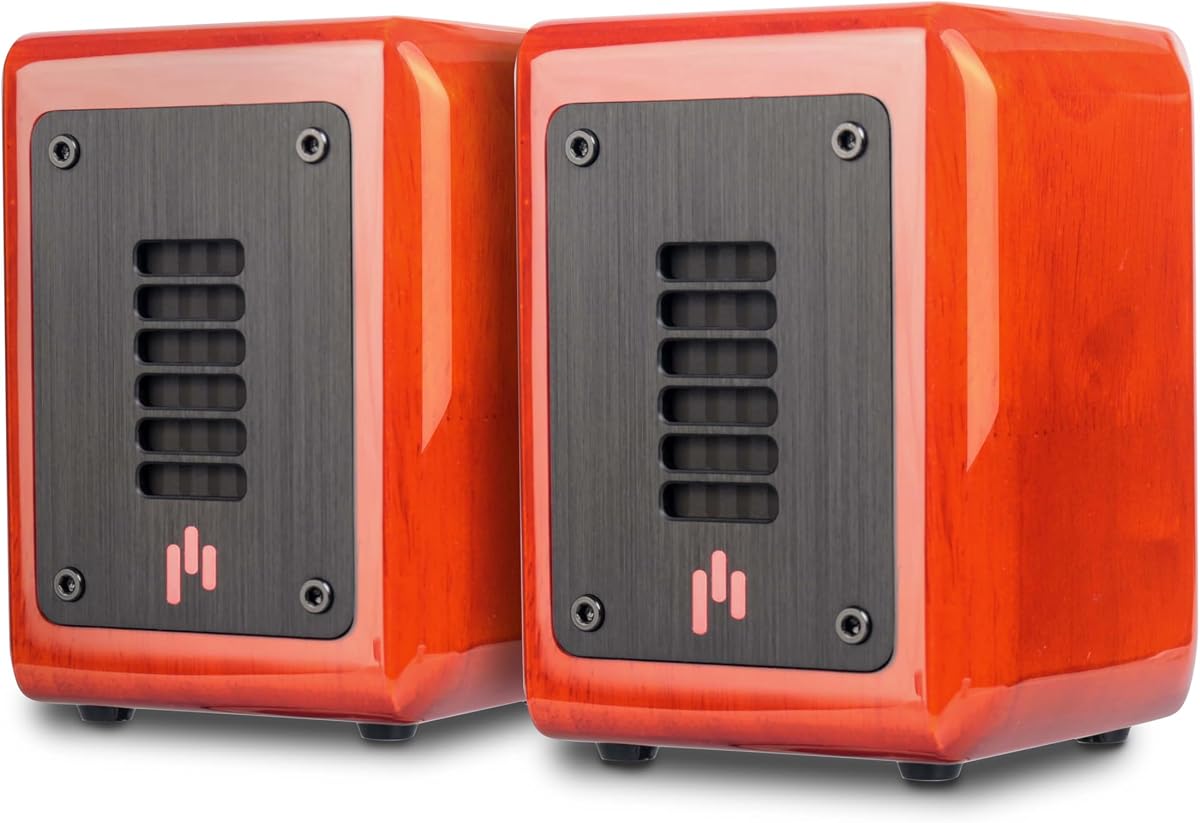
With a 4.0 rating this super tweeter pair offers an excellent way to extend the high-frequency response of existing systems without a full upgrade.
We may earn a commission when you buy through this link, at no additional cost to you.
It features a planar magnetic design that handles frequencies up to 40kHz adding subtle detail and airiness to the upper register of the sound.
Users must ensure their main speakers have compatible efficiency levels between 85 and 93 dB to avoid overloading the existing audio system.
This unit is ideal for audiophiles seeking a refined touch to their high-frequency output rather than a dramatic volume increase.
Five fixed crossover options allow for easy integration with various speaker brands without needing external crossover devices.
The gloss cherry finish and planar magnetic design provide both aesthetic appeal and precise high-frequency control.
We may earn a commission when you buy through this link, at no additional cost to you.
Rated 3.6 stars this crossover is designed for high-power home theater setups requiring robust components to handle demanding audio signals reliably.
We may earn a commission when you buy through this link, at no additional cost to you.
It features 400 watts of power handling and uses oxygen-free copper inductors to minimize resistance and ensure stable signal delivery.
While the solderless terminals simplify installation, the unit lacks advanced features like digital displays or phase adjustments found in higher-end models.
This option suits DIYers building powerful speaker systems who need reliable frequency splitting without complex electronic controls.
The 400W capacity ensures that the crossover can handle peak outputs from powerful amplifiers without thermal stress.
Solderless connection terminals make setup straightforward and reduce the risk of poor connections during installation.
We may earn a commission when you buy through this link, at no additional cost to you.
With a strong 4.5 rating, this compact unit delivers four active channels in a tiny chassis making it perfect for tight vehicle installations or limited spaces.
We may earn a commission when you buy through this link, at no additional cost to you.
It includes customizable sound adjustments and a bass boost feature allowing users to enhance low frequencies without needing additional amplifiers.
While it lacks advanced digital interface options the straightforward RCA connections and compact size make it easy to integrate into existing systems.
Car audio enthusiasts seeking a discreet solution for multi-way splits will find this processor a practical and efficient choice.
At just 190mm in length this processor fits into tight areas under seats or inside dashboards without obstructing movement.
Customizable adjustments let you tailor the output to match specific speakers ensuring a balanced sound across all channels.
We may earn a commission when you buy through this link, at no additional cost to you.
Rated 3.9 stars this unit is known for its accurate state-variable Linkwitz-Riley filters that provide flat summed amplitude responses for critical listening.
We may earn a commission when you buy through this link, at no additional cost to you.
It includes individual limiters and phase reverse switches to protect drivers and ensure proper alignment of acoustic outputs for complex systems.
While the lack of digital displays is a drawback, the reliable analog performance makes it a favorite among sound engineers for its consistency.
This crossover is an excellent choice for professionals who need dependable frequency separation and driver protection in live or installed scenarios.
State-variable Linkwitz-Riley filters ensure that the sum of outputs remains flat without phase cancellation issues.
Limiters per output help prevent amplifier clipping from damaging drivers during sudden volume spikes.
We may earn a commission when you buy through this link, at no additional cost to you.
Choosing the right active crossover involves evaluating several technical and practical factors to ensure compatibility with your existing audio gear and listening environment.
Consider how many channels and bands you need. A 2-way unit splits audio into two ranges while a 6-way model offers granular control over more driver types.
Look for flexible stereo and mono modes to suit both two-channel listening and single-zone subwoofer setups.
Active crossovers require external power but offer precise electronic filtering and adjustable parameters that passive units cannot provide.
Passive models are simpler but rely on passive components which can degrade signal quality and limit customization.
Balanced XLR inputs are preferred for professional environments as they reject noise over long cable runs.
RCA connections are more common in home audio and offer simplicity for shorter distances without significant loss.
Robust chassis and high-quality internal components like copper coils ensure the unit withstands heat and vibration over time.
A metal housing helps shield sensitive electronics from electromagnetic interference during operation.
Units with solderless terminals or pre-wired leads simplify setup for users without advanced soldering skills.
Compact dimensions allow for mounting in tight spaces where rack units might not fit.
Look for limiters or subsonic filters to protect your speakers from damage due to extreme frequency content.
Remote controls or digital displays can make adjustments easier during live performance or frequent listening changes.
Ensure the crossover supports your speaker impedance and power handling requirements to avoid underperformance or distortion.
Check voltage requirements especially for active units to ensure your power source matches the device needs.
Prices vary widely based on features and materials so decide which specs are essential for your specific listening needs.
Investing in higher quality units often leads to better sound clarity and longevity over time.
Connect inputs from your source device such as a preamp or processor using balanced or unbalanced cables as appropriate for your setup.
Adjust the crossover frequency knobs to match the natural range of your drivers starting with manufacturer recommendations for each speaker type.
Use the phase switches and gain controls to fine-tune levels and ensure smooth transitions between frequency bands without peaks or dips.
An active crossover is an electronic device that splits an audio signal into separate frequency bands before amplification using external power to drive internal circuitry for precise control.
Active units provide adjustable settings like cutoff frequency and slope that passive models lack allowing for better optimization of speaker performance and protection.
Set points where drivers begin to distort or lose clarity. For a woofer and tweeter split, use the manufacturer's recommended frequency range for optimal efficiency.
Yes active crossovers require external power such as 12V DC for car models or AC for studio units to power the internal amplifier circuits and electronics.
These are filter types designed to provide flat summed amplitude when drivers overlap ensuring seamless transitions and minimal phase cancellation at the crossover point.
Yes most active units offer a dedicated low-pass output for subwoofers allowing you to send only bass frequencies to the sub for better system integration.
Choose a size that fits your rack or mounting space. Compact models are available for tight spots while rack units offer more features and stability.
Ensure the crossover handles your speaker impedance values. Incorrect impedance can lead to distortion or damage so check specs before purchasing any unit.
The Audiopipe 6-Way and Marchand XM66 stand out as top choices offering high flexibility and analog purity respectively for diverse system needs.
Prioritize compatibility with your speakers and power requirements while considering whether digital features or pure analog signal paths matter most to you.
Always check current availability and specifications before purchasing since models and features may change over time with product updates.