
Orbit Rain and Freeze Sensor
4.5Editor score
Wire run to controller
Adjustable threshold setting
Compatible with major brands
This guide compares the top irrigation controllers with rain sensors for October 2026 to help you save water and protect your landscape from weather damage
Choosing the right irrigation system is crucial for maintaining a healthy landscape without wasting precious water resources. Modern controllers integrate smart technology and environmental sensors to automate watering schedules efficiently.
We evaluated ten leading models based on their sensor compatibility, ease of installation, and overall performance in real-world conditions. Each product offers unique features designed to meet diverse residential and commercial landscaping needs.
Our picks highlight key strengths and potential limitations to help you make an informed decision. Please note that product availability and pricing may change frequently across different retailers.
4.5Editor score

4.6Editor score
4.5Editor score
The following table provides a side by side comparison of the ten top rated irrigation controllers and sensors available this month. Review each specification carefully to determine which model aligns best with your specific watering requirements and budget constraints.




The Hunter Rain-Clik stands out as a top choice for homeowners seeking reliable weather protection for their sprinkler systems. It holds an excellent user rating and delivers rapid response times when rain begins or temperatures drop dangerously low.
We may earn a commission when you buy through this link, at no additional cost to you.
Its wireless design eliminates the need for complex wiring or trenching, making installation a breeze even for those without technical expertise. The built-in battery ensures it operates independently while the adjustable vent allows precise control over when watering resumes after a storm.
While the sensor requires periodic battery changes to function correctly, this minor maintenance task is outweighed by the water savings and landscape protection it provides. The universal compatibility ensures it works seamlessly with most standard irrigation controllers found in residential settings.
This sensor is ideal for busy homeowners who want a set-it-and-forget-it solution that actively prevents water waste and protects grass from freezing temperatures. Investing in this device ensures your landscape receives only the water it truly needs regardless of weather conditions.
The battery powered design means you can install the sensor anywhere on your property without running wires back to the controller box.
The adjustable vent lets you fine tune how quickly your system restarts after rain based on your specific soil type and drainage.
We may earn a commission when you buy through this link, at no additional cost to you.
The Rain Bird TM2-6 offers a straightforward solution for managing irrigation schedules without overwhelming users with complex digital features. It earns a solid rating for reliability and ease of use in basic residential applications.
We may earn a commission when you buy through this link, at no additional cost to you.
This controller features a user-friendly interface that mimics traditional dial systems, making it intuitive for those transitioning from older models. It includes dedicated inputs for rain sensors, allowing you to integrate weather protection seamlessly into your existing setup.
However, the lack of smart connectivity means you cannot control it remotely via a smartphone app. This limitation is acceptable for users who prefer manual control but may be a drawback for those seeking automated weather adjustments.
Choose this model if you need a dependable controller that prioritizes simplicity and physical accessibility over advanced smart home integration. It provides essential features like master valve control and sensor bypass for practical daily management.
The familiar user interface ensures that anyone can program watering schedules without needing to read through complex manuals.
Built-in rain sensor input allows you to connect external sensors easily to suspend watering during wet conditions.
We may earn a commission when you buy through this link, at no additional cost to you.
The Rain Bird TRU6I provides exceptional flexibility for managing complex watering schedules across multiple zones in your yard. It is praised for its ability to handle varied landscaping needs with detailed programming options.
We may earn a commission when you buy through this link, at no additional cost to you.
This controller allows for individual programs per zone with distinct start times, enabling you to water different areas at optimal times without overlap. The permanent memory retention ensures your custom settings remain intact even during power outages, reducing the need for reprogramming.
One consideration is that WiFi functionality requires purchasing a separate module, which adds to the total cost. Additionally, the indoor design means it must be placed in a protected area like a garage or utility room rather than outdoors.
For homeowners who need precise control over watering duration and frequency, this unit offers the necessary tools to optimize plant health. It balances advanced scheduling features with a user-friendly dial interface for convenient manual adjustments.
You can set up to four start times per program allowing for highly customized schedules tailored to specific zone needs.
The seasonal adjustment feature increases or decreases watering times by percentage to match changing weather conditions automatically.
We may earn a commission when you buy through this link, at no additional cost to you.
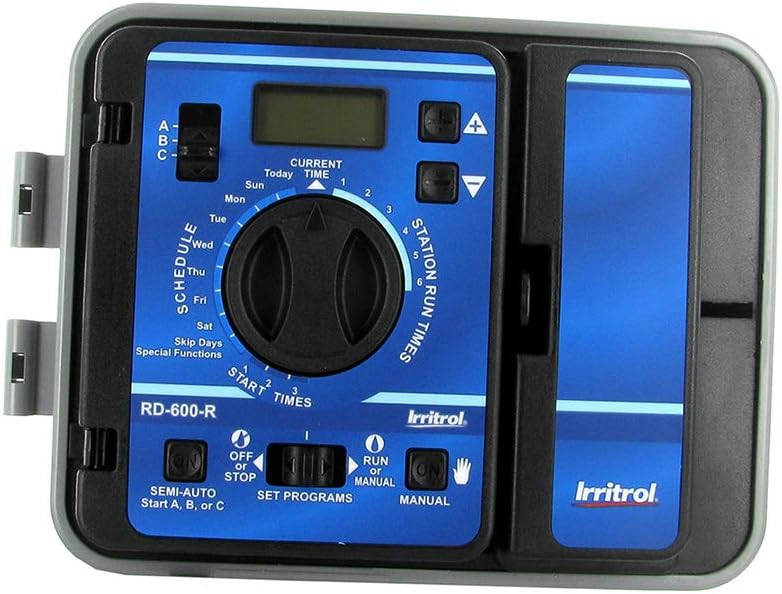
The Irritrol RD600-EXT-R is a robust outdoor controller designed for users who need flexibility and remote access capabilities. It earns high marks for its compatibility with remote series devices and versatile programming features.
We may earn a commission when you buy through this link, at no additional cost to you.
This unit includes a rain sensor bypass switch and terminal, ensuring you can easily integrate weather protection into your irrigation plan. The three independent programs allow you to manage different plant types or zones with unique watering requirements efficiently.
The higher price tag reflects its advanced features and durability for outdoor use, but it may be more than some casual users require. The water well recovery option helps manage pump circuits effectively, which is beneficial for systems with specific pressure needs.
Select this controller if you anticipate needing remote access or have a landscape with diverse plant materials requiring separate watering schedules. Its rugged outdoor design ensures long-term performance even in varying weather conditions.
The controller is ready for contractor residential remote series allowing for convenient control without manual interaction.
Three separate programs allow you to tailor watering schedules to different areas of your landscape precisely.
We may earn a commission when you buy through this link, at no additional cost to you.
The Rain Bird ARC8 brings modern smart home convenience to irrigation management through its dedicated mobile app and voice assistant compatibility. It is recognized for its EPA WaterSense certification which highlights efficiency and water conservation efforts.
We may earn a commission when you buy through this link, at no additional cost to you.
With the app you can adjust schedules and monitor system status from anywhere in the world providing unmatched flexibility for travelers or busy individuals. The automatic weather adjustments based on local forecasts help prevent unnecessary watering during rainy periods saving water and money.
While the app offers powerful features some users report a lower satisfaction rating compared to traditional dial models indicating potential connectivity issues. Relying on a smartphone for basic controls may be inconvenient if you prefer physical dials or encounter Wi-Fi instability.
This model suits tech-savvy homeowners who prioritize remote access and want to integrate irrigation into their broader smart home ecosystem. It offers significant potential for water savings when the smart features function as intended.
Access your system status and modify schedules instantly using your smartphone regardless of your current location.
Compatibility with Alexa allows for hands-free adjustments to your watering schedule using voice commands.
We may earn a commission when you buy through this link, at no additional cost to you.
The Rain Bird ESP-TM2 is engineered for simplicity and speed, offering a straightforward setup process for new users. It maintains a high user rating due to its reliability and clear display options for easy programming.
We may earn a commission when you buy through this link, at no additional cost to you.
A factory installed outdoor rated power cord simplifies the installation process, reducing the need for additional wiring or hardwiring. The large backlit LCD display ensures you can read settings clearly even in low light or direct sunlight conditions.
Connectivity to the internet requires a separate module purchase which adds extra cost but unlocks valuable weather-based adjustment features. While the basic setup is quick the smart features may be inaccessible without additional hardware investment.
Ideal for those who want a reliable controller with an easy transition path to smart features the ESP-TM2 balances traditional ease with modern capability. It is a strong choice for residential use where readability and setup speed matter.
Programming a schedule is reduced to just three simple steps making it accessible for anyone without technical training.
The included power cord means you can plug and play immediately without needing extra adapters or junction boxes.
We may earn a commission when you buy through this link, at no additional cost to you.
The Rain Bird ESP4ME3 is designed to handle residential irrigation with added protection against leaks and system faults. It is highly rated for its memory retention and expandable zone capabilities that suit growing landscapes.
We may earn a commission when you buy through this link, at no additional cost to you.
Flow monitoring compatibility allows you to detect pipe leaks or broken sprinklers early preventing water waste and property damage. The non-volatile memory ensures that your custom programming is saved indefinitely even after long power outages or system resets.
Expansion to more zones requires optional modules which adds complexity and cost if your landscape grows over time. While it offers robust features the need for additional hardware for full smart functionality can be a consideration for budget conscious buyers.
This controller is best suited for homeowners who prioritize system safety and want the option to add flow sensors in the future. It provides a solid foundation for reliable irrigation with room for future upgrades.
Flow monitoring sensors help alert you to abnormal water usage indicating potential leaks or broken pipes quickly.
Non-volatile memory ensures your settings remain safe even during extended power outages so you never lose schedules.
We may earn a commission when you buy through this link, at no additional cost to you.
The Rain Bird ESP-ME3 offers scalable station options that accommodate everything from small residential yards to larger commercial sites. Its high rating reflects durability and the ability to handle complex irrigation demands with ease.
We may earn a commission when you buy through this link, at no additional cost to you.
It includes an outdoor cabinet making it ready for installation outside without needing a separate enclosure. The large screen and color-coded dial simplify programming tasks ensuring that even detailed schedules can be managed without confusion.
The system alerts you to electrical or programming issues through LED indicators which helps maintenance personnel troubleshoot problems quickly. This level of diagnostic capability is particularly useful for sites with multiple zones or complex piping arrangements.
Choose this model if you need a durable controller that can expand with your landscaping needs over time. It provides professional grade features in a package designed for reliability and clear user feedback.
Add station modules easily to expand up to twenty two zones without powering down the main controller.
Red LED and scrolling messages keep you informed of system issues instantly for rapid response and fixes.
We may earn a commission when you buy through this link, at no additional cost to you.
The Orbit Rain and Freeze Sensor provides an affordable entry point for adding weather protection to any sprinkler system. It is praised for its simplicity and effectiveness in preventing unnecessary watering during rain or cold snaps.
We may earn a commission when you buy through this link, at no additional cost to you.
Its design uses water absorbing disks that expand when wet to mechanically suspend watering operations. This mechanical simplicity means there are no electronics to fail from moisture or battery issues ensuring long-term dependability.
Installation requires running a wire from the sensor to the controller which may be less convenient than wireless alternatives. However the low price point makes it an attractive option for budget-conscious buyers who do not mind the wiring effort.
This sensor is perfect for basic residential needs where cost is a primary concern and advanced digital features are not required. It delivers reliable performance for stopping water flow when it is needed most.
Get effective rain and freeze detection for a fraction of the cost of advanced smart sensors or controllers.
Physical disks expand with moisture to mechanically stop the water flow without needing any batteries or chips.
We may earn a commission when you buy through this link, at no additional cost to you.
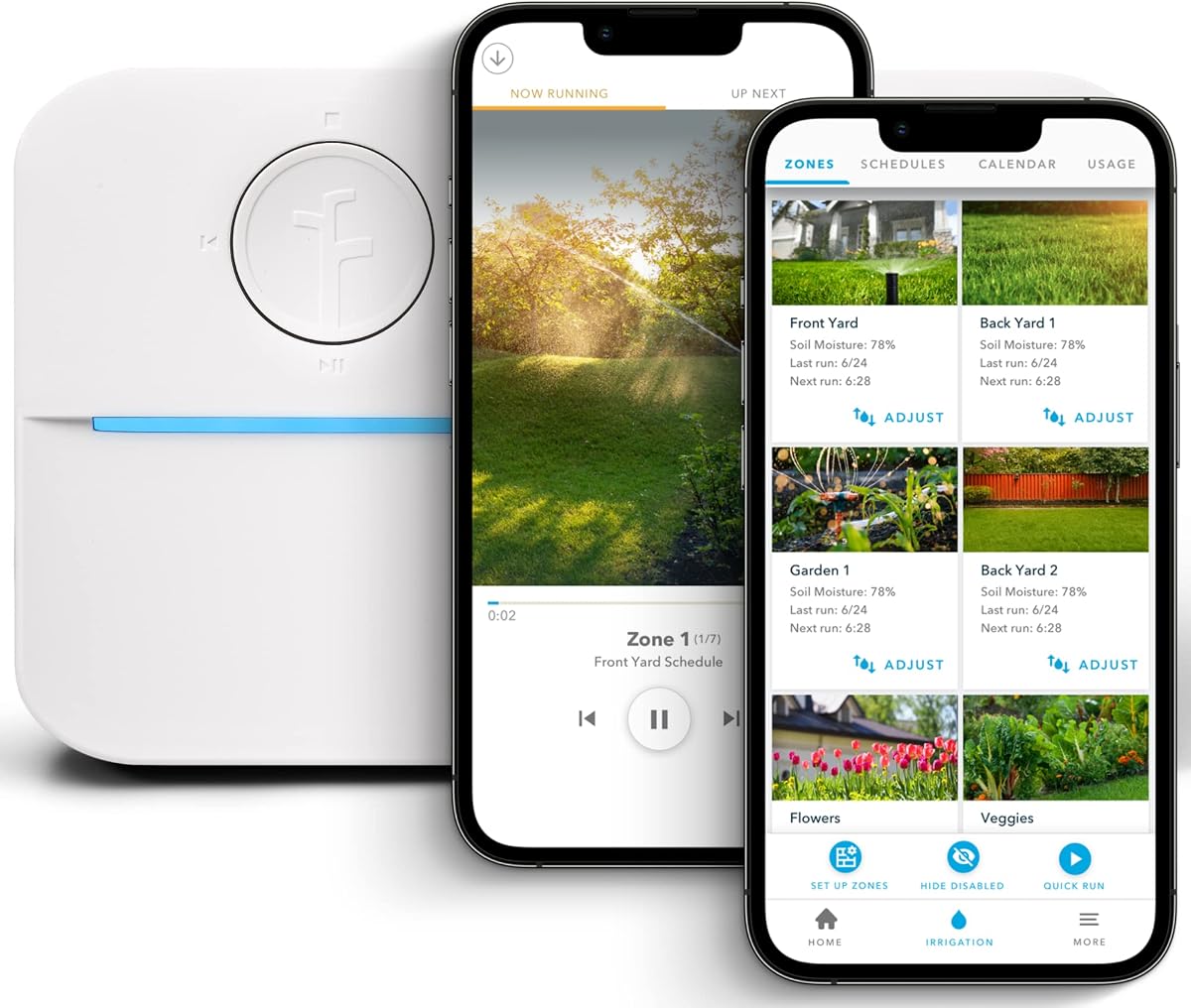
The Rachio 3 represents the pinnacle of smart irrigation technology with patented weather intelligence that automatically adjusts watering. It holds a strong rating among users who value automation and precise control over their landscape health.
We may earn a commission when you buy through this link, at no additional cost to you.
Its app replaces the traditional dial allowing for intuitive schedule management and remote adjustments from any device. The patented weather intelligence skips watering when rain or freezing is expected ensuring your grass is never overwatered or damaged.
While the device requires a larger initial investment the water savings and convenience it provides often justify the cost for serious gardeners. Some advanced features may require subscriptions which adds to the ongoing expense beyond the hardware purchase.
This controller is the best choice for homeowners who want the latest technology and seamless integration with smart home ecosystems. It delivers a premium experience that simplifies irrigation management significantly.
Patented algorithms analyze local weather data to skip watering automatically preventing waste during wet conditions.
Fast DIY install means you can set up the system yourself in about thirty minutes without professional help.
We may earn a commission when you buy through this link, at no additional cost to you.
Selecting the right irrigation controller requires evaluating several technical and practical factors to ensure your landscape receives optimal care while minimizing water waste.
Controllers come in manual dial, smart app-based, and hybrid models. Smart controllers offer remote access and weather adjustments but may need a Wi-Fi network and module. Dial models are reliable but lack automation features.
Choose based on whether you prioritize convenience and automation or reliability and simplicity for your daily needs.
Count the number of valves in your system to ensure the controller supports all zones. Some models allow expansion with additional modules which is useful for growing landscapes or phased projects.
Verify the station count meets your current setup and future expansion plans to avoid needing a new controller later.
Check if the controller has a built-in port for rain sensors or requires a specific brand. Some systems need external sensors to halt watering during rain which is essential for water savings.
Ensure the sensor input is standard or compatible with accessories you prefer to avoid compatibility issues.
Determine if the controller is rated for indoor or outdoor use. Outdoor models usually have weather-resistant cases while indoor ones should be placed in protected areas like garages.
Match the installation location to the product rating to ensure durability and prevent weather damage to electronics.
Most units require standard household voltage but some have battery backups or require hardwiring. Ensure you have access to a power source or plan for a junction box for hardwired units.
Select a power setup that aligns with your property infrastructure to simplify installation.
Look for certifications like EPA WaterSense and features like seasonal adjustment or flow monitoring. These features help reduce usage and protect against leaks.
Prioritize models with water conservation technology to lower bills and support sustainable landscaping.
Consider the interface style and whether you prefer physical dials or digital screens. Intuitive programming saves time and reduces errors when setting schedules.
Choose an interface that you can operate comfortably without needing extensive technical training.
Balance the cost against the features offered. Basic models are cheaper but may lack smart integration. Premium models offer advanced automation at a higher price.
Invest in a controller that provides the best balance of cost and necessary features for your specific needs.
Start by reading the manual to understand the specific programming steps for your model. Proper setup ensures all zones run at the right times and durations without conflicts.
Periodically inspect the controller and sensors for debris or damage. Clean the rain sensor disks or electronics to ensure they respond correctly to weather conditions.
Adjust watering schedules seasonally to match plant needs and weather patterns. Use seasonal adjustment features or manually reduce run times during cooler months to conserve water.
Not all controllers have built-in ports for sensors so check compatibility before buying. Most modern units support standard sensor connections but some may require specific brands or adapters.
Inspect your system monthly during the watering season to catch leaks or misaligned heads early. Regular checks prevent water waste and ensure your plants receive adequate hydration.
Install the sensor in an open area away from roof runoff or sprinkler spray. This ensures it only detects actual rainfall and not water from nearby systems.
Yes many smart controllers accept external rain sensors for redundancy even if they have weather skip features. Using both adds a layer of safety against software or connectivity failures.
Most units are designed for DIY installation with clear instructions but you may need a pro if hardwiring is required. Check the difficulty level and your skills before attempting setup.
Controllers with non-volatile memory retain settings but may not run until power returns. Some have battery backups to keep time or schedules active during brief outages.
Our top picks include the Hunter Rain-Clik for reliability, the Orbit 57069 for budget-friendly protection, and the Rachio 3 for advanced automation. Each model offers distinct advantages depending on your priorities.
Prioritize compatibility with your existing system and choose a model that fits your technical comfort level. Whether you want manual control or smart automation, the right controller makes a big difference.
Always verify current product details and prices before purchasing to ensure you get the best value for your investment today.