
Sceptre New 22-Inch Gaming Monitor
4.4Editor score
144Hz refresh rate
Built-in speakers
Blue-Light Shift tech
Choosing the right monitor for Linux can be tricky due to driver support and display settings. We reviewed top models ensuring they work seamlessly with popular distributions like Ubuntu and Fedora for smooth performance.
Our team compared ten highly rated displays focusing on resolution, connectivity, and user feedback. Each pick was vetted for compatibility with open-source drivers and real-world use cases ranging from coding to casual browsing.
Every product entry highlights key features, pros, cons, and ideal use cases. Note that availability and pricing may change frequently, so check current listings before making your final decision for your setup.
4.4Editor score

4.4Editor score

4.6Editor score
As an Amazon Associate we earn from qualifying purchases.
Below is a detailed side-by-side comparison of all ten selected monitors. We evaluated key specifications, connectivity options, and specific features to help you find the perfect display for your Linux system needs.



This portable screen extender offers a seamless second display experience ideal for Linux users seeking increased productivity. With a strong rating of 4.9 stars it stands out for its reliability and ease of use across multiple platforms.
We may earn a commission when you buy through this link, at no additional cost to you.
The 14-inch FHD IPS panel delivers sharp visuals perfect for coding or reviewing documents. Its plug-and-play functionality ensures minimal configuration time making it a top choice for developers needing quick access to extra screen space.
While it requires compatible ports like full-function USB-C or HDMI the setup is straightforward once connected. Some users might find the price slightly higher than basic monitors but the dual-screen efficiency justifies the investment for professionals.
If you need a reliable way to expand your laptop display on the go this model is highly recommended. It balances portability with performance making it a fantastic pick for anyone needing a versatile external monitor solution.
No complex driver installations are needed as the monitor detects automatically with supported systems for instant setup.
The lightweight design allows users to carry extra screen real estate effortlessly during travel or remote work.
We may earn a commission when you buy through this link, at no additional cost to you.
This gaming monitor showcases premium OLED technology delivering unmatched visual fidelity for enthusiasts and professionals alike. It holds a 4.6 rating reflecting its high quality in display performance and user satisfaction among serious gamers.
We may earn a commission when you buy through this link, at no additional cost to you.
The 240Hz refresh rate and 0.03ms response time ensure incredibly smooth motion which is crucial for fast-paced Linux gaming setups. Its HDR capabilities provide deep blacks and vibrant colors making it a top-tier display for media consumption.
Users should be aware that the glossy finish might attract reflections in bright environments. Additionally the high price point means it is best suited for those who prioritize top-end visuals over budget considerations.
For users seeking the best visual experience available this monitor sets a high standard for performance. It is an excellent choice for Linux gamers wanting cutting-edge technology in their workstation setup.
TrueBlack glossy WOLED technology offers perfect blacks and infinite contrast for realistic and immersive visuals.
ASUS OLED Care Pro functions reduce burn-in risk ensuring long-term display longevity for daily users.
We may earn a commission when you buy through this link, at no additional cost to you.
This monitor offers exceptional value for Linux users looking for a budget-friendly display without sacrificing refresh rate. It has earned a 4.4 rating for its ability to deliver smooth performance at a very accessible price point.
We may earn a commission when you buy through this link, at no additional cost to you.
The 144Hz refresh rate ensures smooth visuals for both work and light gaming tasks. Built-in speakers save desk space while the Blue-Light Shift technology helps maintain eye comfort during extended Linux sessions.
While the 22-inch size might be small for extensive multitasking it fits well in compact setups. The basic stand lacks height adjustment but the overall performance makes it a strong contender for cost-conscious buyers.
If you need a reliable monitor that won't break the bank this model is a great starting point. It proves that you do not need to spend a fortune to get a good Linux-compatible display.
A 144Hz refresh rate provides smoother motion than standard 60Hz screens even at a lower budget price.
Built-in speakers eliminate the need for external audio hardware keeping your workspace clean and simple.
We may earn a commission when you buy through this link, at no additional cost to you.
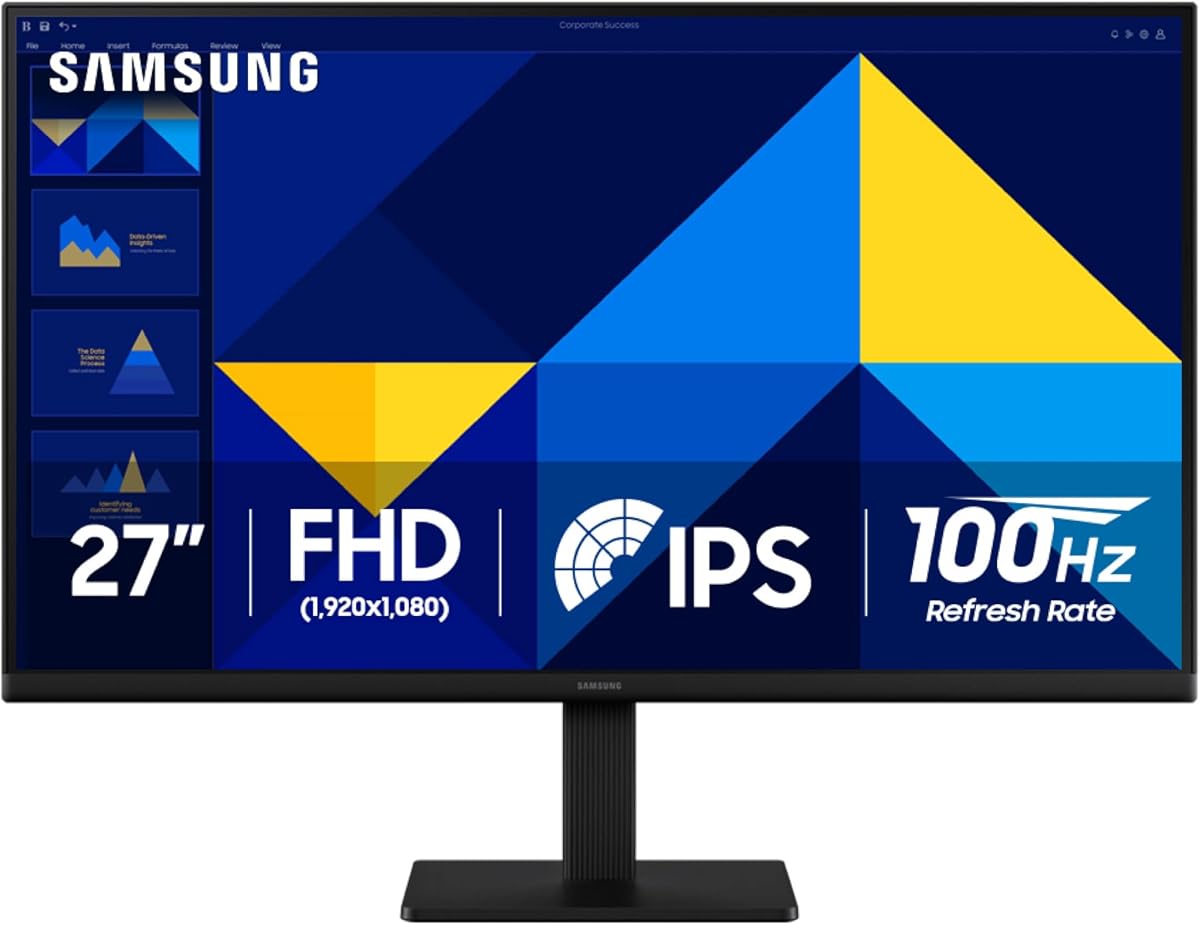
This Samsung monitor provides a balanced mix of visual quality and modern design suitable for general Linux work. It holds a 4.5 rating reflecting its solid performance for everyday tasks and light multimedia use.
We may earn a commission when you buy through this link, at no additional cost to you.
The IPS panel ensures vivid colors remain consistent across wide viewing angles which is ideal for photo editing or document work. A 100Hz refresh rate adds a smooth feel to system navigation compared to standard 60Hz monitors.
While it lacks some dedicated gaming features its eye comfort technologies make it suitable for long workdays. The slim bezels allow for multiple screen setups without bulk which benefits users with limited desk space.
If you want a clean reliable screen for general Linux usage this model delivers consistent results. It is a safe pick for those prioritizing color accuracy and design over high-end gaming capabilities.
IPS technology guarantees accurate color representation even when viewing the screen from different angles.
Reduced blue light and flicker help maintain comfort during extended periods of daily work tasks.
We may earn a commission when you buy through this link, at no additional cost to you.
This monitor is designed for professionals needing high resolution clarity for detailed Linux workflows. With a 4.6 rating it stands out for delivering exceptional visual sharpness and accurate color representation for creative tasks.
We may earn a commission when you buy through this link, at no additional cost to you.
The 4K resolution reveals intricate details perfect for complex diagrams or video content. HDR10 optimization enhances contrast providing a wide gamut of accurate colors that are essential for design work and media consumption.
Users should ensure their Linux system has sufficient GPU power to handle 4K output smoothly. The refresh rate is not targeted at gaming which may limit its appeal for enthusiasts focusing on speed.
If visual precision is your priority this monitor provides an excellent canvas for detailed work. It is highly recommended for Linux professionals working with high-definition content or intricate design projects.
4K UHD resolution offers high pixel density revealing greater levels of detail in any displayed content.
HDR10 technology provides a wide color gamut with accurate shades for professional and creative workflows.
We may earn a commission when you buy through this link, at no additional cost to you.
This curved monitor offers a wide immersive view ideal for Linux users seeking an engaging visual experience. It holds a 4.4 rating for delivering deep visuals and smooth performance that enhance both work and entertainment setups.
We may earn a commission when you buy through this link, at no additional cost to you.
The 1000R curvature matches the human eye field of view wrapping content around you for maximum immersion. QHD resolution ensures razor-sharp details while AMD FreeSync support keeps gameplay tear-free during active Linux sessions.
The large 32-inch size requires ample desk space which might not suit compact workstations. While excellent for media the curved shape can sometimes make text alignment tricky for some productivity tasks.
If you value immersion and a wide field of view this monitor is an excellent choice. It delivers a compelling balance of size and performance suitable for Linux users wanting a modern wide display.
1000R curvature fills your peripheral vision drawing you into every moment of action on screen.
AMD FreeSync ensures synchronization with graphics cards to reduce tearing and lag during use.
We may earn a commission when you buy through this link, at no additional cost to you.
This extender enables a triple screen setup turning a laptop into a powerful workstation on the go. It has a 4.5 rating for its ability to drastically increase multitasking efficiency across Linux and other systems.
We may earn a commission when you buy through this link, at no additional cost to you.
Two 15.6-inch FHD displays provide ample space for coding or data analysis without needing a full desktop. The ultra-thin profile makes it easy to transport allowing professionals to build a workspace anywhere instantly.
Setup might require multiple cables to support two screens simultaneously which could be messy. The price is higher than standard portable monitors but the dual-screen boost is a significant productivity advantage.
For Linux users needing serious multitasking power this solution transforms your laptop capability. It is recommended for professionals traveling who need a full multi-screen workflow without carrying heavy hardware.
Supports opening multiple tasks on three screens simultaneously increasing efficiency significantly for complex work.
Ultra-thin build and included case make it easy to carry and set up a dual screen anywhere.
We may earn a commission when you buy through this link, at no additional cost to you.
This portable monitor is designed for travelers needing a compact reliable screen for Linux devices on the move. It has a 4.3 rating for its slim build and simple plug-and-play connectivity options for basic use.
We may earn a commission when you buy through this link, at no additional cost to you.
The 15.6-inch FHD screen offers decent clarity for daily tasks while the dual Type-C ports simplify connections. Its lightweight design fits easily into backpacks ensuring you can extend your screen space wherever you go.
While the 60Hz refresh rate is standard it is not suitable for high-speed gaming or dynamic motion. Some users might find the resolution limited for detailed work but it is sufficient for general productivity.
If you need a simple portable display that takes up minimal space this is a solid option. It is best suited for Linux travelers who prioritize convenience and portability over high-end specs.
Lightweight and slim profile fits easily into luggage ensuring you can work or game anywhere.
Two full feature Type-C ports allow easy connection for power and display with a single cable.
We may earn a commission when you buy through this link, at no additional cost to you.
This mini monitor is ideal for Linux makers needing a compact interactive screen for projects or embedded systems. It boasts a 4.7 rating for its reliable touch performance and broad compatibility with various Linux distributions.
We may earn a commission when you buy through this link, at no additional cost to you.
The 10.1-inch screen supports precise multi-touch interaction perfect for navigating Linux GUIs or DIY electronics. Plug-and-play connectivity via HDMI and USB ensures quick setup for hobbyists needing a dedicated small control panel.
The low resolution limits its use for text-heavy tasks but works well for visual monitoring or dashboards. Its small size makes it perfect for integrating into larger setups rather than replacing a primary display.
If you are building a Linux project requiring a touch interface this unit delivers high quality. It is highly recommended for makers and hobbyists needing a reliable compact control screen.
Supports precise single-point touch on Raspberry Pi OS and Ubuntu enabling smooth interaction with GUIs.
Built-in mounting holes allow easy integration into custom builds or fixed positions for permanent projects.
We may earn a commission when you buy through this link, at no additional cost to you.
This portable touchscreen offers a responsive interface tailored for Linux makers using single-board computers. It holds a 4.4 rating for delivering reliable input and protection for sensitive hardware during projects and testing.
We may earn a commission when you buy through this link, at no additional cost to you.
The capacitive touch supports smooth interaction on Ubuntu and Raspberry Pi OS making it easy to navigate projects. A protective acrylic case ensures the screen remains safe during transport or frequent use in active environments.
Its small size restricts general computing but is perfect for dedicated control panels or dashboards. Some users might find the viewing area limited for multitasking but it serves its niche well.
If you need a dedicated interactive screen for Linux embedded systems this monitor is highly suitable. It provides the necessary touch input and protection for makers working on DIY electronics and IoT projects.
Includes a stylish protective acrylic case ensuring the screen stays safe during project development.
Compatible with Ubuntu and Kali Linux ensuring seamless integration into common open-source environments.
We may earn a commission when you buy through this link, at no additional cost to you.
Selecting the right monitor for Linux requires attention to specific compatibility factors. Here are key aspects to consider when shopping for your next display.
Linux supports many monitors out of the box but some features may require specific drivers. Ensure your chosen model works well with your distribution kernel to avoid display glitches or resolution issues.
Choose monitors that rely on standard HDMI or USB-C connections for broad driver support across most systems.
Higher resolutions like 1080p or 4K provide sharper text which benefits Linux users writing code. A wider aspect ratio helps manage multiple open windows on the desktop comfortably.
Prioritize Full HD or 4K for clarity to ensure text remains readable during long work sessions.
Standard 60Hz is fine for office work but gaming enthusiasts might need 120Hz or more. Ensure your graphics card supports the refresh rate to enable smooth visual updates on Linux.
Select a refresh rate that matches your daily usage to balance performance and system resource demands.
Check that your laptop or desktop has compatible HDMI or USB-C ports for the monitor. Linux often requires direct display signal connections to avoid handshake issues with third-party hardware.
Verify physical port availability before buying to ensure a smooth connection without extra adapters.
Professional designers on Linux benefit from monitors with high color fidelity and wide gamut. Look for IPS panels as they generally offer better color consistency than other technologies.
Choose a display with accurate color reproduction if you work with design or video editing projects.
Adjustable stands help prevent neck strain during long coding sessions or research work. Linux users spend significant time at their desk making comfort a critical purchasing factor.
Opt for models with tilt or height adjustment to maintain a healthy posture while working.
Travelers or remote workers may need a portable monitor to extend their workspace. Lightweight models with built-in stands are easier to carry and set up quickly in new environments.
Choose slim monitors with dual-C if you need to use them on laptops while on the move.
Determine your price range early to avoid overspending on unnecessary high-end features. Basic productivity monitors offer great value without requiring expensive gaming capabilities or OLED tech.
Balance your needs with your budget to find the best performance without financial strain.
Start by connecting your monitor to your Linux machine using HDMI or USB-C. Ensure the system detects the display in settings to extend or mirror screens as needed.
Clean the screen with a soft microfiber cloth to prevent scratches. Avoid harsh chemicals that might damage the matte or glossy coating on the panel.
Adjust brightness and contrast settings in the display menu for eye comfort. Proper calibration ensures text remains sharp and reduces strain during long usage periods.
Most modern monitors work with Linux through standard HDMI and DisplayPort. Some advanced features like specific HDR modes might need additional configuration.
Developers benefit from high resolution IPS monitors with adjustable stands. Clear text and multiple window support are key features for coding efficiently.
Yes curved monitors work well with Linux for immersive viewing. Ensure the graphics driver supports the refresh rate for smooth performance.
60Hz is sufficient for basic tasks but higher rates improve scrolling smoothness. Gamers or power users often prefer 120Hz or higher for better fluidity.
USB-C monitors simplify setup as they carry video and power signals. Many Linux laptops support USB-C output making them a convenient choice.
Go to settings and select display arrangement to position screens. Choose extended mode to maximize workspace across all connected monitors.
We highlighted top picks like the CIDETTY for productivity and the Sceptre for budget needs. Each monitor offers unique strengths to suit different Linux user profiles and workflows.
Prioritize features that match your daily tasks such as resolution refresh rate or portability. Balancing performance with comfort ensures a better experience during extended use.
Prices and availability change often so check current listings before you buy. Confirm compatibility with your specific Linux distribution to ensure seamless integration.